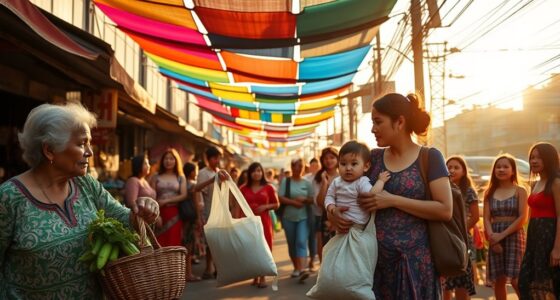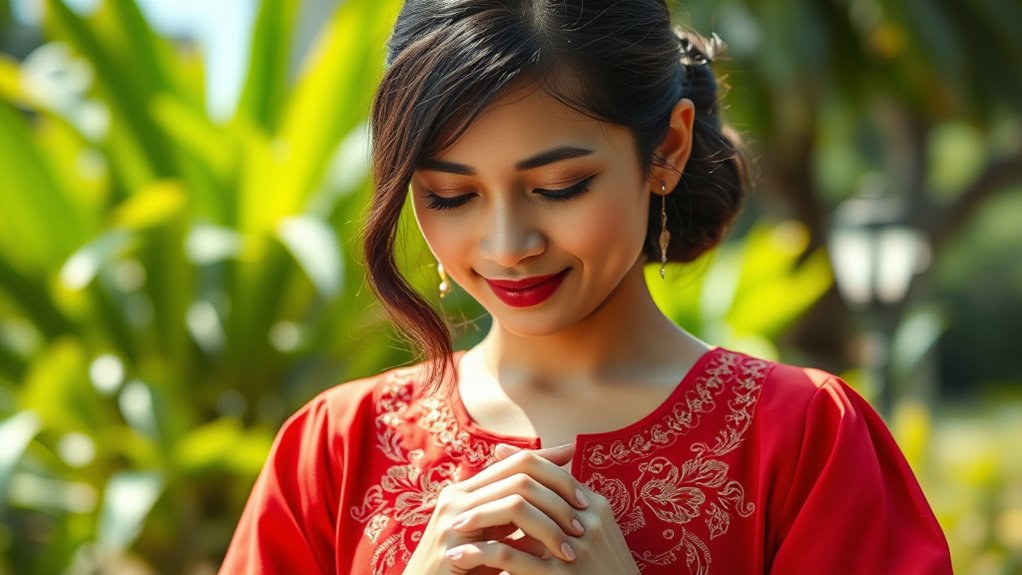

In Filipino culture, “hiya” and modesty guide how Filipinas conduct themselves by emphasizing humility, respect, and social harmony. You’ll notice they often avoid boastfulness and respond politely to praise or criticism, showing humility and concern for others. These values help maintain dignity and foster trust within the community. By embracing “hiya” and modesty, Filipinas strengthen relationships and uphold cultural traditions. If you continue exploring, you’ll gain a deeper understanding of how these qualities shape their daily interactions.
Key Takeaways
- “Hiya” reflects humility and shame, guiding Filipinas to be modest and avoid boastfulness in social interactions.
- Modesty and politeness, expressed through respectful language and gestures, uphold social harmony and community cohesion.
- Filipinas often respond humbly to praise and politely handle criticism to maintain peaceful relationships.
- These values emphasize respect for elders, humility, and collective well-being over individual recognition.
- “Hiya” and modesty serve as cultural expressions of dignity, trust, and mutual respect within Filipino society.
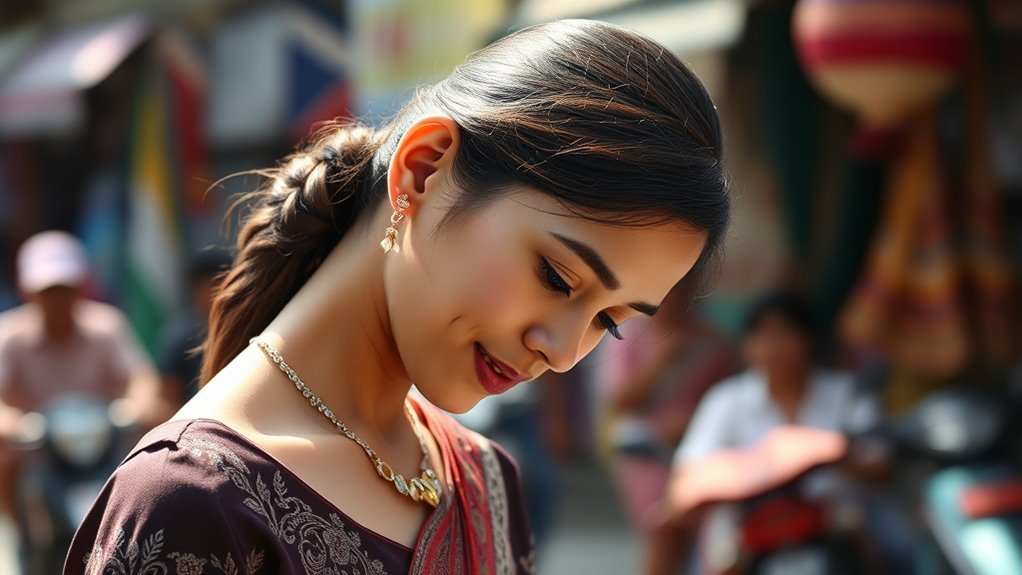
In Filipino culture, “hiya,” or a sense of modesty and shame, plays a essential role in shaping how Filipinas behave and interact with others. It influences their actions, words, and even their self-perception, emphasizing the importance of humility and social harmony. When you observe Filipinas, you’ll notice that cultural humility is deeply embedded in their behavior. They tend to downplay their achievements, avoid boastfulness, and prioritize the collective good over individual recognition. This modesty isn’t just about self-effacement; it’s a reflection of a cultural value that encourages respect for others and fosters a sense of community.
Social politeness is another indispensable aspect intertwined with “hiya.” Filipinas often express their respect through courteous language, gentle gestures, and a humble demeanor. They understand that politeness isn’t just manners but a way of maintaining harmony and avoiding conflict. For example, using polite expressions like “po” and “opo” when addressing elders is more than etiquette—it’s a sign of deep respect and acknowledgment of social hierarchies. This politeness extends to small gestures, such as offering a seat or a warm smile, which helps create a welcoming environment. When you’re interacting with Filipinas, you’ll find that their social politeness is genuine and consistent, rooted in a desire to preserve dignity and harmony in every exchange.
Filipinas show genuine respect through courteous language, gentle gestures, and humble demeanor to preserve harmony and dignity.
Furthermore, the combination of “hiya” and social politeness influences how Filipinas handle praise or criticism. They are often hesitant to accept compliments, preferring to show humility rather than boast about their accomplishments. This modesty can sometimes be mistaken for shyness, but it’s actually a reflection of their cultural humility—an understanding that no one is superior to another. Likewise, when faced with criticism, Filipinas tend to respond politely, avoiding confrontation, which helps maintain peaceful relationships. This approach isn’t about weakness but about respect for others’ feelings and the recognition that humility fosters mutual understanding.
Recognizing these values can also help explain why Filipinas value cultural humility and social harmony in their interactions, which are essential aspects of their identity. Understanding these values helps you appreciate why Filipinas act the way they do. They see modesty and politeness not just as social rules but as expressions of their respect for others and their desire for harmony. “Hiya” and social politeness aren’t mere behaviors; they’re integral to how Filipinas maintain their dignity and build meaningful connections. Recognizing this can deepen your interactions and show genuine appreciation for their cultural values.

Philippines – Culture Smart!: The Essential Guide to Customs & Culture
As an affiliate, we earn on qualifying purchases.
As an affiliate, we earn on qualifying purchases.
Frequently Asked Questions
How Does “Hiya” Influence Daily Interactions Among Filipinas?
You notice that “hiya” shapes daily interactions among Filipinas by emphasizing humility and respect, which are key cultural nuances. When they use “hiya,” they often communicate indirectly or shyly, reflecting their modest communication styles. This influences how openly they express opinions or feelings, fostering harmony and politeness in social settings. Ultimately, “hiya” helps maintain respectful relationships and preserves cultural values within everyday exchanges.
Are There Differences in “Hiya” Across Various Filipino Regions?
You’ll notice that “hiya” varies across Filipino regions due to regional dialects and cultural nuances. In some areas, it’s a subtle gesture, while in others, it’s more pronounced. These differences reflect local customs and social expectations, shaping how Filipinas express modesty and politeness. So, even within a single country, “hiya” adapts to regional identities, highlighting the rich diversity of Filipino culture.
How Is Modesty Expressed Differently Among Filipinas of Different Ages?
You’ll notice age-related modesty varies among Filipinas, with older generations typically displaying more conservative behaviors, such as covering shoulders or avoiding direct eye contact. Younger Filipinas tend to be more relaxed, embracing modern fashion and open conversations while still respecting cultural norms. These generational differences reflect evolving attitudes, but the core value of “hiya” remains, guiding respectful interactions across all ages.
Can “Hiya” Be Perceived as Shyness or Humility?
Think of “hiya” as a gentle ripple on a still pond, subtly revealing shyness or humility. Cultural stereotypes often paint Filipinas as shy, but language nuances show “hiya” also embodies modesty and respect. You might perceive it as shyness, yet it’s a sincere gesture of humility. Recognizing this nuance helps you truly appreciate how “hiya” weaves into their social fabric, beyond just stereotypes, reflecting genuine humility and cultural grace.
How Do Modern Filipinas Balance “Hiya” With Assertiveness?
You can balance “hiya” with assertiveness by understanding cultural etiquette and social harmony. When needed, speak confidently while maintaining humility, showing respect for tradition. Use polite language and gentle gestures to assert yourself without disrupting the harmony. This approach helps you stay true to Filipino values, blending modesty with confidence, and guarantees you’re perceived as respectful yet self-assured in different social settings.

Si Miko at ang Puno ng Mangga: Miko and the Mango Tree (Tita Minnie's Tagalog Readers)
As an affiliate, we earn on qualifying purchases.
As an affiliate, we earn on qualifying purchases.
Conclusion
Understanding the value of “hiya” and modesty reveals more than just behavior—it uncovers a deeper cultural essence. These traits shape Filipinas’ interactions and keep their traditions alive. But as times change, you might wonder: will these values stand the test of modern influences? Staying rooted in humility and respect could be more vital than ever. Are you ready to see how these timeless qualities continue to influence their identity? The answer might surprise you.
Filipino gestures and manners
As an affiliate, we earn on qualifying purchases.
As an affiliate, we earn on qualifying purchases.

Parent Effectiveness Training: The Proven Program for Raising Responsible Children
Parent
As an affiliate, we earn on qualifying purchases.
As an affiliate, we earn on qualifying purchases.