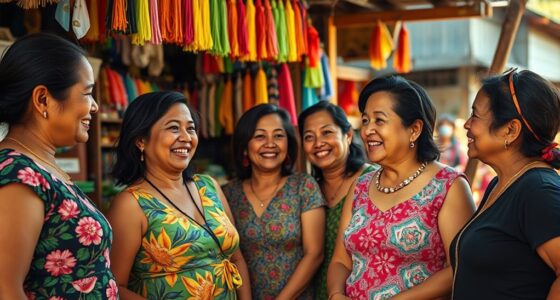
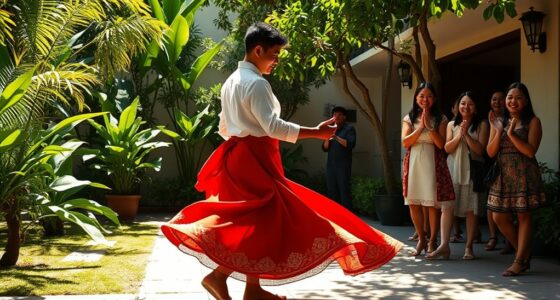
Filipinos express affection mainly through actions and gestures rather than words, reflecting values of respect, warmth, and community. You’ll see this in small acts like preparing meals, offering a hand, or “mano” blessings to elders. Physical closeness, caring touches, and spontaneous surprises showcase deep love and concern. Celebrations, shared stories, and quality time also strengthen bonds. To discover more about these heartfelt expressions and how they uniquely showcase Filipino love, keep exploring these cultural gestures.
Key Takeaways
- Filipinos express love primarily through actions like gestures, small acts of service, and caring behaviors rather than solely words.
- Respectful physical gestures such as “mano” and gentle touches symbolize deep affection and reverence for loved ones.
- Family and romantic love are shown through frequent physical contact, surprise visits, and handwritten notes that reinforce emotional bonds.
- Acts of generosity, hospitality, and sharing during celebrations demonstrate love and reinforce community ties.
- Valuing time and presence with loved ones is a key way Filipinos show affection beyond verbal communication.

Have you ever wondered how Filipinos express love beyond words? It’s a fascinating aspect of Filipino culture, where love is often demonstrated through cultural expressions and affectionate gestures rather than just spoken phrases. In the Philippines, showing affection isn’t solely about saying “I love you”; it’s about embodying that love through actions that speak louder than words. These gestures are deeply rooted in Filipino values of warmth, respect, and community, making their way into everyday interactions and special moments alike.
One of the most common cultural expressions of love is through small acts of service. For instance, preparing a favorite meal or offering to run errands for someone shows your care and consideration. These gestures are often done quietly, without fanfare, because they’re rooted in genuine concern and a desire to ease another’s burden. Another affectionate gesture you might notice is the act of “mano,” where younger people take the hand of an elder and press it to their forehead as a sign of respect and love. This simple yet meaningful act embodies deep filial love and reverence, highlighting how affection in Filipino culture often goes beyond words to include respectful physical gestures.
Physical closeness is another essential way Filipinos express love. Whether it’s holding hands, hugging, or a gentle pat on the back, these acts foster connection and convey warmth. Filipino families are known for their strong bonds, often expressed through frequent physical contact, especially among loved ones. These gestures are natural and spontaneous, reflecting a culture that values closeness and emotional sharing. In romantic relationships, small acts like surprise visits, handwritten notes, or even just a caring touch reveal affection more powerfully than words could.
Additionally, Filipino cultural expressions of love are often evident during celebrations or gatherings. During fiestas or family reunions, acts of generosity and hospitality serve as demonstrations of love. Offering food, sharing stories, and welcoming others into your home symbolize a deep sense of community and care. These gestures are more than just acts of kindness; they’re expressions of love that reinforce relationships and cultural bonds.
Furthermore, understanding the importance of time spent together is crucial, as it often signifies prioritizing loved ones and strengthening bonds within Filipino families and communities. In essence, Filipinos have a unique way of showing love through affectionate gestures and cultural expressions that emphasize sincerity, respect, and closeness. Whether through small acts of service, respectful physical gestures, or communal hospitality, these actions embody a love that’s felt deeply and expressed generously. So, the next time you see a Filipino showing affection, remember it’s often their way of communicating love beyond words—through meaningful gestures that resonate with their rich cultural heritage.
Frequently Asked Questions
How Do Filipino Love Languages Differ From Other Asian Cultures?
Filipino love languages differ from other Asian cultures through their unique blend of cultural nuances and emotional expression. You’ll notice Filipinos often show affection through acts of service, subtle gestures, and warm, heartfelt words. Unlike some cultures that prioritize stoicism, Filipinos openly embrace emotional expression, making their love languages more expressive and deeply rooted in their values of hospitality and close family ties.
Are There Regional Variations Within the Philippines?
You’ll find that regional variations within the Philippines are quite common, and they’re like different strokes for different folks. Regional dialects and cultural nuances shape how love is expressed, from more expressive gestures in the Visayas to subtler ways in Mindanao. These differences highlight the rich diversity across islands, showing that even within one country, love languages adapt to local customs and traditions, making each region’s way uniquely heartfelt.
How Do Filipino Love Languages Change With Age?
As you age, Filipino love languages tend to evolve, reflecting changes in intergenerational communication and life experiences. Younger Filipinos might express affection through acts of service or words of affirmation, while older generations often prefer physical touch or quality time. These shifting affection styles help maintain strong family bonds, adapting to your personal growth and cultural values over time. You’ll notice a natural progression as you connect differently with loved ones at each life stage.
What Role Do Family and Community Play in Expressing Love?
Family bonds and community support are central to how you express love in Filipino culture. You actively show affection through caring gestures, shared responsibilities, and communal celebrations, strengthening these bonds. When you participate in family gatherings or community events, you’re reinforcing your love and support system. This collective approach guarantees everyone feels valued and connected, emphasizing that love isn’t just personal but also nurtured through the strength of family and community ties.
Can Love Languages Predict Relationship Longevity Among Filipinos?
Love languages can help predict relationship longevity among Filipinos because they enhance emotional expression and improve conflict resolution. When you understand your partner’s preferred love language, you communicate more effectively, reducing misunderstandings. This emotional connection fosters trust and resilience, making your relationship more likely to withstand challenges. By actively practicing your partner’s love language, you build a stronger bond that supports long-term commitment and happiness.
Conclusion
Understanding Filipino love languages helps you connect deeper with your loved ones. Imagine a friend who shows affection through acts of service—like cooking your favorite meal after a tough day. When you recognize these gestures, you feel more appreciated and loved. By embracing these cultural expressions, you foster stronger bonds. So, next time someone helps you out or shares a heartfelt gesture, know it’s their way of saying, “I care.”