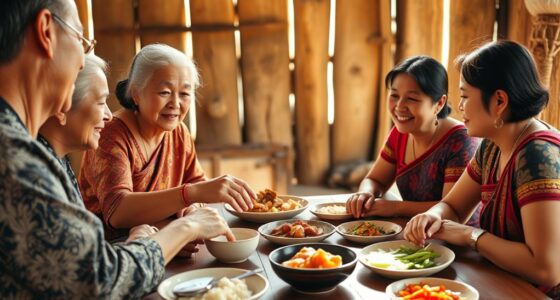
Filipino celebrations are lively events that showcase rich traditions, vibrant festivals, and close family gatherings. You’ll see colorful costumes like the baro and barong, and taste delicious dishes like lechon and adobo that connect everyone. These festivities highlight community spirit, hospitality, and cultural pride, turning ordinary days into meaningful moments. If you want to discover more about the customs, symbols, and stories behind these joyful occasions, there’s much more to explore.
Key Takeaways
- Filipino celebrations showcase vibrant traditions, community spirit, and cultural pride through colorful festivals, attire, and shared culinary delights.
- Traditional clothing like the baro, terno, and barong Tagalog symbolize respect for heritage and enhance festive atmosphere.
- Food plays a central role, with dishes like lechon and adobo representing cultural stories and fostering communal sharing.
- Celebrations emphasize family, kinship, and gratitude, promoting warmth, hospitality, and togetherness among participants.
- Overall, Filipino festivities embody lively, heartfelt expressions of cultural identity, transforming ordinary days into meaningful, colorful events.

Have you ever wondered what makes Filipino celebrations so vibrant and meaningful? It’s the lively mix of traditions, community spirit, and a deep sense of gratitude that turns ordinary days into extraordinary festivities. At the heart of these celebrations are the colorful traditional attire and mouth-watering culinary delights that bring everyone together. When you attend a Filipino fiesta or festival, you’ll notice how locals wear their traditional clothing with pride. Women often don elaborate dresses called terno or baro, decorated with intricate embroidery and vibrant colors, while men sport barong Tagalog, a lightweight embroidered shirt that’s both elegant and comfortable. These outfits aren’t just for show; they symbolize respect for cultural heritage and unity. Seeing everyone dressed in traditional attire instantly sets the tone, making the event feel special and deeply rooted in Filipino identity.
But no celebration is complete without the culinary delights that serve as a feast for the senses. Filipino cuisine is known for its bold flavors, rich textures, and communal spirit. During festivities, food takes center stage, and you’ll find an array of dishes that showcase local ingredients and cooking techniques. From lechon, the roasted pig with crispy skin, to adobo, a savory stew of meat marinated in vinegar, soy sauce, and spices, each dish tells a story of tradition and resourcefulness. There’s also pancit, a noodle dish symbolizing long life and good fortune, and suman or bibingka, rice-based desserts that add sweetness to the celebration. These culinary delights aren’t just about taste; they’re about sharing and creating memories. Families and friends gather around tables laden with food, engaging in lively conversations, laughter, and dance. The act of preparing and sharing these dishes reflects Filipino values of hospitality and togetherness, making every celebration a heartfelt expression of community. Additionally, specialized cooking techniques are often employed to prepare traditional dishes, highlighting the skill and cultural knowledge passed down through generations.
As you immerse yourself in these festivities, you’ll realize that Filipino celebrations are more than just events—they’re an embodiment of cultural pride and kinship. The vibrant traditional attire connects you to generations past, while the culinary delights remind you of the importance of sharing joy and gratitude. Whether it’s a town fiesta, a family gathering, or a national festival, these elements fuse to create an atmosphere filled with warmth, color, and meaning. When you participate in these celebrations, you’re not just an observer—you become part of a living tradition that celebrates life, family, and community in the most spirited way possible.
Frequently Asked Questions
How Do Filipinos Choose Which Festivals to Attend?
You choose which festivals to attend based on their significance and your personal preferences. If a festival holds deep cultural or religious meaning for you, you’re more likely to participate. You might also consider the activities, location, and whether friends or family plan to go. Your decision is influenced by what resonates with you emotionally and culturally, making the experience more meaningful and enjoyable.
What Are Common Traditional Foods Served During Filipino Festivals?
Ah, the glorious feast of Filipino festivals—where your taste buds are expected to dance as wildly as the dancers themselves. You’ll find traditional delicacies like lechon, pancit, and adobo stealing the spotlight, alongside festive snacks such as kakanin and suman. These treats symbolize the rich culture and shared joy, inviting everyone to indulge. After all, what’s a celebration without a bounty of flavorful, soul-satisfying foods?
How Do Family Gatherings Vary Across Different Regions in the Philippines?
In different regions of the Philippines, family gatherings vary by showcasing regional cuisines and emphasizing family roles. In the Visayas, you might enjoy seafood dishes and lively group activities, while in Mindanao, expect diverse ethnic influences and communal feasts. You’ll find that family roles shift—from elders leading traditions to younger members helping prepare food. These gatherings celebrate local customs, strengthening bonds through shared meals and collective participation.
What Are the Origins of Popular Filipino Celebration Customs?
You’ll find that popular Filipino celebration customs have deep roots in historical influences like indigenous practices, Spanish colonization, and religious traditions. These customs hold significant cultural importance, symbolizing faith, community, and gratitude. For example, fiestas often honor saints or historical events, blending indigenous and Spanish elements. Understanding these origins helps you appreciate the rich cultural significance behind each celebration, making your experience more meaningful and connected to Filipino heritage.
How Do Filipinos Incorporate Modern Elements Into Traditional Celebrations?
You might think traditional celebrations resist change, but Filipinos seamlessly blend modern elements into them. You can see digital innovations like live streaming and social media trends used to share festivities worldwide, making celebrations more accessible and interactive. Incorporating apps for virtual greetings or countdowns keeps everyone engaged. By embracing these tools, you connect tradition with today’s technology, ensuring Filipino festivities stay vibrant and relevant for generations to come.
Conclusion
Your journey through Filipino celebrations shows how they’re like vibrant tapestries woven with love, faith, and community. These festivities turn ordinary days into extraordinary memories, filling your heart with warmth and joy. Whether you’re joining a lively fiesta or a quiet family gathering, you’ll feel the deep connection that ties everyone together—like threads in a beautiful fabric. Embrace these traditions, and let their color and spirit brighten your life, just as they do for the Philippines.