

To extend your stay in the Philippines for courting, you should consider options like the tourist visa, which allows up to 30 days and can be prolongated for 29 more days. For longer visits, look into special visas such as the Special Resident Visa (SRRV) or multiple-entry visas. Choosing the right visa guarantees you stay legally and comfortably. Keep exploring to find out more detailed requirements and tips to make your process smoother.

Get gifts for the two of you delivered free — and shop member deals
- Fast, free delivery on millions of items
- Access to Prime Big Deal Days deals on October 6–7
- Prime Video, Amazon Music and more included
Key Takeaways
- Tourist visa (30 days, extendable up to 59 days) suitable for short-term visits and initial courting periods.
- Multiple-entry tourist visas allow longer stays for ongoing relationship development.
- Special Resident Visa (SRRV) offers extended or indefinite stays for qualifying foreigners.
- Special visas like the 9g work visa or fiancee visa may be applicable for longer-term engagement.
- Proper documentation and adherence to application procedures are essential for visa approval and extended courting.
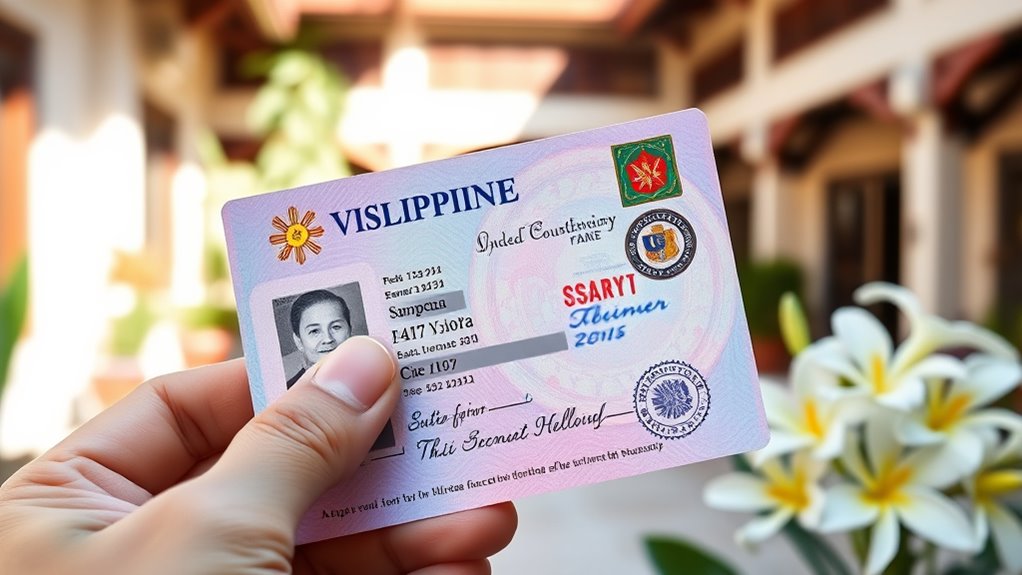
If you’re planning to spend an extended period in the Philippines to get to know someone better, understanding the available visa options is essential. The visa application process can seem complex, but being prepared with the right information makes it much smoother. First, you need to identify which visa best suits your intentions—whether it’s for short-term visits or longer stays aimed at developing a relationship. Typically, the process involves submitting specific legal documentation requirements, such as your passport, proof of financial capacity, and an invitation letter if applicable. Knowing exactly what documents are needed helps prevent delays and ensures your application proceeds without unnecessary hurdles.
Planning an extended stay in the Philippines? Understanding visa options and legal documentation is key to a smooth application process.
For extended courting, the most common options are the tourist visa and the special resident visa, each with its own set of requirements and benefits. The tourist visa usually allows stays of up to 30 days but can be extended for an additional 29 days at the Bureau of Immigration. If you plan to stay longer, you might consider applying for a longer-term tourist visa or a multiple-entry visa. The process involves filling out the application form, paying the applicable fees, and submitting supporting documents like your flight itinerary, proof of accommodation, and proof of sufficient funds. It’s crucial to follow the legal documentation requirements precisely; incomplete or incorrect submissions can result in delays or denial.
Alternatively, if your intention is to stay for a more extended period to develop a relationship, the Special Resident Retiree’s Visa (SRRV) or other special visas might be suitable. These visas typically require more comprehensive documentation, including medical clearance, police clearance, and proof of pension or income. The visa application process for these types involves multiple steps, including background checks and interviews. Ensuring you meet all legal documentation requirements and providing accurate information is vital to avoid issues with your application.
Additionally, understanding the importance of compliance with regulations can help you navigate the process smoothly and avoid legal complications. Ensuring you meet all legal documentation requirements and providing accurate information is vital to avoid issues with your application.
In all cases, it’s advisable to consult the official Philippine Bureau of Immigration website or speak with a legal expert to understand current policies, fees, and specific requirements. Rules can change, and staying updated helps you prepare properly. Remember, the key to a successful visa application is thorough preparation—gather all necessary documents, double-check the legal documentation requirements, and follow the prescribed steps carefully. By doing so, you’ll increase your chances of obtaining the right visa smoothly, allowing you to focus on what truly matters—getting to know someone better in the beautiful Philippines.
Philippines tourist visa extension kit
As an affiliate, we earn on qualifying purchases.
As an affiliate, we earn on qualifying purchases.
Frequently Asked Questions
Can I Switch Visa Types During My Stay in the Philippines?
Yes, you can switch visa types during your stay in the Philippines by applying for visa conversion or extension procedures. You need to submit the proper documents to the Bureau of Immigration before your current visa expires. Make certain to check the specific requirements for the new visa type you’re aiming for, as procedures can vary. Planning ahead helps guarantee a smooth transition without any legal issues.
What Documents Are Required for Each Visa Extension?
Imagine your stay in the Philippines stretching longer than expected. To keep your visa valid, you need to follow specific renewal procedures. You’ll have to prepare essential documents like your passport, completed application forms, proof of financial means, and recent photos. Pay attention to document submission deadlines, or you risk delays. Staying organized guarantees a smooth process, allowing you to enjoy your extended time without worry.
Are There Any Restrictions on Work While on a Visa?
When you’re on a visa, work restrictions vary depending on your visa type. Some visas allow full employment, while others limit employment eligibility or prohibit work altogether. Always check your visa conditions to avoid legal issues, as working without proper authorization can lead to penalties or visa cancellation. Make sure you understand your specific work restrictions before seeking employment, ensuring you’re compliant with local immigration rules.
How Long Does the Visa Extension Process Typically Take?
Time flies when you’re waiting, so it’s good to know that visa processing times for extensions can vary. Typically, extension timelines in the Philippines range from a few days to a few weeks, depending on your specific visa type and the immigration office’s workload. To avoid surprises, check with the Bureau of Immigration for the most current processing times, and plan accordingly to keep your plans on track.
Is It Possible to Apply for a Permanent Residency After Extended Stay?
Yes, you can apply for permanent residency after your extended stay in the Philippines. Your options include applying through visa renewal options like the Special Resident Retiree’s Visa (SRRV) or other pathways. You should maintain a legal status and meet specific requirements to qualify. Once approved, permanent residency allows you to stay long-term, work, or even start a business, making your stay more secure and flexible.
Philippines multiple-entry visa application guide
As an affiliate, we earn on qualifying purchases.
As an affiliate, we earn on qualifying purchases.
Conclusion
So, now that you’re armed with the must-know PH visa types, you’re practically a pro at extended courting in the Philippines. Just remember, whether you choose the tourist, special resident, or fiancé visa, patience and a good sense of humor will keep your romantic adventure smooth. After all, what’s a little bureaucracy compared to a lifetime of love (or at least a long, entertaining stay)? Happy courting—and don’t forget your patience!
Special Resident Visa Philippines documentation
As an affiliate, we earn on qualifying purchases.
As an affiliate, we earn on qualifying purchases.
Philippines visa application support services
As an affiliate, we earn on qualifying purchases.
As an affiliate, we earn on qualifying purchases.
Fall Picks
fall essentials
As an affiliate, we earn on qualifying purchases.