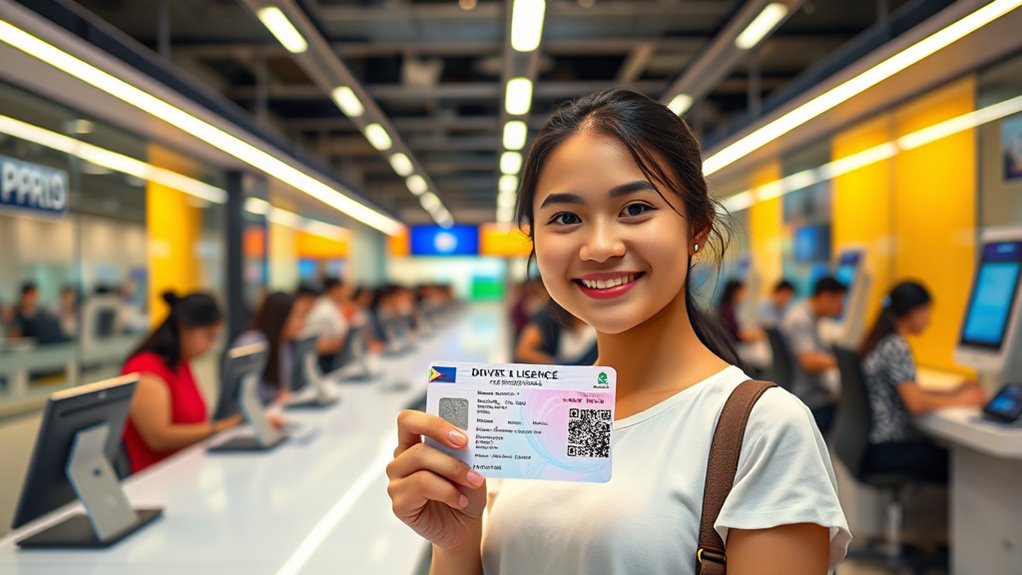

To convert your foreign driver’s license in the Philippines in 2025, you need to visit the Land Transportation Office (LTO) with your valid license, passport, visa, and other necessary documents. Complete the application form, undergo a medical exam, and pay the required fees. The process is straightforward if you prepare everything in advance. If you continue to explore, you’ll find detailed steps to help you navigate the conversion smoothly.
Key Takeaways
- Check if your foreign driver’s license is valid and eligible for conversion under reciprocal agreements in the Philippines.
- Prepare necessary documents: valid foreign license, passport, proof of residence, application form, and medical clearance.
- Visit the LTO or its online platform to submit your application and undergo a medical exam.
- Pay applicable fees and have your photo and biometrics taken at the LTO.
- Await processing; your Philippine driver’s license will be issued within days to weeks once approved.

Thinking of converting your foreign driver’s license to a Philippine license? If you’re planning to stay in the Philippines long-term or want to drive legally here, understanding the process is vital. The conversion process involves specific renewal procedures and requires gathering certain documents to facilitate a smooth transition. Knowing what to expect can save you time and avoid unnecessary trips to licensing centers.
Converting your foreign driver’s license to a Philippine license ensures legal driving and a smooth transition.
The first step is to visit the Land Transportation Office (LTO) or check their official website for the latest updates on conversion policies. In general, you’ll need to prepare your required documents before heading to the LTO. These typically include your valid foreign driver’s license, which must be current and not expired. You’ll also need to present your passport or another valid ID that proves your legal stay in the Philippines, along with a visa or proof of residence. Some countries are part of reciprocal agreements with the Philippines, so it’s worth verifying if your license qualifies for conversion without the need for additional testing.
Once you’ve gathered all required documents, you’ll need to proceed with the renewal procedures. This involves filling out an application form, which is usually available at the LTO office or online. You’ll also undergo a medical exam, which can be done at accredited clinics, to verify you’re fit to drive. After submitting your documents and passing the medical test, your application will be processed. Depending on the location, some LTO offices might require you to pay a fee for the conversion. The fees vary but are generally affordable.
During the renewal procedures, expect to have your photo taken and possibly your fingerprints scanned. These biometric data are part of the process to update your driver’s record in the system. Once everything is completed, you’ll receive a temporary driver’s license or a receipt confirming your application. The actual Philippine driver’s license is often issued within a few days or weeks, depending on the office’s workload. Some offices allow for online tracking of your application status, so keep your reference number handy. Additionally, being aware of vehicle registration requirements can help ensure all related documentation is in order.
Converting your foreign license isn’t complicated if you come prepared. It’s essential to double-check the required documents and follow the renewal procedures correctly. Doing so guarantees you’re complying with local laws and can continue driving legally in the Philippines without interruptions. Whether you’re on a tourist visa or a longer-term stay, converting your license is a straightforward process that helps you stay compliant and safe on the road.
Frequently Asked Questions
What Are the Eligibility Criteria for License Conversion?
To convert your license, you need to meet specific eligibility criteria. You should have a valid driver’s license, a clean driving record, and no pending violations or penalties. Typically, your license must be renewed regularly, and your driving history will be checked. Make sure to provide the necessary documents and pass any required assessments. Staying compliant with these requirements guarantees a smooth conversion process.
How Long Does the Conversion Process Take?
You’ll be amazed at how quickly the license conversion process takes—it’s almost like a blink of an eye! Usually, it can be done in just a few days, especially if you have your driving record and license renewal documents ready. The key is to guarantee all paperwork is complete because delays happen when documents are missing. So, get prepared, and you’ll have your new license faster than you can say “drive”!
Are There Any Fees Involved in Converting My License?
When you convert your driver’s license, you’ll need to pay a license fee and cover conversion costs. These fees vary depending on your license type and the issuing agency. Typically, the costs include processing fees and possibly additional charges for testing or document verification. It’s best to check with the local Land Transportation Office (LTO) for the exact license fee and conversion costs specific to your situation.
Can I Convert a Foreign License Without Taking a Test?
Your question is like asking if you can sail smoothly without a map. In the Philippines, if you have an international driving permit or a valid foreign license, you generally don’t need to take a test to convert it. The process confirms your license’s validity and allows you to drive legally. However, always check with local authorities, as requirements can vary depending on your country of origin and the current regulations.
What Documents Are Required for the Conversion Process?
You’ll need to prepare several documents for the conversion process. Make certain your license’s validity, as expired licenses may not be accepted. You must also provide a valid ID, proof of residency, and your current driver’s license. Additionally, some documents might require notarization to verify their authenticity. Be sure to bring all these, along with recent passport-sized photos, to streamline your conversion. Valid documents and notarization are essential for a smooth process.
Conclusion
So, there you have it—converting your driver’s license in the Philippines in 2025 is as easy as pie, or should I say, as easy as pretending to understand how traffic rules work. Just follow the steps, prepare your documents, and maybe brush up on your patience (or your acting skills). Before you know it, you’ll be cruising around with a shiny new license—proof that you’ve somehow mastered the art of bureaucratic tango. Happy driving!