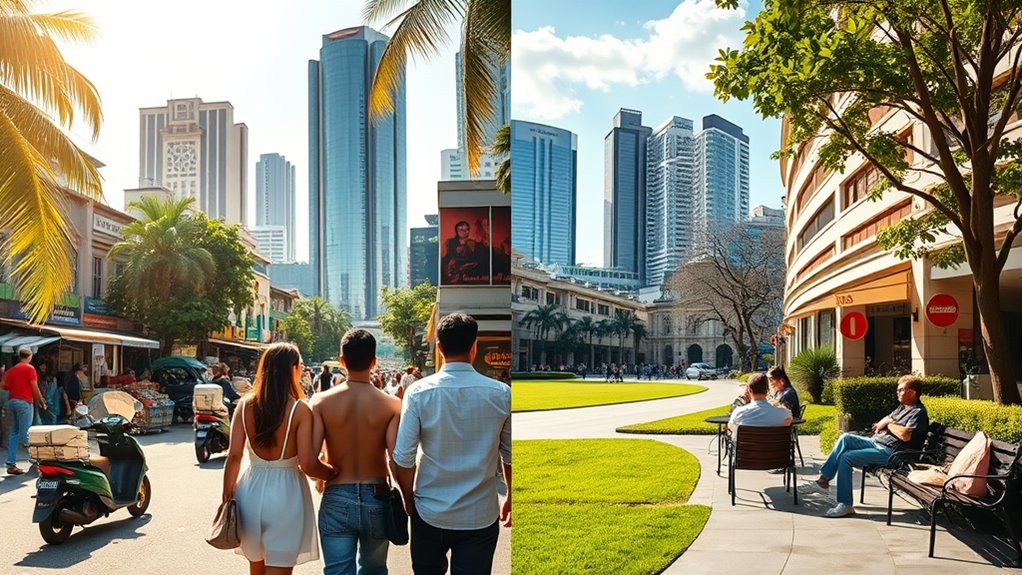

Living in the Philippines offers a vibrant, community-focused lifestyle where social bonds and cultural traditions thrive, making it ideal if you value strong family ties. However, language barriers and infrastructure differences may pose challenges compared to Western countries. You’ll find warmth and lively celebrations but might need patience to adapt to formal social norms. If you want to explore how these factors impact couples, there’s more to uncover about life in the Philippines versus the West.
Key Takeaways
- Philippines offers a warm, community-oriented lifestyle with strong family bonds, while Western countries often emphasize individualism and personal space.
- Cost of living in the Philippines is generally lower, but access to certain services and infrastructure may vary compared to Western nations.
- Cultural norms in the Philippines emphasize respect for elders and social harmony, which may differ from Western values of independence and direct communication.
- Language barriers can pose challenges in the Philippines, whereas English fluency is more widespread in many Western countries, easing daily interactions.
- Climate in the Philippines is tropical and humid, suitable for those who enjoy warm weather, while Western climates vary from temperate to cold, influencing lifestyle preferences.

Deciding where to settle as a couple can considerably impact your lifestyle, and living in the Philippines offers a distinct experience compared to the West. One of the most noticeable differences is the cultural landscape. The Philippines has a vibrant, close-knit community vibe rooted in deep family ties and strong social connections. You’ll find that social gatherings, festivals, and daily interactions are often warmer and more personal than what you might be used to back home. This sense of community can be comforting, but it also means adapting to a different set of social norms and expectations.
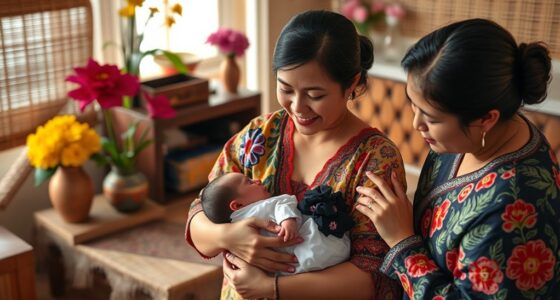
Living in the Philippines means embracing a warm, family-oriented community with vibrant social connections and festive traditions.
Language barriers are another factor to contemplate. While English is widely spoken in the Philippines, especially in urban areas and among younger generations, it’s not always used in everyday conversations outside of the tourist zones or business settings. You might stumble upon local dialects like Tagalog, Cebuano, or Ilocano, which can be challenging if you’re not familiar with them. This can lead to occasional misunderstandings or communication gaps, especially in rural areas where English might not be as prevalent. Learning some basic local phrases can help bridge this gap, but it’s important to recognize that language differences can slow down interactions and require patience from both sides.
Cultural differences also extend to daily routines and societal values. In the Philippines, respect for elders, hierarchical relationships, and community-oriented lifestyles are deeply ingrained. You may find that social etiquette, such as removing shoes before entering a home or using polite language, is more formal than what you’re used to. This is part of the charm but also requires an open mind and willingness to adapt. Additionally, family bonds tend to be stronger, with multi-generational households common. If you’re used to more independence, this might take some getting used to.
Despite these differences, many couples find that embracing the local culture enriches their experience. However, it’s essential to be aware of these cultural differences and language barriers upfront. They can influence your day-to-day interactions, ease of settling in, and overall comfort. Preparation, patience, and a genuine interest in learning about local customs will help you navigate these challenges. Living in the Philippines means immersing yourself in a culture that’s warm, diverse, and vibrant—if you’re willing to adapt, it can become a truly rewarding experience.
Furthermore, understanding the high level of community involvement prevalent in Filipino society can help you better integrate and build meaningful relationships.
Frequently Asked Questions
How Do Healthcare Costs Compare Between the Philippines and Western Countries?
Healthcare costs in the Philippines are generally lower than in Western countries, making healthcare affordability easier for couples on a budget. You can often access quality medical services at a fraction of the price, especially with local clinics. However, it’s wise to have inclusive medical insurance, which helps cover unexpected expenses. This way, you balance affordable care with peace of mind, ensuring you’re protected without overspending.
What Are the Safety Concerns for Couples Living in the Philippines?
Imagine walking through vibrant streets filled with lively chatter and unfamiliar scents. You might face safety concerns like petty theft or managing cultural differences that can cause misunderstandings. Language barriers could make daily communication tricky, increasing the risk of miscommunication. Stay cautious, keep your valuables secure, learn basic local phrases, and respect cultural norms. Being aware and prepared helps you enjoy your Filipino experience safely, together.
How Is the Quality of Education for Expat Children?
You’ll find that the quality of education for expat children varies based on the school they attend. Expat schools generally offer international curricula like the American, British, or Australian, making shifts smoother. However, curriculum differences may affect your child’s learning experience. Some schools may be well-equipped and highly regarded, while others might lack resources. Researching specific institutions helps guarantee your child receives a quality education aligned with your expectations.
What Legal Considerations Should Couples Be Aware of in the Philippines?
You should be aware of legal documentation and visa requirements when living in the Philippines. Make sure your passports are valid and apply for appropriate visas, such as tourist, work, or spouse visas. Keep copies of marriage certificates and other legal documents handy. Stay updated on immigration policies, and consider consulting legal professionals to navigate visa extensions or residency permits smoothly, avoiding any legal issues during your stay.
How Does the Job Market Differ for Foreign Couples?
You’ll find that the job market for foreign couples in the Philippines often favors remote work opportunities, allowing flexibility and better work-life balance. However, cultural adaptation can be a challenge, especially if local workplace norms differ from your home country. Networking and understanding local business etiquette are key. While opportunities may be limited compared to the West, embracing remote work and cultural learning can help you thrive professionally.
Conclusion
Ultimately, choosing between the Philippines and the West depends on your priorities as a couple. Imagine starting a life where you wake up to warm sunshine and friendly smiles, like Mark and Lisa did when they moved to Cebu—finding joy in simple moments. Whether you thrive on vibrant culture or modern conveniences, weigh the pros and cons carefully. Your perfect partnership might just flourish where the environment feels like home, whether that’s across the globe or closer to familiar shores.