When joining a reception toast, avoid skipping local customs like proper eye contact, raising glasses at the right moment, or clinking them loudly if that’s customary. Be mindful of body language, such as not holding glasses improperly or avoiding prolonged stare-downs, and steer clear of jokes or topics that may offend. Learning a simple phrase or gesture shows respect, and observing cues from the host helps you navigate cultural nuances smoothly. Continuing will offer you more tips to blend seamlessly into different cultures.
Key Takeaways
- Follow the host’s lead and wait for their cue before initiating the toast to show respect.
- Avoid making jokes or comments that could be considered controversial or culturally insensitive.
- Learn and correctly pronounce key phrases or toasts in the local language to demonstrate respect.
- Maintain appropriate body language, such as eye contact or avoiding prolonged stare-downs, based on cultural norms.
- Refrain from clinking glasses loudly or excessively, respecting local customs for toasting manners.
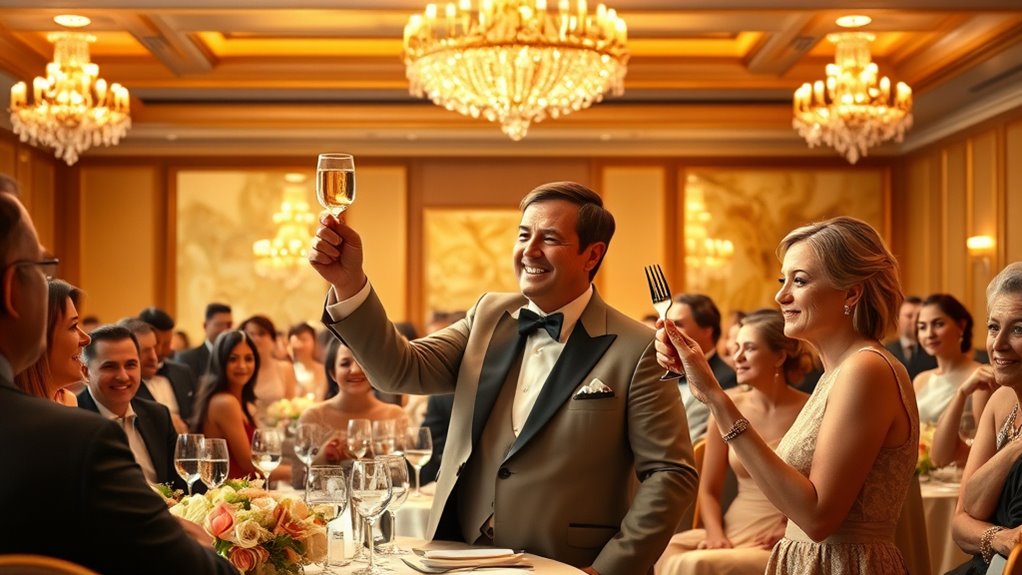
Exploring different cultures can be tricky, especially when it comes to social customs and etiquette. When you’re attending a reception toast, understanding and respecting local customs is key to making a positive impression. Failing to do so can lead to awkward moments or even offending your hosts. One of the most common pitfalls is making etiquette mistakes that clash with the traditions of the place you’re visiting. To navigate this smoothly, it’s essential to do some research beforehand, but even if you’re caught off guard, staying observant and respectful can help you avoid major faux pas.
First, pay attention to how locals handle toasts. In some cultures, raising your glass and making eye contact is expected, while in others, it’s considered inappropriate or even rude. For example, in certain countries, it’s customary to clink glasses loudly, whereas in others, a subtle touch or simply raising your glass suffices. Missing these cues might seem trivial, but it can signal a lack of cultural awareness. Additionally, be mindful of the order in which you toast. In many traditions, the host or the most senior person initiates the toast, and it’s polite to wait for their lead rather than jumping in prematurely. Doing otherwise could be seen as disrespectful or overly informal.
Observe local toasting customs and follow the host’s lead to show respect and cultural awareness.
Another common etiquette mistake involves the content of your toast. In some cultures, humor or jokes are acceptable, but in others, they might be considered inappropriate or disrespectful. Keep your words respectful and positive, avoiding controversial topics or jokes that might not translate well. Also, be aware of the language used. If you’re not fluent, it’s courteous to learn a simple phrase or toast in the local language; this demonstrates effort and respect. Using the wrong phrase or pronunciation can sometimes be seen as dismissive or insincere.
Body language also plays a role. For example, in certain cultures, keeping eye contact during a toast is essential, while in others, it’s better to avoid prolonged stare-downs. Similarly, the way you hold your glass—such as the position of your hand—might vary by tradition. If you’re unsure, mimic what others are doing quietly or follow your host’s lead. Remember, the key is to be observant and adapt accordingly. Additionally, understanding cultural differences in etiquette related to water-related customs can further help you navigate social situations gracefully.
cultural faux pas guide for receptions
As an affiliate, we earn on qualifying purchases.
As an affiliate, we earn on qualifying purchases.
Frequently Asked Questions
What Are Common Cultural Faux Pas During Wedding Toasts?
When giving a wedding toast, you should be aware of common cultural faux pas. You might unknowingly breach historical etiquette by oversharing or making inappropriate jokes. Language sensitivities are vital—avoid slang or humor that could offend. Respect the couple’s cultural background, and keep the tone respectful and inclusive. Being mindful of these factors guarantees your toast is heartfelt, appropriate, and appreciated by all guests.
How Can I Learn About Cultural Customs Before the Reception?
You should start by doing some cultural research on the traditions and customs relevant to the couple’s background. Traditional etiquette varies widely, so understanding these nuances helps you craft a respectful toast. Reach out to the couple or their families for insights, or read reputable sources about their culture. This proactive approach guarantees your speech honors their traditions and avoids unintentional faux pas, making the celebration more meaningful.
What Should I Avoid Saying in a Toast Across Cultures?
When giving a toast across cultures, you should avoid using cross-cultural humor that might offend or be misunderstood. Stick to appropriate language, focusing on positive, inclusive sentiments. Don’t make jokes at others’ expense or reference sensitive topics like religion or politics. Instead, highlight shared values and celebrate the occasion respectfully, ensuring your words resonate well with everyone present. This approach helps you deliver a memorable, culturally sensitive toast.
Are There Specific Gestures to Avoid During a Toast?
Think of gestural etiquette as the silent language of respect you don’t want to muddle. During a toast, avoid overly enthusiastic or pointed gestures that could be misinterpreted. Steer clear of crossing your arms, pointing, or making any hand movements that might seem dismissive or aggressive. Instead, use respectful gestures like a gentle raise of the glass and a warm smile to keep your toast gracious and culturally sensitive.
How Do I Handle Cultural Differences in Alcohol Consumption?
When handling cultural differences in alcohol consumption, you should respect cultural sensitivities and follow alcohol etiquette. Be aware that some cultures might abstain from alcohol or have specific drinking customs. Offer non-alcoholic options and avoid pressuring anyone to drink. Observe and adapt to the host’s cues, showing respect for their traditions. This approach demonstrates your cultural awareness and helps make everyone feel comfortable during the celebration.

Toasts and Tributes Revised and Expanded: A Gentleman's Guide to Personal Correspondence and the Noble Tradition of the Toast (The GentleManners Series)
Hard Cover – Revised and Extended Edition.
As an affiliate, we earn on qualifying purchases.
As an affiliate, we earn on qualifying purchases.
Conclusion
By being mindful of cultural nuances, you’ll gracefully navigate the reception toast without unintended missteps. Approaching traditions with respect and subtlety demonstrates your genuine appreciation for the hosts’ customs. Remember, a touch of tact and a dash of humility go a long way in ensuring your words are warmly received. When in doubt, favor elegance over exuberance—your thoughtful demeanor will speak volumes and leave a lasting positive impression.

shop4ever Around the World Different Languages Slainte Irish Cheers Toast Engraved Heavy Base Prism Shot Glass 2 oz. Ireland Theme
🍀 IRISH-INSPIRED “SLÁINTE” DESIGN – Features the traditional Irish toast “Sláinte” engraved on premium glass, celebrating Ireland’s rich…
As an affiliate, we earn on qualifying purchases.
As an affiliate, we earn on qualifying purchases.
learning local language phrases for toasts
As an affiliate, we earn on qualifying purchases.
As an affiliate, we earn on qualifying purchases.