To blend two cultures in a reception menu, start by selecting signature ingredients, spices, and presentation styles that are emblematic of each tradition. Create fusion dishes by creatively combining flavors, textures, and cooking techniques, ensuring a harmonious balance. Incorporate cultural symbols and motifs into your plating and decor to tell a story. Begin with familiar flavors and gradually introduce more adventurous combinations to engage your guests. Keep exploring for innovative ways to craft a meaningful, seamless culinary experience.
Key Takeaways
- Identify signature ingredients, spices, and cooking styles from both cultures to create authentic fusion dishes.
- Use creative merging techniques that balance flavors, textures, and presentation for seamless integration.
- Incorporate cultural symbols, motifs, and presentation styles to enhance authenticity and storytelling.
- Design a menu flow that gradually introduces guests to more adventurous fusion dishes, building a culinary journey.
- Ensure each dish thoughtfully showcases and respects both cultures, celebrating shared heritage through thoughtful blending.
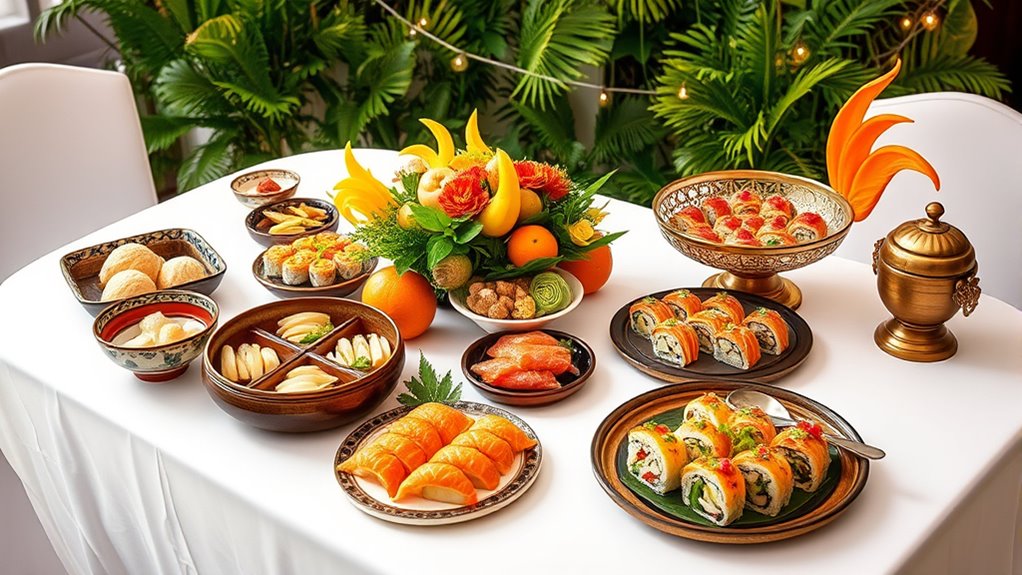
In today’s diverse world, reception menus are increasingly reflecting a blend of cultures to cater to varied tastes and backgrounds. When you’re designing a menu that combines two different culinary traditions, it’s essential to thoughtfully employ fusion techniques. These techniques involve creatively merging ingredients, cooking methods, and presentation styles from each culture to create harmonized dishes that celebrate both heritages. Instead of simply offering separate cuisines side by side, you aim for a seamless integration that surprises and delights your guests.
Start by identifying key elements from each culture—think of signature spices, cooking styles, or iconic ingredients. For example, you might combine Italian pasta with Japanese miso broth, creating a fusion dish that highlights both culinary traditions. Use fusion techniques to balance flavors and textures, ensuring neither culture dominates, but instead complements the other. This approach not only showcases your culinary creativity but also helps guests appreciate the unique qualities of each cuisine within a cohesive menu.
Cultural symbolism plays a crucial role in blending traditions meaningfully. Incorporate symbols, colors, or presentation styles that resonate with both cultures, making your menu more than just a collection of dishes—it becomes a narrative of shared heritage. For instance, garnishing a dish with a symbol or motif important to one culture, while using a presentation style inspired by the other, can deepen guests’ understanding and appreciation. When you thoughtfully integrate these symbols, you’re honoring the significance behind each tradition, creating a respectful and authentic experience.
To successfully blend two cultures, consider the overall flow of your menu. Start with lighter, familiar flavors to ease guests in, then gradually introduce more adventurous fusion dishes. Use storytelling to explain the inspiration behind each dish, highlighting how fusion techniques and cultural symbolism come together. This not only educates your guests but also builds a connection to the culinary journey you’re offering.
Frequently Asked Questions
How Can I Balance Authenticity With Modern Tastes?
You want to balance authenticity with modern tastes, so focus on fusion techniques that honor tradition while appealing to contemporary palates. Use flavor balancing to combine familiar ingredients with innovative twists, creating dishes that respect cultural roots yet feel fresh. Experiment thoughtfully, blending classic flavors with modern presentation, and ask for feedback to guarantee your menu resonates with diverse guests. This approach keeps your reception both authentic and exciting.
What Are Common Cultural Sensitivities to Consider?
You should be aware of cultural sensitivities like avoiding certain foods or symbols that might be considered taboo, as well as language barriers that could lead to misunderstandings. Respect cultural taboos by researching traditions and preferences, and consider using inclusive language or bilingual menus to guarantee everyone feels comfortable. Being attentive to these sensitivities shows respect and helps create a harmonious, welcoming atmosphere for all your guests.
How Do I Accommodate Dietary Restrictions From Both Cultures?
Navigating dietary restrictions demands diligent dedication. You can design a delightful fusion cuisine that respects dietary diversity by offering versatile vegetarian, vegan, gluten-free, and halal options. Communicate clearly with vendors and guests, ensuring everyone’s needs are met. By balancing bold flavors and respecting cultural constraints, you create a welcoming, wonderful menu that honors both cultures, fostering friendliness and flavor for all.
What Presentation Styles Suit a Multicultural Reception?
You should opt for presentation styles that highlight fusion dishes and cultural symbolism, making the menu visually engaging. Use vibrant colors and unique plating techniques to reflect each culture’s identity. Incorporate symbols or decorative elements that represent both traditions, creating a cohesive visual story. This approach celebrates diversity, making guests feel welcomed and intrigued by the blend of cultures, while showcasing the artistry behind each dish.
How Do I Incorporate Traditional Beverages Authentically?
You should explore traditional drink pairing by selecting beverages that hold cultural beverage symbolism, ensuring authenticity. Incorporate these cultural beverages thoughtfully, maybe by offering a signature traditional drink alongside modern options. Share brief stories about each beverage’s significance, helping guests appreciate their roots. This approach creates a meaningful experience, honoring the cultures involved and fostering genuine connection through the authenticity of each traditional drink.
Conclusion
By thoughtfully combining flavors from both cultures, you create a reception menu that’s more than just food—it’s a bridge connecting hearts and traditions. Embrace the dance of ingredients and techniques, like a symphony blending diverse melodies into harmony. Remember, blending cultures isn’t just about mixing dishes; it’s about honoring each story they tell. So, let your menu be a tribute to unity, where every bite celebrates the beautiful mosaic of shared heritage.