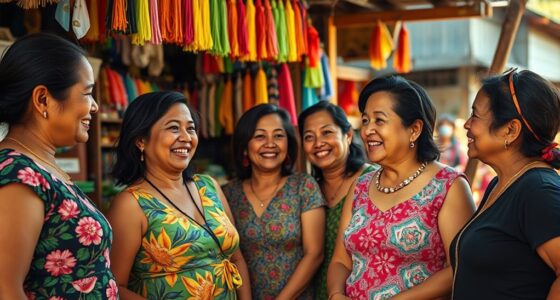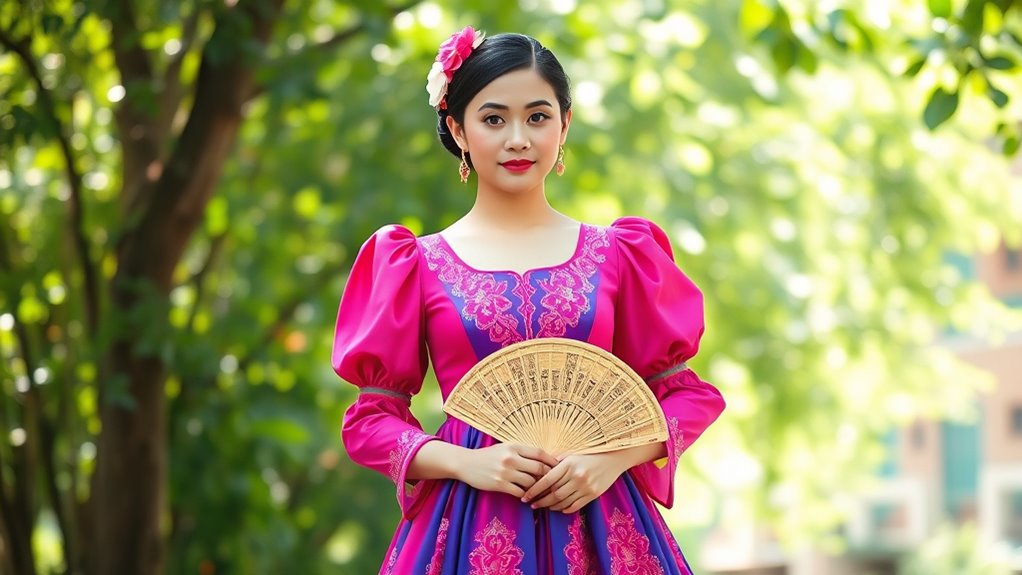

The “Maria Clara” ideal reflects how Filipinas embrace modesty and tradition, shaping their identity and daily life. It emphasizes humility, respect, and restraint through attire like the iconic Maria Clara dress, which embodies elegance without revealing skin. This cultural norm connects Filipinas to their heritage, fostering pride and social harmony. By understanding this ideal, you’ll see how these values keep Filipino culture vibrant and meaningful—if you’re curious, there’s much more to explore.
Key Takeaways
- The Maria Clara dress exemplifies Filipino modesty through its conservative design emphasizing humility and elegance.
- It symbolizes respect for cultural norms, tradition, and the value of social harmony among Filipinas.
- Wearing the Maria Clara reflects pride in cultural heritage and reinforces community identity during special occasions.
- The ideal promotes virtues of restraint, humility, and respect as core components of Filipina identity.
- Traditional attire like the Maria Clara fosters connection to Filipino roots and preserves cultural values across generations.
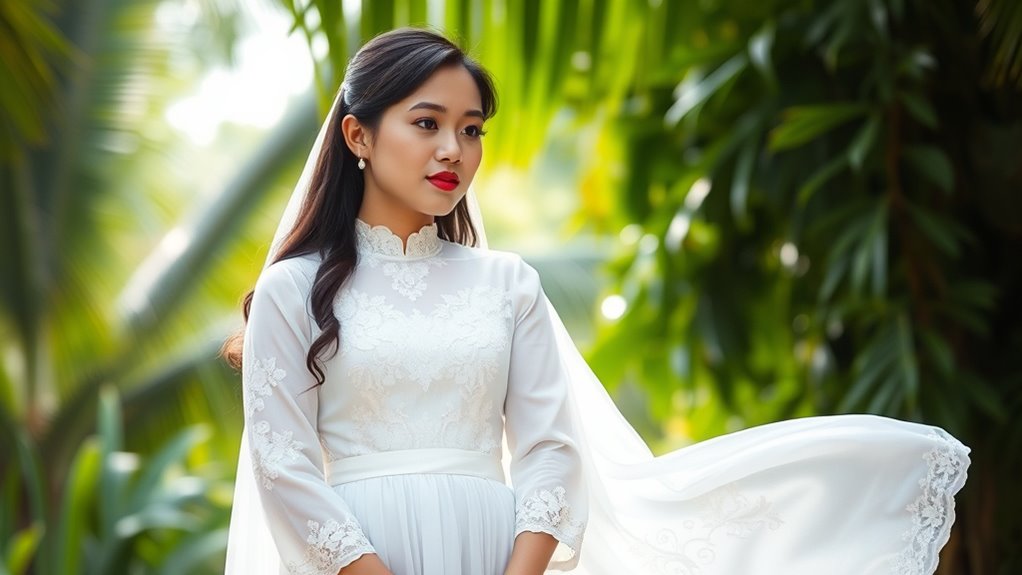
In Filipino culture, modesty and tradition play a vital role in shaping how Filipinas present themselves and interact with others. These values are deeply rooted in history and continue to influence daily life, especially in how women choose to dress and behave. As a Filipina, you likely understand that Filipina values emphasize humility, respect, and restraint. These qualities are often reflected in your choice of cultural attire, which is designed to honor tradition while maintaining a sense of dignity. When you wear traditional clothing, you’re not just dressing up; you’re embodying a cultural identity that values modesty and reverence. The “Maria Clara” dress, for example, is a prime symbol of this ideal. It’s characterized by its modest neckline, long sleeves, and flowing skirt, all crafted to preserve a sense of elegance without revealing too much skin. Wearing this attire is a way of honoring history and expressing respect for cultural norms.
Your choice of cultural attire isn’t just about fashion; it’s a statement of your values. Filipina modesty isn’t solely about covering up—it’s about demonstrating respect for yourself and others. The way you dress communicates your understanding of social harmony and your desire to uphold family and community standards. When you wear a “Maria Clara”-inspired outfit, you’re aligning yourself with a long-standing tradition that emphasizes restraint and humility. This isn’t about outdated customs but about embracing a sense of identity that’s rooted in history. It’s a way of showing that you value your heritage and want to carry that respect forward. Many Filipinas see their cultural attire as a symbol of pride, a visual reminder of their roots, and a way to connect with the generations before them.
Furthermore, the “Maria Clara” dress fosters a sense of community and shared identity among Filipinas. It’s often worn during special occasions, religious festivals, or cultural celebrations, reinforcing the importance of tradition in maintaining social cohesion. This attire also serves as a reminder that modesty and respect are timeless virtues that transcend fashion trends. As a Filipina, you may find that donning traditional clothing helps you feel more connected to your cultural roots and reinforces the values you want to pass on to future generations. Incorporating cultural attire into your wardrobe allows you to express your pride and preserve your heritage in a meaningful way. Ultimately, your choice to embrace Filipina values through cultural attire isn’t just about appearance—it’s about embodying a way of life that respects tradition, promotes humility, and celebrates the unique identity of Filipinas worldwide.
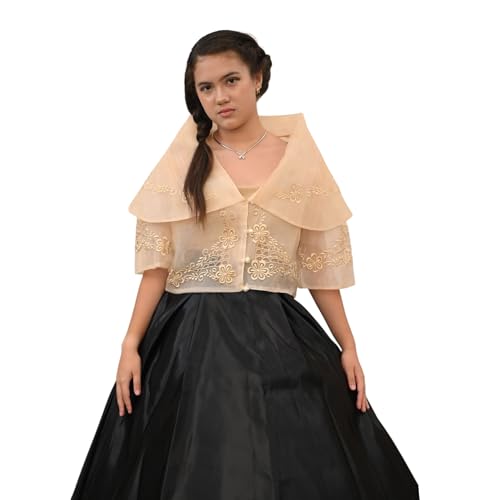
Maria Clara Filipiniana, Beige Embroidered Top, Formal Traditional Filipino Wear (M)
DESIGN: Elegant Filipiniana-inspired top featuring delicate floral embroidery and layered ruffles for a sophisticated traditional look
As an affiliate, we earn on qualifying purchases.
As an affiliate, we earn on qualifying purchases.
Frequently Asked Questions
How Has the “Maria Clara” Ideal Evolved Over Recent Decades?
Over recent decades, the “Maria Clara” ideal has evolved due to cultural shifts and generational differences. You now see many Filipinas embracing modern fashion and expressing individuality, while still respecting tradition. Younger generations blend modesty with personal style, challenging strict stereotypes. This shift reflects a broader acceptance of diverse identities, allowing you to appreciate the balance between tradition and contemporary values without feeling pressured to conform entirely to the classic ideal.
Are There Modern Filipinas Who Embody the “Maria Clara” Traits Today?
Yes, many modern Filipinas embody “Maria Clara” traits today, with around 65% embracing cultural preservation and traditional gender expectations. You’ll see them balancing modesty and grace while maneuvering through contemporary roles. These women often uphold Filipino values, emphasizing respect, humility, and family ties. Their actions show that, despite societal shifts, the “Maria Clara” ideal still influences how Filipinas express their identity and uphold cultural heritage.
How Does the “Maria Clara” Image Influence Filipina Women’s Career Choices?
The “Maria Clara” image can influence your career choices by shaping your responses to cultural expectations, often encouraging you to prioritize family or traditional roles over career ambitions. This may lead to career limitations, as societal pressure might discourage you from pursuing certain professions or leadership roles. Recognizing these influences helps you navigate your aspirations more freely, challenging stereotypes and expanding your opportunities beyond traditional expectations.
What Are the Criticisms Against the “Maria Clara” Stereotype?
You might see the “Maria Clara” stereotype as limiting, but critics argue it reinforces harmful gender stereotypes and unrealistic cultural expectations. While it idealizes modesty and tradition, it can suppress women’s independence and diversity. This stereotype creates a rigid standard that discourages women from pursuing careers or expressing themselves freely. Ultimately, it confines Filipina women, preventing them from embracing their full potential beyond traditional roles.
How Do Filipinas Balance Traditional Modesty With Contemporary Fashion?
You blend traditional modesty with contemporary fashion through cultural adaptation and fashion fusion. You choose modern clothing pieces that respect modesty, like high-neck tops or longer skirts, while incorporating trendy styles and accessories. This way, you honor Filipino traditions without sacrificing personal style. By balancing these elements, you create a unique look that celebrates your cultural roots while embracing current fashion trends.

Modern Mestiza Bolero, Filipiniana, Traditional Filipino Formal Wear (US, Alpha, Large, Regular, Regular, White)
Bolero – Modern Filipiniana
As an affiliate, we earn on qualifying purchases.
As an affiliate, we earn on qualifying purchases.
Conclusion
You might be surprised to learn that over 80% of Filipinas still uphold the Maria Clara ideal, valuing modesty and tradition deeply. This cultural standard shapes how you present yourself and interact with others, preserving a sense of identity and respect. As modern influences grow, understanding and appreciating this tradition becomes even more important. Embracing your roots can empower you to stay true to your values while steering through a changing world.

Middle Eastern Modest Maxi Dress – Muslim Moroccan Kaftan Abaya for Women Gold Embroidered Eid Dress Islamic Traditional Wear (White, M)
ELEGANT DESIGN: This abaya-style dress featuring intricate gold embroidered lace detailing along the centre and edges, with a…
As an affiliate, we earn on qualifying purchases.
As an affiliate, we earn on qualifying purchases.

Coolproud Clara Barton Costume Girls Wartime Nurse Costume 4pcs Includes Dress Apron Hat Armband
Historic Costume Set: Inspire role-playing with this complete nurse costume, featuring a dress, apron, arm band, and cap,…
As an affiliate, we earn on qualifying purchases.
As an affiliate, we earn on qualifying purchases.