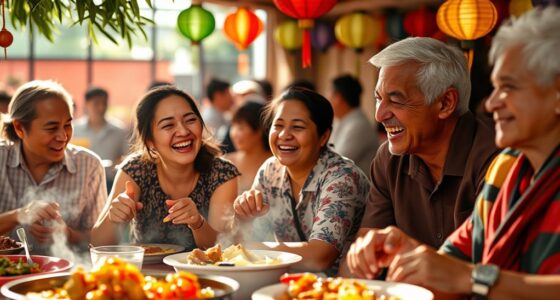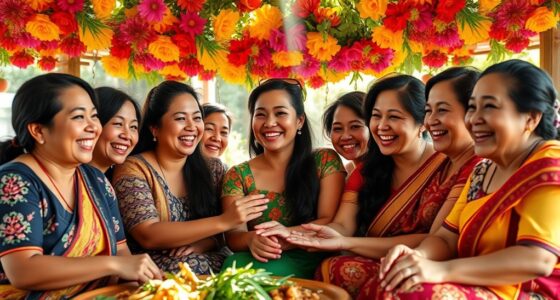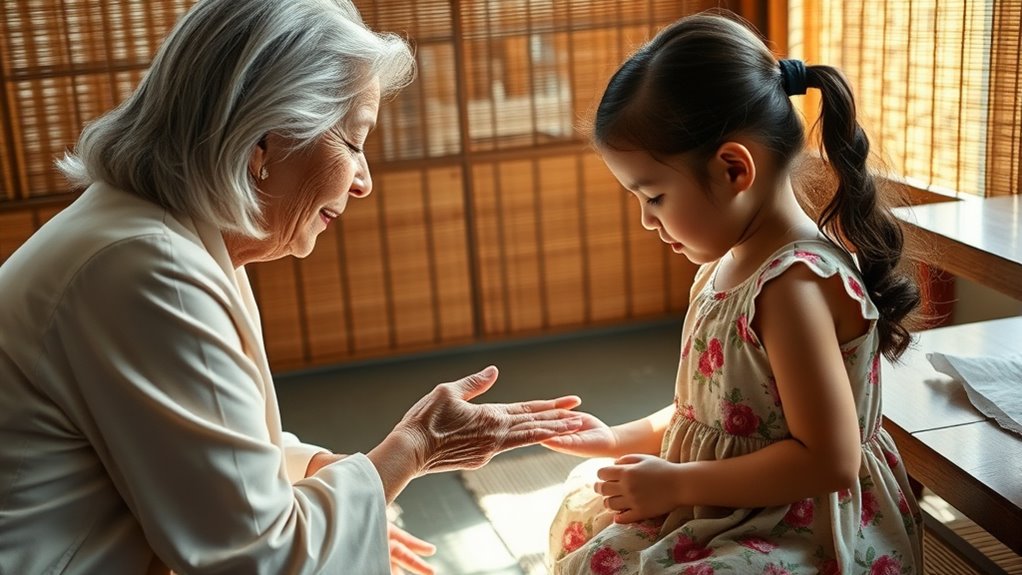

In Filipino families, respect through pagmamano plays a vital role in showing humility, gratitude, and honoring elders. It strengthens family bonds and preserves cultural traditions amid modern changes. This gesture isn’t just a routine but a reflection of deep-rooted values that promote harmony and mutual respect across generations. Understanding its significance helps you appreciate Filipino heritage even more. Continue exploring to see how this tradition continues to shape relationships and cultural identity today.
Key Takeaways
- Pagmamano symbolizes reverence, humility, and gratitude, reinforcing strong family bonds and cultural identity in Filipino families.
- It serves as an active demonstration of respect, acknowledging elders’ wisdom and role within the family hierarchy.
- The gesture preserves cultural heritage, fostering continuity of Filipino traditions across generations.
- Respect through pagmamano promotes harmony, mutual understanding, and reinforces social cohesion within the community.
- Practicing pagmamano helps instill core values of humility and gratitude, vital for maintaining family integrity.
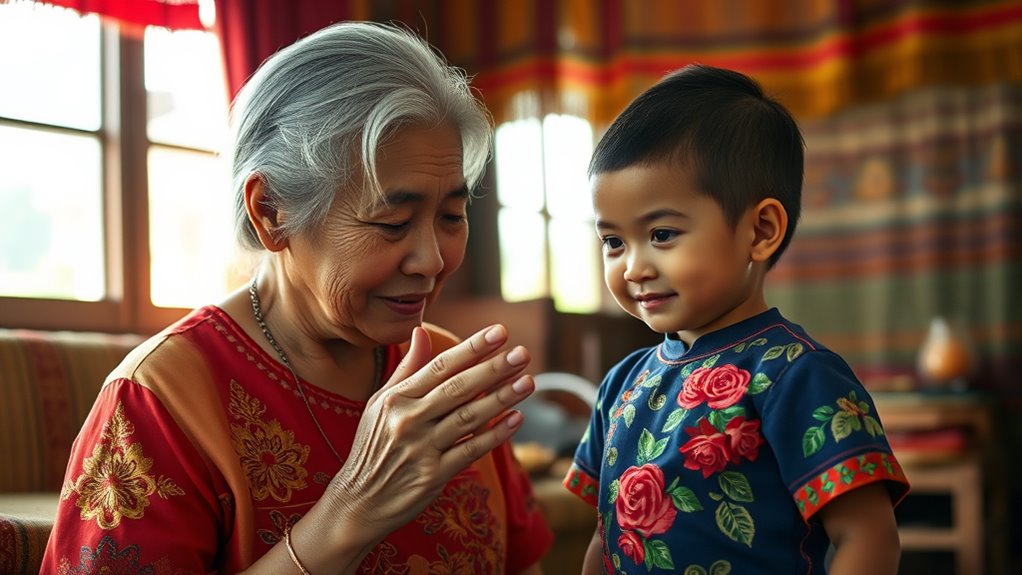
Have you ever wondered why respect holds such an essential place in Filipino families? It’s more than just a custom; it’s a reflection of the deep-rooted cultural significance that shapes Filipino society. Respect, particularly expressed through the act of pagmamano, symbolizes reverence for elders and acknowledges their wisdom and experience. This gesture isn’t just about tradition—it’s about honoring the generations that came before you and maintaining strong family bonds. In Filipino culture, family is the core, and respect acts as the glue that keeps everyone connected. It’s a way of showing gratitude and humility, values that are passed down from parents to children, reinforcing the importance of filial piety.
Respect in Filipino families symbolizes reverence, gratitude, and the enduring bonds that keep generations connected.
You might notice that how respect is expressed can differ across generations. Older family members often see pagmamano as an automatic sign of deference and expect it from younger relatives. For them, this gesture isn’t just a formality but a crucial part of their identity and cultural heritage. Younger generations, on the other hand, may sometimes see it as a tradition that still holds significance but might also interpret it as a symbol of humility and gratitude rather than a strict obligation. This difference highlights the evolving nature of cultural practices and how they adapt to modern times. Despite these generational differences, the core value remains intact: respect is a fundamental way to uphold familial harmony and show appreciation for elders’ sacrifices.
Practicing pagmamano isn’t just about tradition; it’s an active way to demonstrate your values. It reminds you to stay humble and recognize the importance of elders’ guidance. When you approach an elder to perform pagmamano, you acknowledge their role in your life and express your gratitude. It’s a meaningful act that reinforces mutual respect and strengthens family ties. Even as society modernizes and influences from other cultures seep in, many Filipinos still see pagmamano as a crucial part of their identity. It’s a gesture that transcends generations, maintaining its relevance while adapting to contemporary contexts.
Understanding the cultural significance behind respect helps you appreciate why it’s so deeply rooted in Filipino families. It’s not just about formality; it’s about honoring your roots, embracing humility, and fostering a sense of community within your family. Recognizing the differences in how generations view this tradition also allows you to see how culture evolves while still holding onto its essential values. Respect, through acts like pagmamano, remains a powerful way to keep Filipino familial bonds strong and meaningful. Additionally, many families incorporate traditional practices that further reinforce these values and create a sense of continuity across generations.
Frequently Asked Questions
How Has Respect (Pagmamano) Evolved Over Generations in Filipino Families?
Generational shifts and cultural adaptations have transformed how you practice pagmamano today. While older generations emphasized strict respect, younger Filipinos often see it as a gesture of love rather than obligation. You might still do it, but with a more relaxed attitude, blending tradition with modern values. This evolution reflects your family’s ability to honor cultural roots while adapting to contemporary perspectives on respect and familial bonds.
Are There Specific Occasions When Pagmamano Is Particularly Important?
You should perform pagmamano during formal ceremonies and religious occasions, as it shows respect and reverence. When visiting elders’ homes or attending church events, it’s especially important to do so. These moments highlight the cultural significance of pagmamano, reinforcing family bonds and tradition. By doing this, you honor your elders and uphold the Filipino value of respect, especially during meaningful or solemn moments.
How Does Respect Differ Between Urban and Rural Filipino Communities?
In rural communities, respect shines through warm, heartfelt gestures like pagmamano, emphasizing kinship and tradition. Meanwhile, urban etiquette leans toward politeness, with less emphasis on physical gestures and more on words like “po” and “opo.” You notice that in the countryside, respect feels more personal and ingrained, while in the city, it’s often formalized through language and social manners. Both, however, reflect Filipino values deeply rooted in respect.
What Are Common Mistakes to Avoid When Performing Pagmamano?
When performing pagmamano, avoid rushing the gesture or showing impatience, as it can offend cultural sensitivities. Make sure you use proper etiquette by approaching elders respectfully, using both hands, and bowing slightly. Don’t forget to say “Mano po” sincerely. Stepping on their toes or not maintaining eye contact can be seen as disrespectful. Always be attentive to their cues, showing genuine respect and understanding of proper Filipino traditions.
Can Non-Family Members Practice Pagmamano in Filipino Culture?
Yes, non-family members can practice pagmamano in Filipino culture, but you should be mindful of cultural boundaries and the context. In modern practices, many Filipinos extend respect to teachers, elders, or community leaders through pagmamano, showing courtesy and humility. However, always guarantee your gesture is appropriate and welcomed, as cultural norms can vary. Respect and sensitivity help maintain genuine connections while honoring traditions.
Conclusion
As you extend your hand in pagmamano, you’re passing down a seed of respect that blooms into a tree of trust and love. This simple gesture is the bridge that connects generations, its roots deep in tradition, its branches reaching toward understanding. By honoring your elders, you nurture a family garden where kindness and humility flourish. Remember, each act of respect is a silent song, echoing through time, holding your family’s spirit strong and alive.