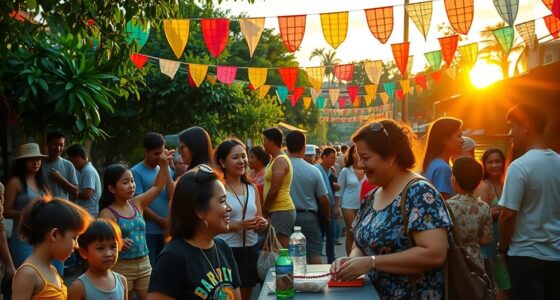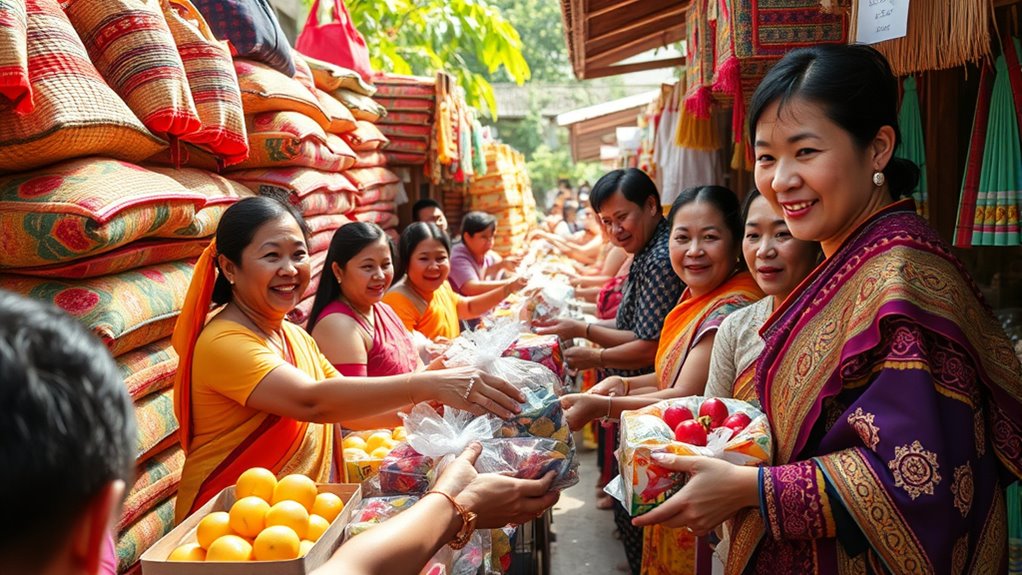

In pasalubong politics, politicians give gifts to constituents to build support and strengthen bonds, often reflecting local customs and regional pride. Wealthier areas tend to receive more elaborate presents, while rural regions might get simpler ones, highlighting regional disparities. These gifts are more than tokens—they symbolize gratitude, loyalty, and cultural identity. Understanding who gets what helps reveal underlying political strategies and regional inequalities. Keep exploring to learn how this tradition influences broader social and political dynamics.
Key Takeaways
- Politicians give region-specific gifts to show gratitude, reinforce cultural ties, and gain voter loyalty during pasalubong politics.
- Wealthier areas often receive more elaborate gifts, creating regional disparities and perceptions of favoritism.
- Gifts reflect local customs and products, making them culturally meaningful and strengthening regional pride.
- Distribution patterns are influenced by socio-economic factors, impacting perceptions of fairness and political influence.
- Pasalubong serves as both a cultural tradition and a strategic tool to solidify political relationships and loyalty.

Pasalubong Politics refers to the practice of politicians giving gifts or souvenirs to constituents as a way to garner support or maintain influence. These gestures are more than just tokens; they carry deep cultural significance that resonates within local traditions. In the Philippines, pasalubong, or hometown souvenirs, symbolize gratitude, respect, and a sense of community. Politicians leverage this cultural tradition to forge stronger bonds with voters, knowing that small tokens can evoke feelings of appreciation and loyalty. However, it’s important to recognize that the impact of pasalubong politics isn’t felt equally across all regions. Regional disparities play a significant role in how these gifts are distributed and received. In rural areas, where access to resources and social services might be limited, a well-timed gift can be a powerful gesture that influences voting behavior. Conversely, in urban centers, where constituents are accustomed to a more transactional political environment, the same gesture might be viewed as a strategic move rather than genuine concern. These disparities highlight how cultural expectations and socio-economic contexts shape the effectiveness of pasalubong politics.
You might notice that politicians often tailor their gifts to reflect local customs and products, reinforcing cultural identity and regional pride. For example, a politician visiting a province known for its handicrafts might bring locally made items, emphasizing regional uniqueness. This not only appeals to the emotional aspect of cultural significance but also demonstrates respect for local traditions, making the gesture more meaningful. But while these gifts can foster goodwill, they also raise questions about fairness. Regions with more resources or wealthier communities may receive more elaborate pasalubong, widening the gap between affluent and underserved areas. This imbalance can perpetuate regional disparities, where some communities feel overlooked or undervalued, simply because they lack the same access or influence.
Additionally, understanding how creativity can be cultivated through consistent practice helps reveal how political strategies like pasalubong politics are often rooted in cultural traditions that are reinforced over time. As a voter or observer, it’s vital to understand that pasalubong politics taps into cultural values, but it can also reinforce existing inequalities. Politicians use gifts not just to thank constituents but to solidify loyalty, often knowing that what they give can influence future elections. The strategic distribution of pasalubong underscores how deeply cultural significance intertwines with political power, especially in a country marked by regional disparities. Recognizing this dynamic helps you see beyond the surface—understanding that these gestures are about more than just tokens; they’re about cultural identity, regional pride, and the ongoing quest for influence within a diverse nation.
Frequently Asked Questions
How Does Pasalubong Influence Local Political Campaigns?
You should recognize that pasalubong plays a significant role in local campaign strategies by fostering voter influence. Candidates often use it to build rapport and show appreciation, which strengthens community ties. This form of gift-giving can sway voters’ opinions and loyalty, making it a subtle yet powerful tool in campaign strategy. As a result, pasalubong helps candidates gain support and secure votes more effectively.
Are There Legal Restrictions on Pasalubong Distribution?
Imagine you’re giving pasalubong to friends during an election campaign. You should know there are legal boundaries that restrict excessive or inappropriate gifts to prevent undue influence. Regulatory enforcement aims to make certain of fair practices, but enforcement varies. For example, some candidates face scrutiny for giving expensive pasalubong, highlighting the importance of understanding legal limits. Always stay within legal boundaries to avoid penalties and maintain transparency.
How Do Recipients Perceive Pasalubong as Political Currency?
You see that recipients often view pasalubong as more than just a gift; it’s a symbol of social standing and influence. When you give or receive pasalubong, it’s a form of gift exchange that can subtly reinforce status or political ties. People perceive it as political currency because it demonstrates generosity, loyalty, or connection, shaping social dynamics and trust within communities.
What Cultural Significance Does Pasalubong Hold Beyond Politics?
You might think pasalubong is just a token, but it’s actually a rich part of cultural traditions that deepen emotional connections. It’s a way to show thoughtfulness and maintain bonds, transcending politics and material exchanges. The act of giving reflects respect, gratitude, and love, making it more than mere tradition—it’s a heartfelt gesture that keeps relationships alive. So, behind the political game, pasalubong remains a symbol of genuine connection.
How Has Pasalubong Politics Evolved Over Recent Decades?
You’ll notice that pasalubong politics has evolved as traditions adapt to modern times. Changing recipient expectations influence who receives gifts and what they value. Over recent decades, the practice has shifted from purely cultural exchanges to strategic gestures, often reflecting social or political motives. This evolution of traditions highlights how societal values, economic factors, and personal relationships shape pasalubong practices today, making it a dynamic aspect of Filipino culture.
Conclusion
Pasalubong politics shapes the landscape of influence, carving out spaces where favors flow like rivers converging. As you watch these exchanges, remember they’re not just gifts—they’re seeds of power, planted deep in the soil of loyalty and opportunity. When you understand who gets what and why, you see the true map of politics unfolding before your eyes—an intricate dance of giving and taking, as inevitable as the tide’s relentless pull.