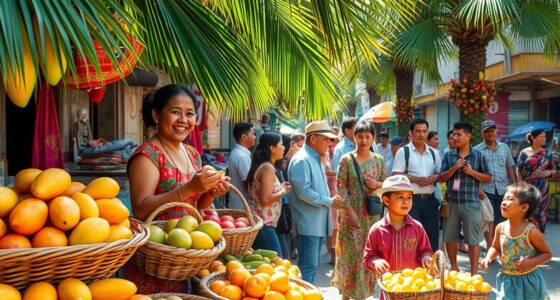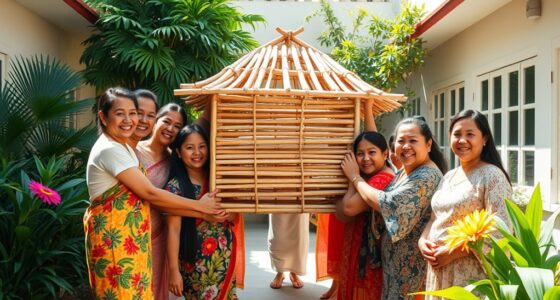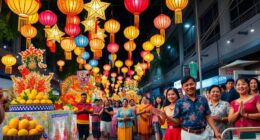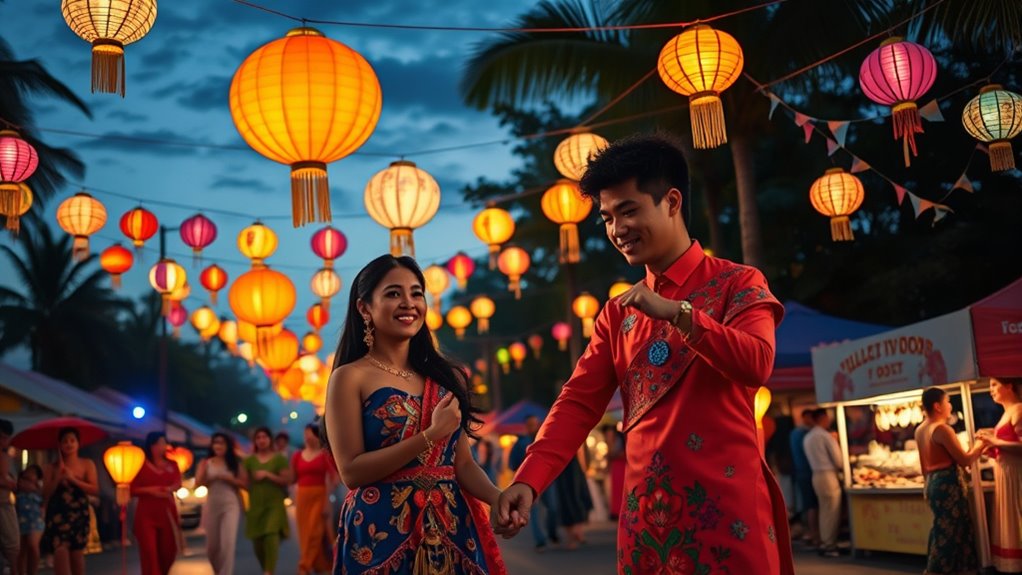

When you celebrate with your Filipina partner, you’ll experience vibrant festivals filled with colorful costumes, delicious traditional foods like lechon and pancit, and lively street dances that showcase Filipino culture. These celebrations highlight community spirit, family bonds, and deep-rooted traditions that emphasize love and resilience. You’ll witness rich customs preserved through traditional attire and rituals, creating unforgettable memories. Stay with us to discover more about the exciting and meaningful festivities you can enjoy together.
Key Takeaways
- Participate in lively festivals like Sinulog, Ati-Atihan, and Pahiyas, showcasing vibrant costumes and traditional dances.
- Enjoy Filipino holiday traditions such as Christmas, New Year, and Holy Week, emphasizing family gatherings and cultural rituals.
- Experience traditional foods like lechon, pancit, and bibingka during celebrations that symbolize unity and prosperity.
- Dress in colorful, indigenous-inspired costumes that honor Filipino heritage and showcase local craftsmanship.
- Engage in storytelling and community activities that preserve cultural identity and deepen your connection with Filipino roots.
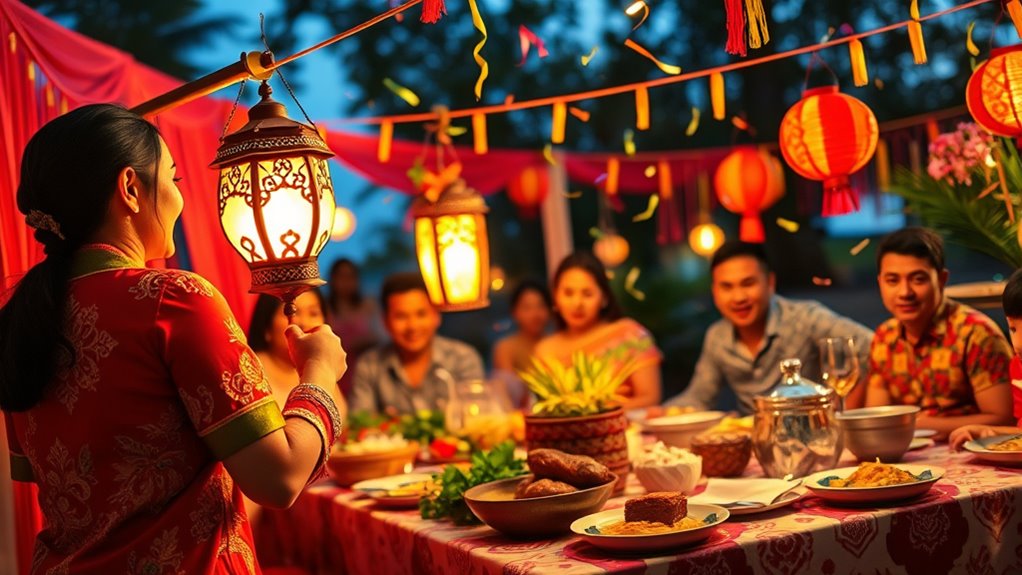
Have you ever wondered how Filipinos celebrate their rich culture and traditions throughout the year? When you join a Filipino celebration, you’ll quickly notice the lively atmosphere filled with vibrant sights, sounds, and flavors. These festivities aren’t just about having fun; they’re a reflection of deep-rooted history and community spirit. One of the first things that will catch your attention is the array of traditional foods served during these occasions. Filipino celebrations are renowned for their delicious dishes—savoring lechon (roast pig), pancit (noodles), and bibingka (rice cake) will give you a taste of the country’s culinary heritage. These foods are more than just nourishment; they symbolize unity, prosperity, and gratitude. You’ll see families and neighbors coming together to prepare these dishes, sharing stories and laughter over meals that tie everyone closer.
Alongside the food, you’ll observe the colorful festival costumes that are a highlight of many Filipino festivities. These costumes are more than just clothing—they’re expressions of cultural pride. During events like the Ati-Atihan, Dinagyang, or Panagbenga, locals wear intricate, often handmade attire that features bold colors, indigenous patterns, and decorative accessories. The costumes often incorporate traditional elements like tribal motifs, feathers, and beads, representing the rich history of indigenous Filipino tribes. When you see participants dancing in these elaborate outfits, it’s impossible not to be drawn into the energy and meaning behind the attire. They’re designed to honor ancestors, celebrate local heritage, and showcase artistic craftsmanship. Your Filipina partner will likely explain the significance of these costumes, sharing stories of identity and tradition that you might not find in textbooks. Additionally, these celebrations often emphasize cultural preservation, helping to keep traditional arts and practices alive for future generations.
Participating in or simply observing these celebrations will give you a deeper appreciation of Filipino culture. Everything—from the mouthwatering traditional foods to the eye-catching festival costumes—serves as a reminder of the Philippines’ vibrant history and communal values. These festivities are more than just events; they’re expressions of love, pride, and resilience. As you immerse yourself in these traditions, you’ll realize that Filipino celebrations are about connection—between generations, communities, and cultural roots. Whether you’re dancing at a street festival or enjoying a family feast, you’ll experience firsthand how Filipinos honor their past while celebrating life in the present.
Frequently Asked Questions
How Do Filipinos Typically Prepare for Christmas Celebrations?
You typically prepare for Christmas by decorating your home with colorful lanterns and lights, and playing Christmas carols to set the festive mood. Filipinos also engage in gift-giving traditions, exchanging presents with family and friends. You might prepare special foods like ham and queso de bola, and attend Simbang Gabi, early morning church prayers, to celebrate the season’s spiritual significance. These customs create a joyful, communal atmosphere during Christmas.
What Are Traditional Foods Served During Filipino New Year?
During Filipino New Year, you’ll enjoy a festive spread featuring traditional foods like sticky rice cakes (biko), pancit, and ham, which are central to Filipino culinary traditions. You’ll also find round fruits symbolizing prosperity and lucky foods such as noodles for long life. These New Year feast foods are meant to bring good fortune, health, and abundance, making the celebration vibrant and meaningful for everyone.
How Is a Filipino Wedding Celebration Different From Others?
You might think all weddings are the same, but Filipino weddings stand out with their lively Filipino wedding customs, vibrant traditions, and the significance of family. Expect traditional wedding attire like barong and terno, symbolizing respect and elegance. The celebration often lasts longer, filled with joyful music and rituals like the money dance. It’s an unforgettable blend of culture, love, and community that’s uniquely Filipino — and undeniably special.
What Are Popular Regional Festivals in the Philippines?
You’ll find that popular regional festivals in the Philippines showcase vibrant local culture through energetic regional dance and colorful displays of local crafts. For example, the Ati-Atihan in Aklan features lively street dances and intricate tribal masks, while the Panagbenga Festival in Baguio highlights floral floats and traditional performances. These festivals celebrate regional heritage, allowing you to immerse yourself in the country’s diverse traditions and craftsmanship firsthand.
How Do Filipinos Celebrate Their Independence Day?
On Independence Day, you’ll witness the most incredible Filipino street parties that light up the whole nation! Streets burst into color with flags waving everywhere, and you’ll be swept up in traditional dance performances that seem to dance right into your soul. Filipinos celebrate with pride and joy, honoring their freedom through lively parades, patriotic music, and heartfelt ceremonies. It’s a day where everyone feels united and free, truly unforgettable!
Conclusion
Embracing Filipino celebrations with your partner means immersing yourself in a vibrant world of tradition, joy, and unity. From colorful fiestas to heartfelt family gatherings, you’ll create memories that feel as timeless as a vintage jeepney ride through bustling streets. These holidays offer a chance to connect deeply with her culture, making every moment feel like a scene from a classic film. So, plunge into and let the festive spirit turn your love story into a beautiful, everlasting chapter.