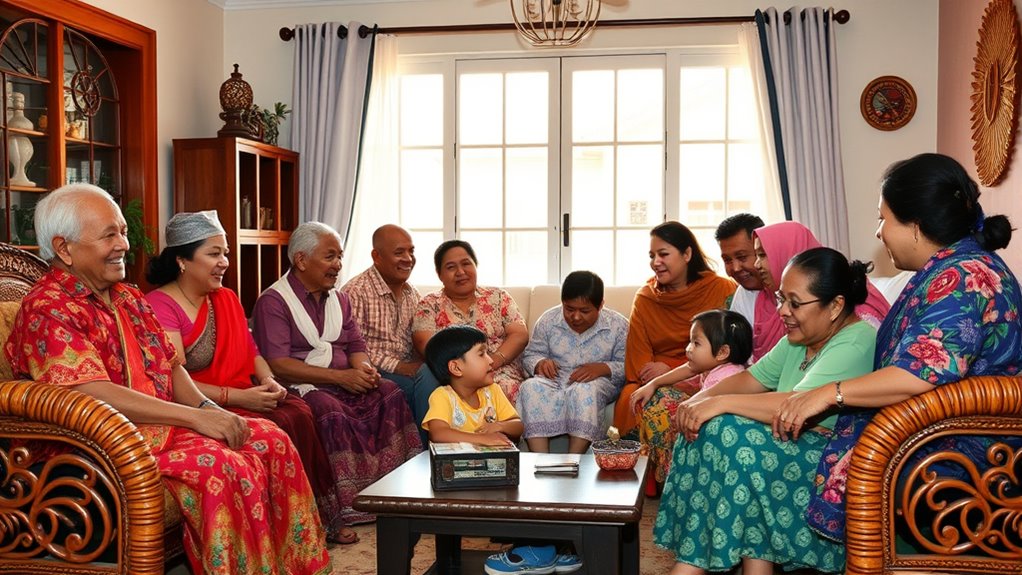

In Filipino life, your extended family, especially in-laws and relatives, deeply influence your marriage choices and daily routines. They often share strong opinions on partner selection and household responsibilities, emphasizing respect and cooperation. Living with them means balancing family expectations with your personal needs, shaping everyday chores and interactions. The bond with your relatives fosters unity and support, making family ties integral to your life. If you keep exploring, you’ll discover how these dynamics strengthen cultural values and connection.
Key Takeaways
- In Filipino culture, extended family significantly influences marriage decisions and household roles, emphasizing family cohesion and shared responsibilities.
- In-laws often participate actively in household chores, decision-making, and maintaining cultural traditions within the family unit.
- Respect and patience are vital in navigating family dynamics, balancing independence with honoring elders’ expectations.
- Family members collaborate on daily routines, fostering unity through chores, caregiving, and mutual support.
- Strong family bonds provide emotional support, cultural continuity, and a sense of belonging, shaping personal and relational life.
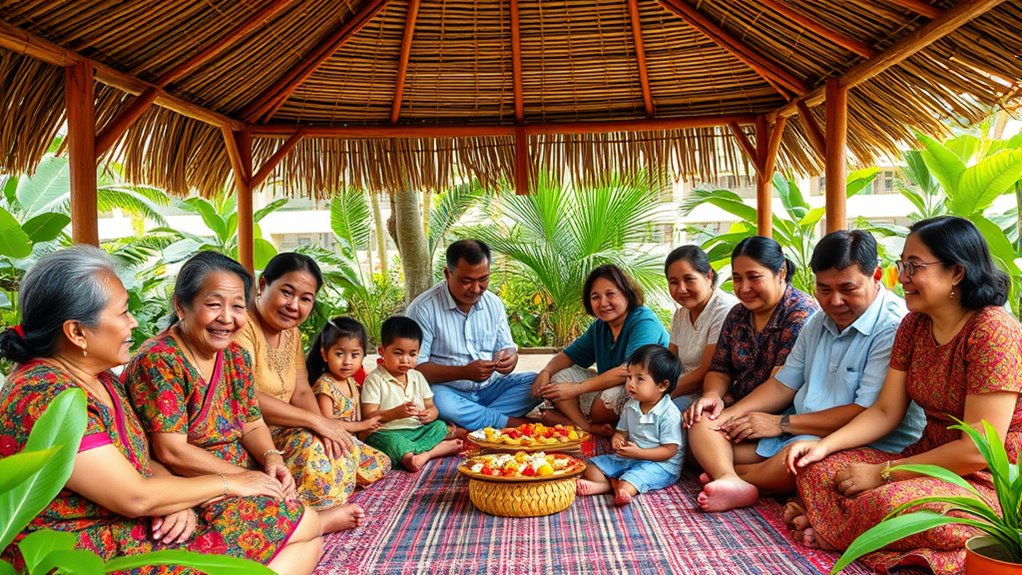
Extended family dynamics shape much of our social and emotional lives, often influencing decisions, traditions, and support systems. When you’re part of a Filipino family, these dynamics become even more central, especially regarding marriage expectations and household responsibilities. You might find that your choices about marriage aren’t just about your preferences but also about fulfilling your family’s hopes and cultural norms. Your relatives may have strong opinions on when you should marry, who you should marry, or how your relationship should look. These expectations can sometimes feel overwhelming, but they also serve as a guide rooted in tradition and shared values. You’re encouraged to honor your family’s wishes while balancing your personal desires, which can be a delicate act.
Family expectations influence your marriage choices, balancing tradition with personal desires in Filipino culture.
In Filipino culture, marriage isn’t just about two individuals coming together; it’s seen as forming a union that extends to the entire family. Your in-laws may have specific ideas about your role within the household, expecting you to contribute to household responsibilities from early on. These responsibilities often include cooking, cleaning, and caring for elders, emphasizing a collective effort to maintain harmony and respect within the home. You might feel a sense of obligation to uphold these traditions, even if they differ from your previous experiences or personal preferences. This involvement in household chores isn’t just about practicality; it’s a way of demonstrating your commitment and respect for family bonds.
Living with or near extended family means your daily routines are intertwined with those of your relatives. Household responsibilities often fall into a shared system where everyone has a role, fostering a sense of unity. You may be tasked with certain chores based on age or gender, which can sometimes lead to disagreements or misunderstandings, but ultimately, it’s about maintaining the household and honoring familial expectations. These shared responsibilities reinforce a sense of belonging and reinforce the importance of collective effort. Recognizing the importance of interdependence and family cohesion can help you navigate these shared duties more smoothly.
Navigating these family dynamics requires patience and open communication. You learn to negotiate your independence while respecting your elders’ wishes. Your family’s expectations about marriage and household responsibilities shape your choices but also offer a framework of support and cultural continuity. Embracing this environment means understanding that your decisions are part of a larger story—one that values connection, duty, and tradition. While it can be challenging at times, it also provides a deep sense of belonging and purpose rooted in Filipino family values.
Frequently Asked Questions
How Do Filipino Families Handle Conflicts With In-Laws?
You handle conflicts with in-laws through cultural negotiation and conflict resolution, often prioritizing harmony and respect. You listen carefully to their concerns, communicate openly, and seek compromises that honor Filipino values. You may involve elders or trusted family members to mediate, ensuring everyone feels heard. By maintaining politeness and understanding, you resolve disagreements without damaging relationships, preserving family unity and demonstrating the importance of respect in Filipino culture.
What Are Common Expectations for In-Law Relationships in the Philippines?
In Filipino culture, in-law relationships are like a delicate dance, guided by deep-rooted norms. You’re expected to show respect, uphold familial obligations, and foster harmony. Cultural norms emphasize close ties and mutual support, so maintaining positive interactions is essential. You should honor elders and participate actively in family events. By embracing these expectations, you strengthen bonds and honor the rich tradition of Filipino family life.
How Does Extended Family Influence Filipino Wedding Traditions?
You’ll notice that extended family influences Filipino wedding traditions through cultural rituals that emphasize family unity and respect for elders. Family hierarchy plays a vital role, with elders often leading or blessing the ceremony. You might participate in rituals like the “money dance” or “veil and cord” ceremonies, which symbolize the couple’s bond with their families. These traditions reinforce the importance of family ties and collective celebration in Filipino culture.
What Role Do Relatives Play in Filipino Child-Rearing?
Relatives play a vital role in Filipino child-rearing by providing support and guidance. You’ll find that their involvement offers emotional comfort and practical help, whether it’s caring for the child or sharing parenting advice. You’re encouraged to involve family members in daily routines and decisions, creating a strong support network. This collective approach helps nurture well-rounded children and reinforces family bonds through shared responsibilities and love.
How Do Filipino Families Manage Financial Support Among Relatives?
Did you know that over 80% of Filipino families rely on financial assistance from relatives? You manage this by prioritizing family obligations, often pooling resources or providing support during emergencies. You see it as a duty to help each other, so financial support flows smoothly within the family. This collective approach strengthens bonds and guarantees everyone’s needs are met, reflecting the deep sense of community that defines Filipino family life.
Conclusion
As you navigate Filipino family life, you might find it funny how your in-laws become like your own family overnight. Coincidentally, just when you think you’ve understood the dynamics, a surprise gathering or shared story reminds you how interconnected everyone truly is. Embracing these relationships, with all their quirks, makes you realize that family isn’t just about blood—it’s about love, acceptance, and those unexpected moments that bring everyone closer together.