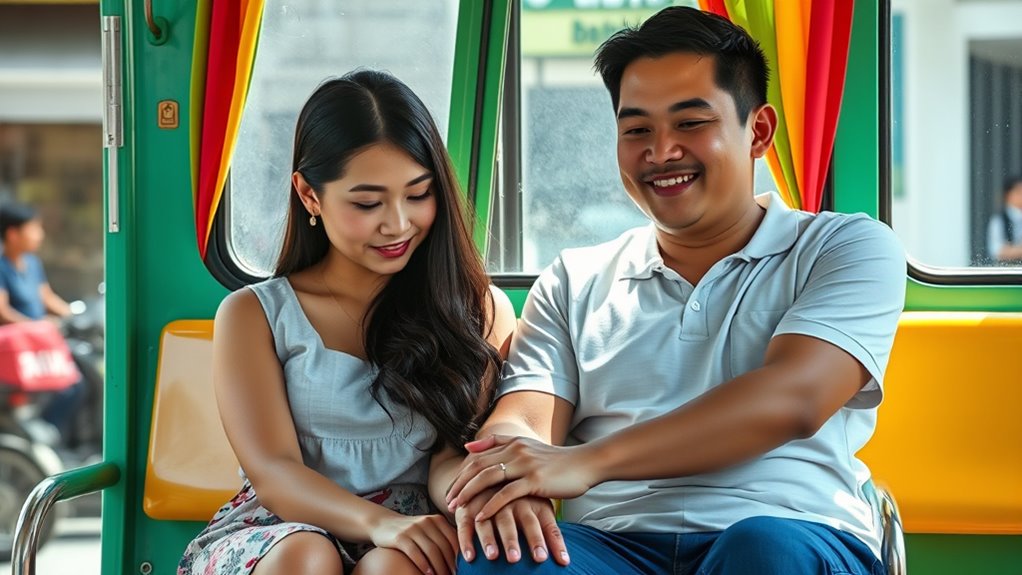

Filipinas often blend modesty with warmth, making their public displays of affection typically subtle and reserved. Due to cultural norms emphasizing decorum and respect, they tend to shy away from openly showing love in public, preferring private moments for more expressive affection. However, personal comfort levels vary, and some may be more open than others. If you stay tuned, you’ll discover how cultural influences shape their unique ways of expressing love and connection.
Key Takeaways
- Filipinas generally exhibit modesty, often making public displays of affection subtle or reserved due to cultural norms.
- Comfort with public affection varies; some Filipinas are shy, while others may be more open with close partners.
- Cultural expectations prioritize decorum, leading many Filipinas to prefer private expressions of love over public displays.
- Respecting individual boundaries is essential, as personal comfort levels with PDA differ among Filipinas.
- Overall, Filipinas’ behavior regarding PDA is shaped by cultural influences, balancing shyness and affection based on context and personal preference.

Public displays of affection (PDA) can evoke a wide range of reactions, depending on where and how they’re expressed. When it comes to Filipinas, understanding the cultural perceptions surrounding PDA is essential. In the Philippines, a chiefly conservative society, showing affection in public is often viewed through the lens of tradition and modesty. Many Filipinas may feel hesitant or shy about openly demonstrating their love in public spaces, especially in rural areas or among older generations. This isn’t necessarily a sign of a lack of affection but more a reflection of deeply ingrained cultural norms that prioritize respect and decorum. As someone observing or engaging with Filipino women, it’s important to recognize that their comfort levels with PDA are shaped by these cultural perceptions, which often emphasize restraint and discretion. Respecting personal boundaries is crucial; what might seem like an innocent gesture elsewhere could be considered inappropriate or overly intimate in the Filipino context.
However, this doesn’t mean Filipinas are inherently shy or less affectionate. Many are deeply caring and expressive within the comfort of private settings or among close friends and family. Their display of affection tends to be more subtle and reserved publicly, but that doesn’t diminish the warmth and sincerity behind their gestures. When you’re in a relationship with a Filipina, you’ll often find that her expressions of love are sincere but measured, adhering to societal expectations. It’s important to approach this with understanding and patience, recognizing that her boundaries are shaped by cultural perceptions rather than personal disinterest. Additionally, cultural norms influence how affection is expressed and perceived, which highlights the importance of sensitivity and awareness.
Furthermore, personal boundaries vary from person to person, even within the same cultural environment. Some Filipinas may feel comfortable holding hands or exchanging quick kisses in public, while others prefer to keep such gestures private. This variation is normal and should be respected. As someone interested in Filipino culture and relationships, you’ll find that communication about comfort levels and boundaries is key. By being mindful of these differences and respecting her pace, you foster trust and understanding. Ultimately, acknowledging the influence of cultural perceptions on public behavior allows you to appreciate her affection in a way that’s respectful and genuine. Whether she’s shy or affectionate in public, it’s her personal boundaries and cultural context that define her comfort level—and recognizing this makes your connection all the more meaningful.
Frequently Asked Questions
Do Filipinas Show PDA More in Private or Public Settings?
You’ll notice Filipinas are more comfortable showing PDA in private settings rather than public, due to cultural norms and respect for personal boundaries. In public, they tend to be more reserved, often avoiding overt displays of affection out of politeness and tradition. However, in private, you’ll see them express their affection freely, reflecting warmth and closeness without concern for societal judgment.
How Does Culture Influence Filipinas’ Comfort With PDA?
Cultural norms, personal boundaries, and societal expectations shape how Filipinas feel about PDA. You’ll find that they’re often guided by respect and modesty, which influence their comfort levels. While some may be affectionate in private, they might hesitate in public out of respect for tradition and social harmony. Their openness varies based on individual personalities and the context, but generally, cultural influences play a significant role in their comfort with PDA.
Are There Regional Differences in PDA Among Filipinas?
Yes, there are regional differences in PDA among Filipinas. In areas with strong conservative values, like rural regions, you’ll notice more reserved behavior due to local customs and cultural variations. Conversely, in urban centers, people tend to be more open and expressive with public affection. You should consider these regional customs to understand how Filipinas might display affection, as cultural variations profoundly influence their comfort level with PDA.
How Do Age and Social Status Affect PDA Behaviors?
Like a river flowing steadily, age and social status shape how Filipinas express PDA. Older generations often follow conservative social norms, making them less open about public affection. Younger women, however, tend to be more relaxed, embracing more outward displays with their partners. Social status also influences behavior; those from traditional backgrounds may shy away from PDA, while modern perspectives encourage more affectionate gestures in public spaces.
Is PDA More Accepted Among Filipinas in Urban or Rural Areas?
You’ll find PDA more accepted among Filipinas in urban areas, where modern cultural norms influence behavior. Urban settings tend to be more open to public displays of affection, reflecting greater exposure to diverse influences. Conversely, rural areas often hold traditional values, making PDA less common and more restrained. So, if you’re in a city, you might notice more affectionate gestures, but in the countryside, people usually keep things more discreet.
Conclusion
So, next time you see a Filipina shyly clutching her partner’s hand, remember—she’s just playing hard to get, right? Or maybe she’s secretly an affectionate ninja, mastering the art of subtle love. Whether shy or bold, one thing’s for sure: Filipinas know how to keep the mystery alive. So, don’t rush her—she might just surprise you with a public display of affection when you least expect it. Or not. Either way, love’s a beautiful game.