

Relationship communication tools come in several formats — workbooks, card decks, and skill-based guides — and the right one depends on whether you want structured exercises, quick daily prompts, or a framework for changing how you talk. Nonviolent Communication: A Language of Life earns the best overall spot for its widely respected method that reshapes everyday conversations, not just romantic ones. Couples Communication Workbook: 20 Minutes a Day for 12 Days stands out for couples who want a time-boxed, low-commitment starting point, while The Fair Play Deck suits partners who’d rather talk through prompts than read chapters. The main tradeoff in this category is depth versus accessibility: books that build lasting skills demand more effort, while card decks and short workbooks deliver faster but shallower results. Keep reading for the full breakdown of all 14 picks.

Get gifts for the two of you delivered free — and shop member deals
- Fast, free delivery on millions of items
- Access to Prime Big Deal Days deals on October 6–7
- Prime Video, Amazon Music and more included
Key Takeaways
- Workbooks with short, fixed time commitments (like the 20-minutes-a-day format) consistently outperform longer books for couples starting communication work, because finishing matters more than depth at the beginning.
- Card decks such as The Fair Play Deck and Life Sutra fill a different role than books: they lower the barrier to conversation but don’t teach the underlying skills, so they work best as supplements rather than standalone fixes.
- The strongest picks teach a transferable framework (observation, feeling, need, request) rather than scripts — script-based books like Communicate Your Feelings help short-term but plateau quickly.
- General-purpose communication books (public speaking, small talk, workplace feedback) only partially transfer to romantic relationships; couples-specific tools performed better on conflict and intimacy outcomes.
- At-home therapy workbooks bridge the gap between self-help and professional counseling, but they assume both partners are willing participants — none of these tools work for a reluctant or one-sided effort.
| Nonviolent Communication: A Language of Life |  | Best Overall | Format: Paperback / eBook / Audiobook | Category: Communication skills, relationships | Approach: Compassionate communication framework (observations, feelings, needs, requests) | VIEW LATEST PRICE | See Our Full Breakdown |
| Communication Skills for Couples: Guide to Improve Communications, Resolve Conflict, Deepen Intimacy, Strengthen Marriage and Create a Healthy Relationship |  | Best for Conflict Resolution | Format: Paperback / eBook | Category: Couples communication and conflict resolution | Approach: Practical strategies for arguments, repair, and intimacy | VIEW LATEST PRICE | See Our Full Breakdown |
| Giving and Receiving Targeted Feedback that Works: A Competency-Based Approach |  | Best for Workplace Communication | Format: Workbook | Category: Professional communication and feedback skills | Approach: Competency-based skill development | VIEW LATEST PRICE | See Our Full Breakdown |
| Couples Relationship Blueprint & Practical At-Home Therapy (2-in-1 Edition) |  | Best Premium Toolkit | Format: 2-in-1 book edition | Category: Couples therapy workbook and relationship guide | Approach: Evidence-informed at-home therapy exercises | VIEW LATEST PRICE | See Our Full Breakdown |
| Practical At-Home Couples Therapy Workbook |  | Best Value Starter Workbook | Format: Workbook | Category: Couples communication and therapy exercises | Approach: Guided at-home exercises | VIEW LATEST PRICE | See Our Full Breakdown |
| Emotional Intimacy for Couples: Communication Skills, Trust-Building Habits, and Practical Tools to Deepen Connection and Strengthen Your Relationship |  | Best for Trust Building | Format: Book | Primary Focus: Emotional intimacy and trust-building | Approach: Practical habits and communication skills | VIEW LATEST PRICE | See Our Full Breakdown |
| Love More, Fight Less: Communication Skills Every Couple Needs | 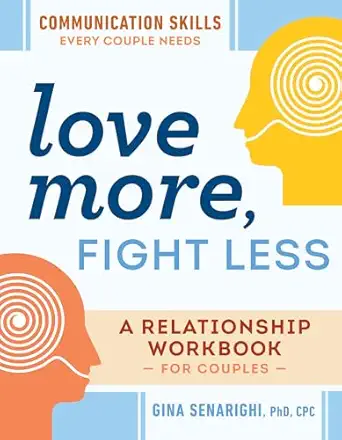 | Best for Conflict Reduction | Format: Relationship workbook | Primary Focus: Conflict reduction and communication skills | Approach: Practical exercises and insights | VIEW LATEST PRICE | See Our Full Breakdown |
| Couples Communication Workbook: 20 Minutes a Day for 12 Days to Improve Listening, Resolve Conflicts, and Strengthen Your Relationship |  | Best Structured Program | Format: Workbook with daily exercises | Program Length: 12 days | Daily Time Required: 20 minutes | VIEW LATEST PRICE | See Our Full Breakdown |
| Reconnect: A Marriage Counseling Workbook |  | Best for Married Couples in a Rut | Format: Marriage counseling workbook | Primary Focus: Guided conversations for long-term relationships | Approach: Counselor-style prompts and exercises | VIEW LATEST PRICE | See Our Full Breakdown |
| Communication & Social Skills: 13-in-1 Techniques to Improve Interactions, Small Talk, Body Language & Public Speaking |  | Wildcard Pick for Individual Growth | Format: Book | Topic Count: 13 techniques in one volume | Primary Focus: General communication and social skills | VIEW LATEST PRICE | See Our Full Breakdown |
| The Talk Book: With Six Prize-Winning Talk Tools That Strengthen Relationships and Repair Communication Breakdowns |  | Best for Repairing Broken Communication | Format: Book | Core Content: Six prize-winning talk tools | Primary Focus: Repairing communication breakdowns | VIEW LATEST PRICE | See Our Full Breakdown |
| Communicate Your Feelings (Without Starting a Fight): What to Say and What Not to Say to Your Partner |  | Best for Conflict-Avoidant Partners | Format: Book | Core Content: Scripts for expressing feelings without conflict | Primary Focus: Healthy emotional expression | VIEW LATEST PRICE | See Our Full Breakdown |
| The Fair Play Deck: A Couple’s Conversation Deck for Prioritizing What’s Important |  | Best for Prioritizing Together | Format: Conversation card deck | Core Content: Prompts for prioritizing what matters as a couple | Primary Focus: Alignment, priorities, and shared decision-making | VIEW LATEST PRICE | See Our Full Breakdown |
| Life Sutra Couple Reconnect Card Game |  | Best Value Reconnection Game | Format: Conversation card game | Number of Cards: 150 | Purpose: Build trust, deepen bond, improve communication | VIEW LATEST PRICE | See Our Full Breakdown |
| relationship communication tool | Format | Approach | Audience | Primary Focus |
|---|---|---|---|---|
| Nonviolent Communication: A La | Paperback / eBook / Audiobook | Compassionate communication framework (observations, feelings, needs, requests) | General — couples, professionals, families | — |
| Communication Skills for Coupl | Paperback / eBook | Practical strategies for arguments, repair, and intimacy | Dating and married couples | — |
| Giving and Receiving Targeted | Workbook | Competency-based skill development | Professionals, managers, and teams | — |
| Couples Relationship Blueprint | 2-in-1 book edition | Evidence-informed at-home therapy exercises | Committed couples | — |
| Practical At-Home Couples Ther | Workbook | Guided at-home exercises | Couples, beginners to relationship self-help | — |
| Emotional Intimacy for Couples | Book | Practical habits and communication skills | — | Emotional intimacy and trust-building |
| Love More | Relationship workbook | Practical exercises and insights | — | Conflict reduction and communication skills |
| Couples Communication Workbook | Workbook with daily exercises | — | — | Listening and conflict resolution |
| Reconnect: A Marriage Counseli | Marriage counseling workbook | Counselor-style prompts and exercises | — | Guided conversations for long-term relationships |
| Communication & Social Skills: | Book | — | — | General communication and social skills |
| The Talk Book: With Six Prize- | Book | Instructional framework with practical strategies | Couples, families, and workplace relationships | Repairing communication breakdowns |
| Communicate Your Feelings | Book | What to say / what not to say guidance | Partners who avoid conflict or struggle with delivery | Healthy emotional expression |
| The Fair Play Deck: A Couple’s | Conversation card deck | — | Couples seeking intentional goal-setting dialogue | Alignment, priorities, and shared decision-making |
| Life Sutra Couple Reconnect Ca | Conversation card game | — | — | — |
More Details on Our Top Picks
Nonviolent Communication: A Language of Life
This pick earns the top spot because it solves the root problem behind most communication breakdowns: how people express needs without blame. Where Communication Skills for Couples narrows its lens to romantic partnerships, this framework works across marriages, friendships, workplaces, and parenting, which is why it has become the reference point so many other titles borrow from. The core method — observing without judging, naming feelings, and making clear requests — gives readers a repeatable script rather than vague advice. The tradeoff is real, though: this is a practice-based system, not a quick fix. Readers who want exercises to fill out may connect faster with the Couples Relationship Blueprint, and the writing can feel dense for anyone expecting light, conversational prose.
Pros:- A complete, reusable framework rather than scattered tips
- Applies to romantic, professional, and family relationships alike
- Widely referenced foundation that other communication books build on
- Teaches both expressing needs and listening empathically
Cons:- Techniques take consistent practice before they feel natural
- Denser, more conceptual prose than workbook-style alternatives
Best for: Readers who want one durable communication framework that applies to every relationship in their life, not just their marriage
Not ideal for: Couples in active crisis who need immediate, scripted conflict de-escalation tools rather than a philosophy to study and rehearse
- Format:Paperback / eBook / Audiobook
- Category:Communication skills, relationships
- Approach:Compassionate communication framework (observations, feelings, needs, requests)
- Audience:General — couples, professionals, families
- Structure:Chapters with examples and practice dialogues
- Learning style:Concept-driven with applied exercises
- Author background:Developed by psychologist and mediator Marshall B. Rosenberg
Our verdict“Buy this if you want the deepest, most transferable communication skill set; skip it if you need quick conflict scripts tonight.”
Communication Skills for Couples: Guide to Improve Communications, Resolve Conflict, Deepen Intimacy, Strengthen Marriage and Create a Healthy Relationship
Where Nonviolent Communication teaches a broad philosophy, this guide goes straight for the fight itself — how to argue fairly, de-escalate, and repair after blowups. That narrow focus is its strength: couples who fight about the same three things repeatedly will find conflict-specific strategies here rather than general theory. It also addresses intimacy, which purely tactical conflict books often ignore. The tradeoff is depth. Compared with the Couples Relationship Blueprint, it offers fewer structured exercises, so couples who learn by doing rather than reading may find it feels more inspirational than transformative. Author credentials and content depth are also thin on detail, so readers expecting clinical rigor may want a workbook with a stronger evidence base.
Pros:- Directly targets recurring conflict patterns
- Covers intimacy alongside communication, not just fighting
- Accessible, non-clinical language for stressed couples
- Broader scope than single-issue guides
Cons:- Fewer guided exercises than workbook competitors
- Limited transparency about author background and content depth
Best for: Couples stuck in recurring arguments who want practical, conflict-focused techniques without wading through communication theory
Not ideal for: Readers who want a credential-backed, exercise-heavy program — the structure here is lighter and more advice-driven
- Format:Paperback / eBook
- Category:Couples communication and conflict resolution
- Approach:Practical strategies for arguments, repair, and intimacy
- Audience:Dating and married couples
- Structure:Advice chapters with actionable techniques
- Learning style:Reading-driven with applied tips
- Focus areas:Conflict resolution, intimacy, marriage strengthening
Our verdict“A sensible pick for couples who fight in loops and want tactics now, not a substitute for a structured workbook program.”
Giving and Receiving Targeted Feedback that Works: A Competency-Based Approach
This is the only pick in the lineup built for professional relationships, and that distinction earns it a slot. Every other title here — from Nonviolent Communication to the Practical At-Home Couples Therapy Workbook — assumes a personal context. This workbook instead trains a skill most couples books never touch: giving feedback that lands and receiving criticism without defensiveness. The competency-based structure means progress is measurable, which suits readers who like clear skill milestones. The tradeoff is obvious for this roundup’s audience: it won’t help with romance, intimacy, or household conflict. Its receiving feedback chapters do transfer to personal life better than you’d expect, but couples should treat this as a supplement, not a primary relationship tool.
Pros:- Fills the workplace-communication gap no other pick covers
- Competency-based structure makes progress trackable
- Feedback skills transfer to personal conversations too
- Structured, workbook-style learning rather than passive reading
Cons:- Professional focus limits value for romantic relationship repair
- No ratings or detailed specs available to verify depth
Best for: Managers, team leads, and professionals whose hardest conversations happen at work, and who want measurable skill-building
Not ideal for: Couples seeking help with romantic conflict — the workplace framing leaves intimacy and partnership dynamics untouched
- Format:Workbook
- Category:Professional communication and feedback skills
- Approach:Competency-based skill development
- Audience:Professionals, managers, and teams
- Structure:Structured exercises with skill milestones
- Learning style:Practice-based workbook format
- Focus areas:Delivering feedback, receiving criticism, interpersonal relationship building
Our verdict“Worth buying if your communication struggles are professional — pair it with a couples title if you want full coverage.”
Couples Relationship Blueprint & Practical At-Home Therapy (2-in-1 Edition)
Think of this as the most complete self-directed program in the batch: a blueprint for understanding your relationship’s structure plus a full exercise set for at-home therapy work. Compared with the standalone Practical At-Home Couples Therapy Workbook, the two-in-one format adds a diagnostic layer — you map what’s actually broken before you start fixing it. Its focus on emotional intimacy and trust, not just talk techniques, also sets it apart from lighter guides like Communication Skills for Couples. The tradeoffs are commitment and cost. This demands sustained effort from both partners, and a partner who’s reluctant to “do workbooks” will stall the whole thing. With no reviews yet, buyers are also taking a chance on fit sight unseen.
Pros:- Two-in-one format combines relationship assessment with exercises
- Evidence-informed therapy techniques adapted for home use
- Targets trust and emotional intimacy, not just conversation tactics
- Deeper and more systematic than single-topic guides
Cons:- Requires sustained commitment from both partners
- No customer reviews yet to validate fit or quality
Best for: Highly motivated couples who want a structured, therapy-adjacent program and are willing to invest real time together
Not ideal for: Couples where one partner is skeptical of self-help work — the format collapses without buy-in from both sides
- Format:2-in-1 book edition
- Category:Couples therapy workbook and relationship guide
- Approach:Evidence-informed at-home therapy exercises
- Audience:Committed couples
- Structure:Relationship blueprint plus practical exercise program
- Learning style:Exercise-driven, done together as a couple
- Focus areas:Emotional intimacy, trust building, communication repair
Our verdict“The most program-like option here — choose it only if both partners are genuinely ready to put in the work.”
Practical At-Home Couples Therapy Workbook
This is the low-friction entry point for couples who suspect they need help but aren’t ready for a full program. Where the Couples Relationship Blueprint asks you to commit to a two-part system, this single workbook keeps things simple: guided exercises you can open and use without a learning curve, aimed at communication repair, intimacy, and honest conversation. Compared with Nonviolent Communication, it trades theory for immediate practice — you’re doing, not studying. That simplicity is also the limitation. There’s little detail on the specific exercises inside, and couples with deep or long-standing wounds will likely exhaust it quickly and need something more layered, or an actual therapist. Think of it as a first step, not a complete rebuild.
Pros:- Guided exercises remove the “where do we start” barrier
- Simple enough for self-help skeptics to actually use
- Cheaper and less demanding than multi-part programs
- Covers communication, intimacy, and conflict in one volume
Cons:- Depth is limited — advanced or long-term issues will outgrow it
- Exercise contents are thinly documented before purchase
Best for: Couples new to relationship self-help who want an affordable, low-commitment way to start talking again
Not ideal for: Couples dealing with deep betrayal or chronic conflict — the exercises are too light for serious repair work
- Format:Workbook
- Category:Couples communication and therapy exercises
- Approach:Guided at-home exercises
- Audience:Couples, beginners to relationship self-help
- Structure:Exercise-based chapters for home use
- Learning style:Hands-on, low-commitment practice
- Focus areas:Honest communication, intimacy restoration, conflict repair
Our verdict“A smart first purchase for hesitant couples; upgrade to a fuller program if it surfaces problems it can’t fix.”
Emotional Intimacy for Couples: Communication Skills, Trust-Building Habits, and Practical Tools to Deepen Connection and Strengthen Your Relationship
This pick stands out for couples whose real problem isn’t arguing — it’s distance. Where Love More, Fight Less zeroes in on defusing conflict, this book treats communication as a pathway to emotional intimacy and trust, which makes it better suited to partnerships that feel polite but disconnected. Compared with the Couples Communication Workbook, it’s less prescriptive about daily drills and more focused on building lasting habits.
The tradeoff: habits take longer to form than a 12-day program can deliver, so buyers wanting a quick structured fix should look elsewhere. This pick makes the most sense for couples willing to work gradually rather than checklist their way to closeness.
Pros:- Focuses on trust-building, not just talk tactics
- Habit-based framework creates lasting change
- Addresses emotional intimacy directly rather than skirting it
- Works for couples who rarely fight but feel disconnected
Cons:- Requires sustained commitment over weeks or months to see results
- Lacks the structured day-by-day schedule some workbooks offer
Best for: Long-term couples who get along on the surface but feel emotionally distant and want to rebuild trust over time
Not ideal for: Couples in active crisis who need immediate conflict-resolution scripts — the habit-based approach is too slow
- Format:Book
- Primary Focus:Emotional intimacy and trust-building
- Approach:Practical habits and communication skills
- Time Commitment:Ongoing, habit-based
- Best Use Case:Long-term relationship strengthening
- Structure:Skill and strategy chapters
Our verdict“Choose this if your relationship needs depth and trust rebuilt gradually, not a fast conflict fix.”
Love More, Fight Less: Communication Skills Every Couple Needs
Of the workbooks in this lineup, this one is the most direct answer to the question why do we keep fighting about the same things? Its practical communication exercises target recurring conflict patterns, which separates it from Reconnect, a workbook built around guided conversations rather than conflict-specific skills. Couples who argue in loops will find more actionable material here.
The honest drawback: experienced couples who’ve already read relationship books may find the content too foundational. Compared with the denser Emotional Intimacy for Couples, this is a broader, simpler starting point — great for beginners, less satisfying for veterans. It also demands real participation; skimmed passively, it changes nothing.
Pros:- Concrete exercises rather than abstract theory
- Directly targets recurring conflict patterns
- Accessible language for couples new to self-help work
- Builds understanding alongside de-escalation skills
Cons:- Content may feel basic for couples with prior therapy or reading experience
- Results depend on both partners actively doing the exercises
Best for: Couples stuck in repetitive arguments who want workbook exercises they can practice together
Not ideal for: Couples well-versed in relationship books who need advanced material beyond fundamentals
- Format:Relationship workbook
- Primary Focus:Conflict reduction and communication skills
- Approach:Practical exercises and insights
- Difficulty Level:Beginner-friendly
- Participation Required:Active, both partners
- Best Use Case:Recurring arguments and miscommunication
Our verdict“This is the pick for couples who fight in circles and want a workbook they’ll actually use together.”
Couples Communication Workbook: 20 Minutes a Day for 12 Days to Improve Listening, Resolve Conflicts, and Strengthen Your Relationship
Time is the most common excuse couples give for skipping relationship work, and this workbook removes it. The 20-minute, 12-day structure is the tightest framework in this roundup — compared with Love More, Fight Less, which asks for open-ended engagement, this option tells you exactly what to do each day and when you’re finished. That built-in finish line is genuinely motivating for busy or procrastinating couples.
The tradeoff is depth. Twelve short sessions can’t match the trust-building scope of Emotional Intimacy for Couples, and couples with deep-seated issues may hit day 12 still wanting more. This option stands out as a gateway program: finish it, then graduate to something heavier if needed.
Pros:- Fixed 20-minute daily commitment fits real schedules
- Clear 12-day endpoint prevents workbook abandonment
- Emphasizes listening skills, which many workbooks overlook
- Low barrier to entry for skeptical or busy partners
Cons:- Limited depth given the short program length
- Sparse reviews and content details make it harder to vet in advance
Best for: Busy couples with packed schedules who need a defined start-to-finish program they can’t procrastinate on
Not ideal for: Couples with serious long-standing issues — 12 days is a starter, not a full repair
- Format:Workbook with daily exercises
- Program Length:12 days
- Daily Time Required:20 minutes
- Primary Focus:Listening and conflict resolution
- Structure:Day-by-day guided program
- Best Use Case:Time-constrained couples
Our verdict“The best choice for couples who’ve failed at open-ended workbooks and need a finite, 12-day plan.”
Reconnect: A Marriage Counseling Workbook
Where most entries in this roundup aim at couples broadly, this workbook is built specifically for long-term marriages, using guided conversations that mirror what a counselor would prompt in session. Compared with the Couples Communication Workbook‘s skill-drill format, this option is more reflective and conversation-driven — better for partners who struggle to start meaningful talks on their own. The prompts do the heavy lifting.
The drawback: it’s less tactical. Couples who need scripts for defusing fights will get more from Love More, Fight Less, and the thin author and review information makes it a bit of a gamble compared with better-documented titles. Still, for a marriage that’s stable but flat, the conversation-first design fits well.
Pros:- Guided conversations remove the awkwardness of starting hard talks
- Tailored to long-term marriage dynamics
- Mimics counseling-session structure at home
- Encourages mutual understanding rather than one-sided change
Cons:- Limited author and content information available to vet beforehand
- Reflective format may frustrate couples wanting actionable conflict tools
Best for: Married couples in long-term relationships who want counselor-style guided conversations to reignite connection
Not ideal for: Couples seeking concrete conflict scripts and de-escalation tactics rather than reflective dialogue
- Format:Marriage counseling workbook
- Primary Focus:Guided conversations for long-term relationships
- Approach:Counselor-style prompts and exercises
- Target Relationship Stage:Long-term marriage
- Tone:Reflective and dialogue-based
- Best Use Case:Reconnecting after emotional drift
Our verdict“A solid pick for stable-but-stale marriages that need structured conversations, not tactical fight scripts.”
Communication & Social Skills: 13-in-1 Techniques to Improve Interactions, Small Talk, Body Language & Public Speaking
This is the outlier in the lineup, and I include it deliberately: it’s not a couples book at all. It’s a 13-in-1 general communication guide covering small talk, body language, and public speaking. Its role here is for the partner who recognizes they are the communication bottleneck. Compared with every couple-focused option, it lets one person work on themselves solo — no reluctant partner required.
The tradeoff is focus. A couple working through Reconnect together will make faster relational progress, and much of this book — public speaking especially — has little to do with a marriage. It’s breadth over depth, and the 13-in-1 packaging means topics get covered thinly. Worth it only as a companion to a couples-specific title, not a substitute.
Pros:- Solo-friendly — no partner participation needed
- Builds general confidence that spills into the relationship
- Covers body language and listening often missing from couples books
- Broad 13-topic scope for foundational skills
Cons:- Mostly off-topic for couples — public speaking and small talk aren’t marriage skills
- Bundled format means each topic gets shallow treatment
Best for: Individuals who know their own social and communication habits are hurting the relationship and want to improve alone
Not ideal for: Couples wanting to work on their relationship together — most content isn’t partnership-specific
- Format:Book
- Topic Count:13 techniques in one volume
- Primary Focus:General communication and social skills
- Topics Covered:Small talk, body language, public speaking, interactions
- Intended Audience:Individuals, not couples
- Best Use Case:Solo skill-building alongside couples work
Our verdict“Buy this only as a self-improvement supplement for one partner, never as your main couples tool.”
The Talk Book: With Six Prize-Winning Talk Tools That Strengthen Relationships and Repair Communication Breakdowns
Most communication books focus on preventing conflict, but this one stands out for fixing communication that has already broken down. Its six talk tools give couples a repeatable script for moments when conversations have gone off the rails — a more remedial approach than Communicate Your Feelings (Without Starting a Fight), which is geared toward preventing blowups in the first place. Compared with the Fair Play Deck, this is the deeper investment: it demands actual reading and practice rather than a casual card night. The tradeoff is that its framework takes commitment to internalize, and couples wanting a low-effort entry point may stall before the tools click. But for partners stuck in recurring blowups who want structured repair techniques rather than conversation prompts, this pick makes the most sense.
Pros:- Six concrete, repeatable talk tools rather than vague advice
- Specifically designed to repair communication that has already broken down
- Practical strategies couples can apply mid-conflict
- Framework generalizes to family and work relationships, not just romantic ones
Cons:- Requires genuine time investment to learn and internalize the tools
- Drier, more instructional tone than lighter options like conversation card decks
Best for: Couples stuck in recurring arguments who want structured, repeatable techniques to rebuild broken dialogue
Not ideal for: Partners hoping for a quick, low-effort fix — the six-tool framework requires real reading and practice before it pays off
- Format:Book
- Core Content:Six prize-winning talk tools
- Primary Focus:Repairing communication breakdowns
- Best Use Case:Couples in recurring conflict patterns
- Approach:Instructional framework with practical strategies
- Audience:Couples, families, and workplace relationships
Our verdict“Buy this if your conversations keep derailing and you want a repair toolkit, not just prevention tips.”
Communicate Your Feelings (Without Starting a Fight): What to Say and What Not to Say to Your Partner
Where The Talk Book repairs damage after it happens, this one is preventive maintenance — it teaches what to say and, just as usefully, what not to say before a conversation escalates. That script-based, do-this-not-that structure makes it the friendliest option here for conflict-avoidant partners who freeze up or go silent when emotions run high. Compared with the Love More, Fight Less style guides already in this roundup, it trades breadth for directness: fewer frameworks, more ready-to-use phrasing. The tradeoff is depth — couples with deep-rooted resentment or long-standing rupture will likely need something heavier, and its shorter scope means less coverage of listening skills. But for anyone whose biggest problem is how feelings come out of their mouth, this is the most targeted match in the lineup.
Pros:- Concrete what-to-say and what-not-to-say scripts reduce guesswork
- Focused specifically on emotional expression rather than general skills
- Preventive approach stops arguments before they start
- Supports individual emotional wellness, not just couple dynamics
Cons:- Narrower scope than fuller communication guides — little on listening or repair
- Script-based advice can feel formulaic to readers wanting deeper theory
Best for: Conflict-avoidant partners who struggle to voice emotions without triggering an argument
Not ideal for: Couples dealing with deep-rooted resentment — the script-based approach is too lightweight for serious repair work
- Format:Book
- Core Content:Scripts for expressing feelings without conflict
- Primary Focus:Healthy emotional expression
- Best Use Case:Preventing arguments during emotional conversations
- Approach:What to say / what not to say guidance
- Audience:Partners who avoid conflict or struggle with delivery
Our verdict“Pick this if your arguments start at the moment you open your mouth — it fixes the delivery, not the relationship.”
The Fair Play Deck: A Couple’s Conversation Deck for Prioritizing What’s Important
This deck shifts the format entirely: instead of reading about communication, couples practice it through structured conversation. What sets it apart from the Life Sutra Couple Reconnect Card Game is its focus — while Life Sutra leans into emotional warmth and connection, Fair Play pushes partners to negotiate priorities and分工 responsibilities, making it the better fit for couples whose tension comes from unbalanced workloads or misaligned goals. The card format removes the awkwardness of cold-starting hard topics, something books like Nonviolent Communication can’t do alone. The tradeoff: with limited instructions, some pairs may flounder on how to turn a card prompt into a real decision, and it won’t help couples who need actual conflict-resolution skills. This pick makes the most sense for functional couples who want alignment, not therapy.
Pros:- Card format removes the awkwardness of raising difficult topics
- Turns abstract relationship talk into concrete prioritizing exercises
- Faster to engage with than book-based alternatives
- Works well as a recurring ritual rather than a one-time read
Cons:- Sparse instructions leave some couples unsure how to act on prompts
- No conflict-resolution training — it starts conversations but doesn’t finish them
Best for: Functional couples who want a low-pressure way to align on priorities, responsibilities, and shared goals
Not ideal for: Couples in active conflict — the deck surfaces topics but doesn’t teach the skills to resolve them
- Format:Conversation card deck
- Core Content:Prompts for prioritizing what matters as a couple
- Primary Focus:Alignment, priorities, and shared decision-making
- Best Use Case:Regular structured couple conversations
- Players:2 (couples)
- Audience:Couples seeking intentional goal-setting dialogue
Our verdict“Choose this deck if your relationship needs alignment sessions, not counseling — it’s a facilitator, not a fixer.”
Life Sutra Couple Reconnect Card Game
Of the two decks in this roundup, Life Sutra is the softer, more affordable entry point — its 150 prompts aim at warmth, trust, and emotional openness rather than the priority-negotiation focus of The Fair Play Deck. That makes it the better gift or date-night pick: the rules are simple enough to start in five minutes, and the volume of prompts means it survives many evenings without repetition. Compared with book options like Communicate Your Feelings, it asks far less of the reader — no frameworks to study, just honest answers to questions. The honest tradeoff: it’s prompts only, with no skill-building or physical game mechanics, so couples with serious communication breakdowns will get conversation starters but not tools. For comfortable couples who have simply drifted into small-talk autopilot, this pick makes the most sense.
Pros:- 150 prompts provide long-term replay value without repetition
- Nearly zero learning curve — playable in minutes at home or traveling
- Strong gift option for weddings, anniversaries, or new couples
- Cheaper and more accessible than therapy-style workbooks
Cons:- Purely prompt-based — no skills, frameworks, or structure beyond the questions
- Effectiveness depends entirely on both partners’ willingness to be open
Best for: Busy married or long-term couples who’ve drifted into surface-level talk and want a low-effort way back to real conversation
Not ideal for: Couples in crisis — it generates connection but teaches no conflict or communication skills
- Format:Conversation card game
- Number of Cards:150
- Purpose:Build trust, deepen bond, improve communication
- Game Type:Conversation prompt card game
- Suitable For:Married and mature couples
- Portability:Playable at home or on the go
- Gift Suitability:High — common anniversary and wedding gift
Our verdict“At this price, it’s the easiest yes in the lineup — buy it to restart intimacy, not to rescue a relationship in trouble.”

How We Picked
I evaluated each tool through one lens: does it actually change how two people communicate, not just how much content it contains. That meant judging usability for two people (can both partners engage without a facilitator?), time commitment realism (a 300-page book nobody finishes scores lower than a 12-day plan couples complete), and skill transferability (frameworks that generalize beyond the exercises beat memorized phrases). I also weighed whether each tool addresses conflict specifically, since most couples seek help during disagreements, not calm conversations.
Ranking also reflected format fit and evidence base. Tools grounded in established approaches — Marshall Rosenberg’s nonviolent communication method, structured couples therapy exercises — ranked higher than collections of tips. Finally, I considered cost-to-outcome ratio: a $15 workbook a couple completes beats a $30 book that gets abandoned in week two. Decks and games were ranked as entry points and supplements, which is why none claims the top spot despite being genuinely useful.
Factors to Consider When Choosing Relationship Communication Tools
Before picking a specific title, it helps to understand what separates a tool that gets used from one that gathers dust. These are the factors that shaped my ranking and the mistakes I see couples make most often.Match the Format to Your Partner’s Willingness
The most common mistake couples make is buying a book for a partner who won’t read it. If one partner is hesitant, a card deck or short workbook is far more likely to get joint buy-in than a 300-page guide, because the ask is smaller and the payoff is immediate. Deep skill-building books only work when both people are motivated. Be honest about who will actually participate before choosing format over ambition — a shallower tool that gets used beats a rigorous one that doesn’t.
Frameworks Beat Scripts
Some books hand you exact phrases to say; others teach you a repeatable process for constructing your own. Scripts feel reassuring at first and can defuse a specific recurring fight, but they break down the moment the conversation goes off-script — which real arguments always do. A transferable framework like observation-feeling-need-request costs more upfront effort but keeps working in novel situations. If you buy a script-based book, treat it as a stepping stone, not a destination.
Time Commitment and Completion Rates
Publishers rarely advertise the real workload: a workbook with 60 exercises is a multi-month project, while a 12-day plan asks for under three hours total. Abandoned tools produce zero results, so undershoot rather than overshoot your capacity as a couple. A realistic pattern is starting with a short program, finishing it, then graduating to something deeper. Check the page count and exercise count before buying, and ask whether that fits a typical week for both of you.
Conflict Focus vs. Connection Focus
Communication tools generally optimize for one of two things: fighting better or connecting more. Couples in frequent conflict need de-escalation and repair skills first — a connection deck used mid-argument will feel tone-deaf. Couples who get along but feel distant benefit more from intimacy and gratitude-building prompts than from conflict frameworks they rarely need. Diagnose which problem you actually have before buying, because most tools only do one well.
General Communication Skills Rarely Transfer Fully
Books covering public speaking, small talk, and workplace feedback overlap with couples’ skills on paper — listening, body language, clarity — but the emotional stakes differ completely. Romantic conflict triggers defensiveness in ways workplace feedback doesn’t. If a general communication book is already on your shelf, it’s a fine supplement, but if you’re buying specifically for your relationship, couples-specific tools address the dynamics general books skip, like repair attempts, bids for attention, and vulnerability.
When to Pay More — and When to Skip Therapy-Style Workbooks
At-home therapy workbooks cost more than typical self-help paperbacks because they borrow structure from professional counseling. That premium is worth it if you want guided, progressive exercises and can’t access or afford a therapist. But these workbooks assume both partners are active participants; one person working through a couples therapy workbook alone gets limited results. If willingness is uneven, spend less on a card deck or short workbook first, then upgrade once both partners are engaged.
Frequently Asked Questions
Can a book or card deck really replace couples therapy?
For mild to moderate communication friction — recurring misunderstandings, avoidance patterns, arguments that escalate too fast — a well-structured workbook can produce real change, especially ones modeled on therapeutic approaches like the at-home therapy workbooks in this lineup. What these tools can’t do is address active contempt, betrayal, addiction, or one partner who has already checked out. A useful rule: if both partners are willing and the problems are about how you talk rather than whether you want the relationship, self-guided tools are a reasonable first step. If six to eight weeks of consistent use brings no improvement, that’s a signal to bring in a professional rather than buy another book.
Card deck or workbook — which should a struggling couple start with?
It depends on the temperature of the conflict. If arguments are frequent and heated, a deck can actually backfire because lighthearted prompts feel dismissive when someone is genuinely hurt — start with a conflict-focused workbook that teaches de-escalation. If the relationship is stable but has gone quiet or routine, a deck like The Fair Play Deck or Life Sutra is the better entry point because it’s playful, low-pressure, and rebuilds the habit of talking. Many couples use both: the deck weekly to stay connected, the workbook when a specific problem surfaces. The one scenario where a deck alone is enough is a couple that communicates fine but has run out of things to talk about.
What if my partner won’t do the exercises with me?
This is the most common reason these tools fail, and it changes what you should buy. Skip the couples therapy workbooks entirely — they’re designed for two participants and feel hollow solo. Instead, pick a solo-friendly framework book like Nonviolent Communication, because changing one person’s communication patterns genuinely shifts the dynamic between two people. When you stop criticizing and start expressing needs clearly, the other partner’s responses often change too, even without formal participation. Once your partner sees the difference, resistance to joint exercises usually softens. Be wary of using the book as ammunition to diagnose your partner, though — that reliably backfires.
How long before we see actual results from a communication workbook?
Most structured programs are built around a two-to-four-week horizon, and the 12-day formats reflect research on habit formation more than marketing. Expect small wins early — a fight that de-escalates faster, a need expressed without an argument — rather than a transformed relationship. The couples who see the best results treat it like exercise: short, consistent sessions beat occasional marathons. If you complete a full program and feel nothing changed by the final week, the issue is usually either a mismatch between the tool and your actual problem (connection vs. conflict) or uneven participation, not that communication tools don’t work.
Are the cheaper short workbooks actually worse than the big comprehensive ones?
Usually the opposite, at least for a first purchase. Short, focused workbooks have higher completion rates, and a finished 12-day program beats an abandoned 60-exercise bible every time. The big comprehensive volumes earn their price only after a couple has built the habit — they work better as a second book than a first one. Price in this category also correlates with format rather than quality: therapy-style workbooks cost more because of licensed-therapist authorship and structured programs, while mass-market paperbacks are cheaper but more general. Spend your first $15–20 on something you’ll finish, then reinvest in depth once the habit exists.
Conclusion
If you want the best overall pick, Nonviolent Communication delivers the deepest, most transferable skill set — it’s the tool that keeps working after the book goes back on the shelf. For best value, the Couples Communication Workbook’s 12-day, 20-minutes-a-day format gets couples real results for the price of a paperback. The Couples Relationship Blueprint & Practical At-Home Therapy (2-in-1 Edition) is the premium choice, borrowing structure from professional counseling for couples ready to invest serious time. Beginners — or couples where one partner is hesitant — should start with The Fair Play Deck or Life Sutra, because a card game is the lowest-barrier entry point in this entire category. For specific needs: Communicate Your Feelings (Without Starting a Fight) targets chronic arguers, Emotional Intimacy for Couples suits partners who fight rarely but feel distant, and Love More, Fight Less works well as a maintenance tool between deeper programs. Whatever you choose, the deciding factor isn’t the book — it’s whether both of you actually open it.
Halloween Picks
halloween
As an affiliate, we earn on qualifying purchases.