When planning your photoshoot, choose locations that match your vision and consider lighting conditions to get the most favorable results. Visit the site beforehand to identify the best spots and determine if permits are needed, especially in public or private areas. Secure all necessary permissions in advance to avoid delays. Incorporate local elements and plan your schedule around ideal natural light. Keep these tips in mind, and you’ll be well on your way to a seamless, impactful shoot.
Key Takeaways
- Research location options and ensure they align with your shoot’s vision and lighting needs.
- Visit the site beforehand to identify optimal spots and assess natural light conditions.
- Check permit requirements for public or private locations and obtain necessary permissions early.
- Understand local regulations and cultural sensitivities to ensure respectful and compliant photography.
- Plan your schedule around natural lighting times, such as golden hour, for the best photographic results.
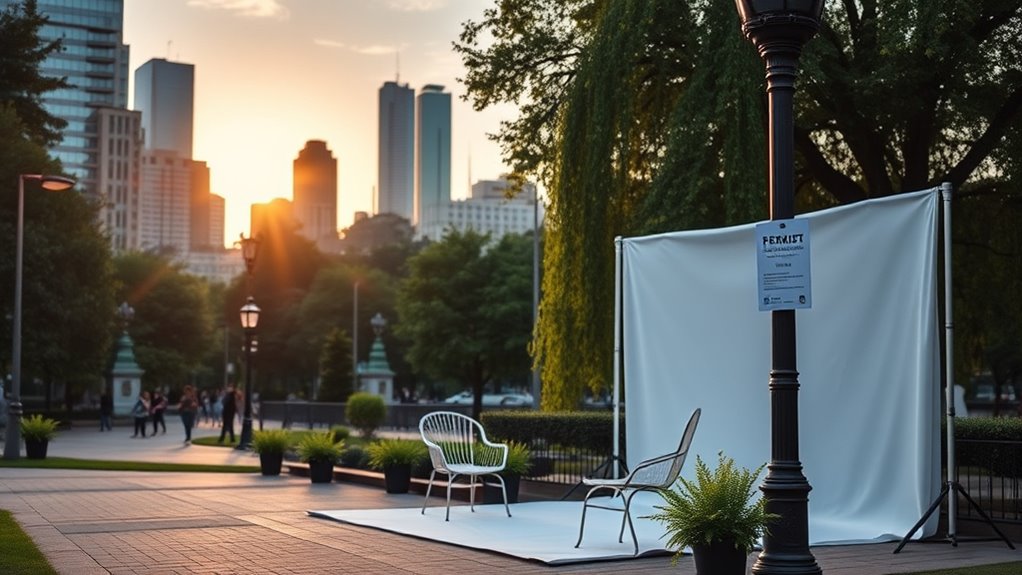
Are you wondering how to guarantee your photoshoot planning goes smoothly from start to finish? One of the biggest factors is choosing the right location and securing any necessary permits. Before you start scouting, consider how the setting aligns with your vision. Think about how lighting techniques will impact your shots; natural light can be stunning, but in some locations, you might need to bring additional lighting equipment to ensure your photos are perfectly lit. Bring along equipment essentials like reflectors, diffusers, and portable lights to control and enhance the environment’s natural illumination. This preparation helps you adapt quickly to changing conditions and guarantees consistent results. Additionally, understanding cultural and regional characteristics of the location can enrich your photoshoot and provide authentic backdrops. When selecting a location, always research whether you need permits or permissions. Many public parks, beaches, or urban areas require permits for professional photoshoots, especially if you’re setting up equipment or blocking pathways. Failing to obtain necessary permits can cause delays or even force cancellations, so check with local authorities or property managers well in advance. Knowing the rules about photography, access times, and restrictions can save you a lot of headaches later. If you’re shooting in a private space, make sure you have explicit permission from the owner and clarify any limitations beforehand. Once you’ve identified your location and secured permits, consider how the environment affects your lighting techniques. For example, if you’re shooting during midday in an open area, harsh sunlight might create unwanted shadows or overexposed highlights. In that case, bringing diffusers or reflectors can help you bounce or soften light, ensuring your subject looks their best. Alternatively, if you’re shooting during golden hour, natural light will be softer and more flattering, but you might still want to carry a portable flash or reflector to fill in shadows. Always pack your equipment essentials thoughtfully, so you’re prepared for any lighting scenario. It’s also wise to visit the location beforehand, if possible, to scout for the best spots and test how different lighting conditions look at various times of day. This way, you can plan your shoot schedule accordingly, utilizing the natural light to your advantage. Remember, the right equipment and lighting techniques can transform an average shot into something extraordinary. Proper planning around location and permits not only streamlines your workflow but also ensures you stay within legal boundaries, giving you peace of mind during the shoot. When these factors come together seamlessly, your photoshoot will be more efficient, productive, and ultimately, more successful.

NEEWER 43 Inch/110 Centimeter Light Reflector Diffuser 5 in 1 Collapsible Multi Disc with Bag – Translucent, Silver, Gold, White, and Black for Studio Photography Lighting Outdoor
- Size: 43 inches / 110 centimeters
- Type: 5-in-1 collapsible reflector
- Colors: Translucent, silver, gold, white, black
As an affiliate, we earn on qualifying purchases.
As an affiliate, we earn on qualifying purchases.
Frequently Asked Questions
How Far in Advance Should I Book Permits for Photo Shoots?
When asking how far in advance you should book permits, it’s best to take into account your booking timeline for a permit application. You should start the process at least 4 to 6 weeks before your shoot date to ensure enough time for approval. This allows for any delays or additional documentation needed. Planning ahead helps you avoid last-minute stress and guarantees your location and permits are secured smoothly.
Are There Any Restrictions for Drone Photography During Proposals?
While drone restrictions often seem strict, they’re especially important on private property. You can’t fly drones freely during proposals without permission, as laws limit drone use near private property and public spaces. Always check local regulations and obtain necessary permits to avoid fines or legal issues. Respect privacy and safety concerns, and consider alternative photoshoot options if drone restrictions are too tight. Being informed helps make certain your proposal stays smooth and memorable.
Can I Access Private Property Without a Permit?
You can’t access private property without a permit, as doing so is generally considered trespassing. Always seek permission from the property owner before entering private property, and check if a permit is necessary for your activities. Without the proper permit, you risk legal issues and fines. Respect property rights and guarantee you have all required permissions to avoid complications during your photoshoot or visit.
What Are the Costs Associated With Filming Permits?
Imagine standing on a bustling city street or serene park, ready to capture your vision. The costs for filming permits vary based on location and scope, with permit fees and location costs shaping your budget. You might pay a flat fee or hourly rate, depending on the area. Always check with local authorities, as permit fees can range from modest sums to significant investments, ensuring your shoot stays compliant and smooth.
Are There Time Limits for Shooting at Popular Locations?
Shooting time limits at popular locations vary based on local regulations and permit restrictions. You should check specific popular location restrictions beforehand, as some sites impose strict schedules to prevent disruptions. Typically, permits specify maximum shooting hours, so plan your shoot accordingly. Being aware of these limits helps you avoid fines or needing additional permits. Always confirm with local authorities to guarantee you stay within permitted shooting time limits.

K&F CONCEPT 5-in-1 Light Reflector, 32" (80cm), Collapsible & Portable
- Versatile 5-in-1 Reflector: Includes gold, silver, white, black, translucent
- Multiple Lighting Effects: Softens sunlight, brightens shadows, adds warmth
- Portable and Foldable: Quickly folds into compact size with carrying bag
As an affiliate, we earn on qualifying purchases.
As an affiliate, we earn on qualifying purchases.
Conclusion
Now, picture yourself stepping into your perfect photoshoot location, sunlight filtering through leaves or urban lights casting shimmering reflections. With permits in hand, you feel confident as your vision comes alive against stunning backdrops. Every detail, from the chosen spot to the permission granted, aligns seamlessly. As you capture each shot, imagine the memories you’ll hold—crafted in beautiful spaces, ready to tell your story for years to come.

Amazon Basics 50-inch Lightweight Portable Camera Tripod Stand with Quick-Release Plate, Adjustable Height, Aluminum, for Travel Photography, Champagne
- Includes Storage Bag: Zippered storage for portability
- Adjustable Height: 16.1 to 50 inches with lever-lock legs
- Lightweight and Portable: Made of aluminum, weighs 1.23 lbs
As an affiliate, we earn on qualifying purchases.
As an affiliate, we earn on qualifying purchases.

2-Pack LED Video Light Kit, NiceVeedi Studio Light, 2800-6500K Dimmable Photography Lighting Kit with Tripod Stand&Phone Holder, 73" Stream Light for Video Recording, Game Streaming, YouTube
- Multiple Color Temperatures: 2800K, 4800K, 6500K options
- Adjustable Brightness: 10% to 100% remote control
- High CRI 97+: Precise color rendering
As an affiliate, we earn on qualifying purchases.
As an affiliate, we earn on qualifying purchases.