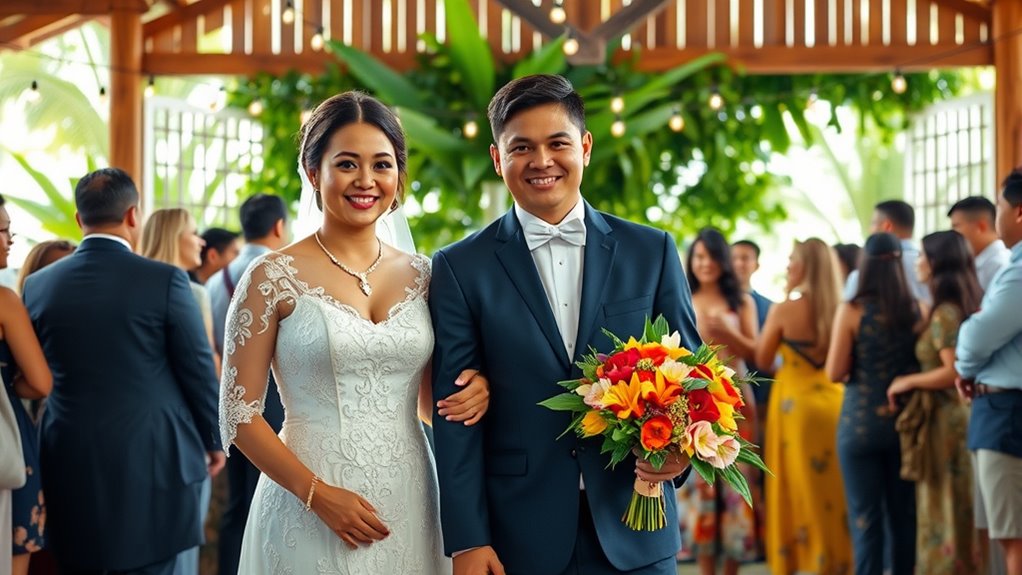

When planning a Filipino-Western wedding, focus on blending meaningful traditions from both cultures to create a memorable celebration. Choose customs that resonate with your values, such as Filipino arras or the exchange of vows and rings, and incorporate Western elements like speeches or a first dance. Coordinate with your wedding team to guarantee cultural details are respectful and authentic. Continue exploring ways to seamlessly combine these traditions for a truly personalized event.
Key Takeaways
- Select meaningful Filipino and Western traditions that resonate personally, ensuring cultural authenticity and respectful integration.
- Coordinate early with family, vendors, and officiants to seamlessly incorporate customs into the ceremony.
- Educate guests about cultural rituals through programs or explanations to foster understanding and appreciation.
- Balance and blend traditions visually and symbolically, such as decorations and rituals, to create a harmonious celebration.
- Personalize the wedding by focusing on meaningful customs and creatively combining elements to reflect the couple’s heritage and style.
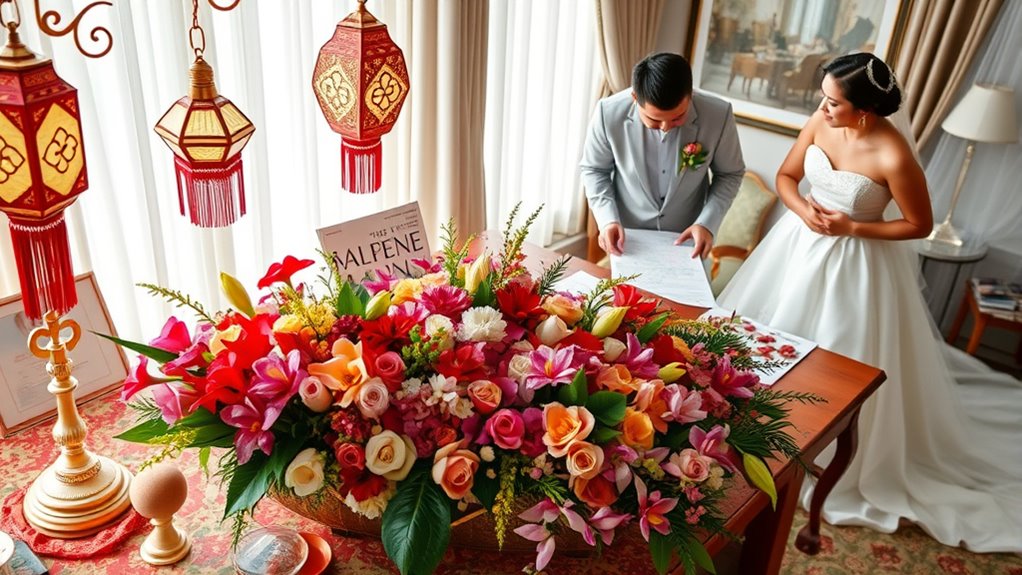
Are you wondering how to seamlessly blend different traditions and cultures for your wedding day? Planning a multicultural wedding, especially a Filipino-Western celebration, can be incredibly rewarding, but it requires thoughtful coordination. One of the first steps is understanding the cultural traditions and ceremony customs that are meaningful to you and your partner. Incorporating these elements thoughtfully ensures your wedding feels authentic and respectful to your heritage while creating a memorable experience for your guests.
Start by identifying the key cultural traditions you want to include. For Filipino customs, this might mean incorporating the *arras* (coins), which symbolize prosperity, or the *cord* and *veil* ritual, representing unity and spiritual blessing. Western ceremony customs, on the other hand, often focus on the exchange of vows and rings, emphasizing personal commitment. When you plan your ceremony, consider how these traditions can coexist harmoniously. For example, you might have the *salubong* or *dampa* (a traditional Filipino greeting or dance) before the vows, followed by a Western-style exchange of rings and vows. Blending these customs shows respect for both cultures and creates a unique narrative for your wedding.
Communication is key. Talk openly with your partner and family members about which traditions are most important and how they can be integrated. If you’re working with a wedding planner, share your vision early so they can help coordinate the ceremony customs and cultural traditions seamlessly. It’s also helpful to prepare your officiant, ensuring they understand the significance of each element and can explain them to your guests, especially if some are unfamiliar with certain customs.
Another important aspect is educating your guests about the traditions. Consider including a small program or a brief explanation during the ceremony, so everyone understands the significance of the rituals. This not only enriches their experience but also shows your respect for the customs you’re honoring. When it comes to decorations, think about combining elements from both cultures—perhaps Filipino lanterns alongside Western floral arrangements—to visually symbolize your union’s multicultural nature.
Lastly, be flexible and creative. There’s no need to force every tradition; instead, select the ones that resonate most with you and your partner. By thoughtfully weaving together cultural traditions and ceremony customs, you create a wedding that truly reflects both of your identities. This blend will serve as a beautiful foundation for your marriage, celebrating your shared heritage while embracing new traditions. Additionally, understanding the 16PF personality traits can help you and your partner navigate the planning process with greater empathy and cooperation, ensuring a harmonious celebration.
Frequently Asked Questions
How Can We Blend Filipino and Western Wedding Traditions Seamlessly?
To blend Filipino and Western wedding traditions seamlessly, you should incorporate fusion ceremonies that honor both cultures. Use cultural symbols like the Filipino *arrhae* or *cord* alongside Western rituals like the vows or ring exchange. Communicate openly with your vendors and family, and create a meaningful mix of customs that reflect your unique love story. This approach guarantees a heartfelt celebration that respects and celebrates both heritages.
What Cultural Sensitivities Should We Consider During Planning?
You should consider cultural sensitivities like respecting Filipino gift-giving customs, where gifts are often wrapped beautifully and given with humility. Be aware of cultural taboos—such as avoiding certain colors or symbols that might be offensive. Since 78% of couples say blending traditions enhances their wedding experience, guarantee open communication with both families, honoring their customs and avoiding unintentional disrespect. This approach fosters harmony and mutual respect.
How Do We Handle Language Barriers Among Guests?
To handle language barriers among guests, you should anticipate translation challenges and prepare multilingual programs or printed materials in different languages. Consider hiring interpreters or bilingual hosts to facilitate communication during the ceremony and reception. You can also incorporate visual aids, signages, and simple language to guarantee everyone feels included and engaged. These efforts help bridge communication gaps, making your multicultural wedding enjoyable and memorable for all guests.
Are There Specific Legal Requirements for a Multicultural Wedding?
You need to check local laws for specific legal requirements, as these vary by location. Typically, you’ll need to complete legal paperwork and obtain a marriage license from the appropriate government office. Make certain all documents are valid and translated if necessary, especially for a multicultural wedding. This process guarantees your marriage is legally recognized, no matter cultural differences, and helps you avoid any legal complications later.
How Can We Honor Both Families’ Expectations Effectively?
Think of your wedding as a bridge connecting two vibrant islands, each with unique traditions. To honor both families’ expectations effectively, you embrace cultural fusion—blending customs thoughtfully and with respect. You communicate openly, involving family members in planning, and create shared rituals that celebrate both heritages. This approach nurtures understanding and strengthens family dynamics, making everyone feel valued and included in your joyful journey together.
Conclusion
Planning a Filipino-Western wedding beautifully blends traditions, but did you know that embracing both cultures can actually strengthen your relationship? Studies show that couples who celebrate their differences tend to communicate better and build deeper connections. So, as you create your special day, remember that honoring your backgrounds isn’t just about traditions—it’s about forging a stronger, more vibrant union. Embrace the diversity, and watch your love story become even more meaningful.