
For your first trip to the Philippines, pack lightweight, breathable clothing like shorts, tank tops, and skirts for the hot dry season, and include waterproof jackets and quick-drying clothes for the rainy months. Don’t forget essentials such as sunglasses, hats, and sunscreen for sun protection, plus sturdy shoes for exploring. As weather varies across the country, considering different wardrobe needs will guarantee a comfortable journey—keep going to discover more tips on packing smartly.
Key Takeaways
- Pack lightweight, breathable clothing like shirts, skirts, and tank tops for the hot dry season (March-May).
- Include waterproof gear, quick-drying clothes, and an umbrella for the rainy season (June-October).
- Bring sun protection items such as hats, sunglasses, and sunblock regardless of season.
- Prepare for cooler evenings and higher altitudes with light jackets or sweaters.
- Carry versatile accessories like a waterproof phone case, reusable water bottle, and a sturdy backpack for daily excursions.

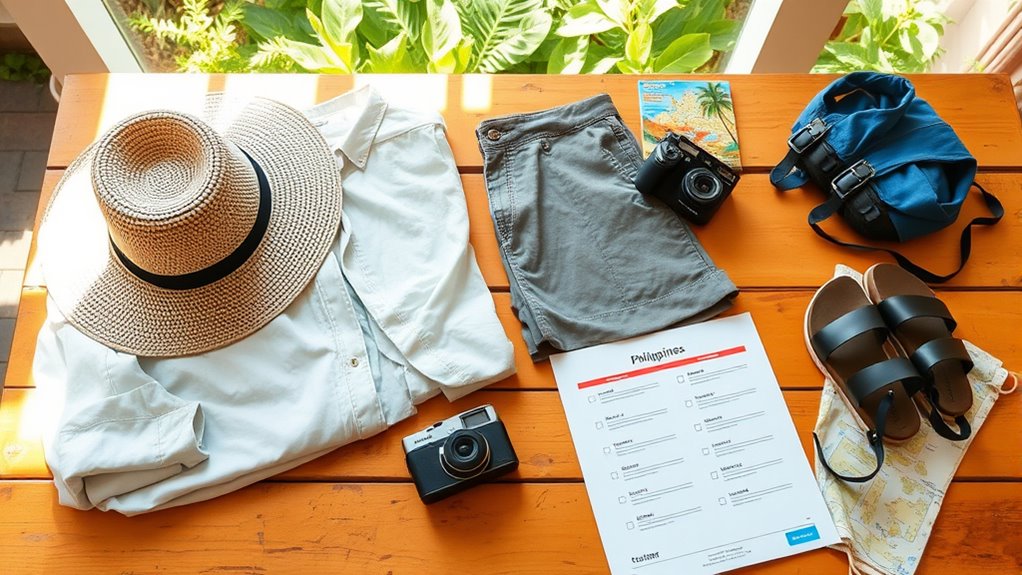
Planning your first trip to the Philippines can be exciting, but knowing what to pack is essential for a smooth experience. The country’s tropical climate means you’ll need to focus on lightweight, breathable clothing, but packing the right clothing essentials depends heavily on the season. During the hot dry season, from March to May, you’ll want to bring plenty of lightweight shirts, tank tops, shorts, and skirts. Don’t forget a wide-brimmed hat or cap to shield you from the strong sun, along with sunglasses. For footwear, pack comfortable sandals or flip-flops ideal for beach outings, and a sturdy pair of walking shoes for exploring cities and natural sights.
Pack lightweight, breathable clothing, hats, and comfortable footwear for your Philippines trip during the hot dry season.
When the rainy season hits, roughly from June to October, your packing list needs a bit more attention. Waterproof jackets or a compact raincoat become indispensable clothing essentials, along with quick-drying clothes that you won’t mind getting wet. An umbrella is also handy, especially during sudden downpours. Since humidity increases during this period, breathable fabrics like linen and moisture-wicking materials will keep you comfortable. In addition to clothing essentials, bring travel accessories like waterproof phone cases, which protect your devices from rain and water splashes, and a small, portable power bank to keep your gadgets charged during long days out.
Regardless of the season, a good-quality sunblock is vital because the Filipino sun is intense. Also, pack insect repellent, especially if you’re planning to visit rural or forested areas, and a lightweight scarf or shawl can serve multiple purposes—covering shoulders, providing extra sun protection, or adding warmth during cooler evenings. The versatility of travel gear can help you adapt to changing conditions and ensure a more comfortable trip.
Your travel accessories should include a versatile backpack or tote for daily excursions, a reusable water bottle to stay hydrated, and a compact first aid kit for minor emergencies. If you plan on snorkeling or diving, bring your swimwear and gear, or plan to rent locally. In colder months, if you’re visiting higher elevations like Baguio or Tagaytay, pack a light jacket or sweater.

LILLUSORY Women's 2 Piece Lounge Travel Outfit Beige M
- Fabric: Silky-soft, breathable Lyocell blend
- Fit & Waist: Relaxed fit with adjustable drawstring waist
- Top Design: Henley style with side pockets
As an affiliate, we earn on qualifying purchases.
As an affiliate, we earn on qualifying purchases.
Frequently Asked Questions
Do I Need a Visa to Visit the Philippines?
You might need a visa to visit the Philippines, depending on your nationality. Check the visa requirements for your country before you travel. Generally, travelers from visa-exempt countries can enter for a specific period without one, but you should carry essential documents like your passport and return ticket. For longer stays or certain purposes, obtaining a visa is necessary. Always review the latest entry policies to make sure you have all the document essentials prepared.
Are There Any Specific Health Precautions for Travelers?
When traveling to the Philippines, you should check vaccination requirements, like hepatitis A and typhoid, to stay healthy. It’s also wise to get all-inclusive health insurance options in case of emergencies. Carry a small first aid kit, stay hydrated, and use insect repellent in mosquito-prone areas. Always consult your healthcare provider before departure for personalized advice, ensuring you’re prepared for any health precautions during your trip.
What Currency Should I Carry for Transactions?
When you’re in the Philippines, it’s best to carry some local currency for easy transactions. You should consider local currency exchange options and keep cash handy for smaller purchases or places that don’t accept digital payments. While digital payments are growing in popularity, having cash guarantees you’re prepared everywhere. Balance cash and digital payments based on your activities, and always keep your money secure and accessible during your trip.
Is It Safe to Drink Tap Water in the Philippines?
Think of water safety like balancing hydration tips with caution—tap water in the Philippines isn’t safe to drink. While it’s tempting to quench your thirst easily, always opt for bottled or filtered water to stay hydrated without risk. You’ll enjoy your trip more when you prioritize water safety, ensuring you stay healthy while exploring. Carry a refillable bottle with a filter for convenience and peace of mind.
Are There Any Cultural Customs I Should Be Aware Of?
When visiting the Philippines, you should be aware of local cultural customs. Respect traditional attire, especially when visiting religious sites, by dressing modestly. Be mindful of religious customs, such as removing shoes before entering homes or temples. Greet locals with a friendly smile and use polite language. Understanding and honoring these traditions helps you show respect and enjoy a more authentic experience during your trip.

UIQUR Mens Rain Jacket Raincoat Waterproof Windbreaker Black L
- Waterproof and Windproof: High-quality waterproof fabric blocks rain and wind
- Adjustable Wide-Brim Hood: Provides full coverage and clear visibility
- Lightweight and Packable: Includes a compact foldable storage bag for portability
As an affiliate, we earn on qualifying purchases.
As an affiliate, we earn on qualifying purchases.
Conclusion
As you prepare for your Philippine adventure, remember that the right essentials can open doors to unforgettable experiences. While your packing list guides your journey, it’s the little moments and hidden treasures that truly enrich your stay. Embrace the surprises that come your way, and let your thoughtful choices gently lead you to memories you’ll cherish long after you leave. After all, sometimes the most unexpected details make the trip truly special.

Sun Bum Road Tripper – Travel Sized Sun Care Pack with Sunscreen Lotion, Face Stick, and Lip Balm – SPF 30 Broad Spectrum UVA/UVB Protection – Hawaii 104 Act Compliant – TSA Friendly
- Complete Travel Sun Care Set: Includes lotion, face stick, lip balm, and bag
- SPF 30 Broad Spectrum Protection: UVA/UVB protection for face and body
- Moisturizing and Summer Scented: Original formula with summer fragrance
As an affiliate, we earn on qualifying purchases.
As an affiliate, we earn on qualifying purchases.

Mini First Aid Kit – 150 Piece Small Waterproof Hard Shell Medical Kit for Home, Car, Travel, Camping, Truck, Hiking, Sports, Office, Vehicle & Outdoor Emergencies- Small First Aid Medical Kit (Red)
- Complete Emergency Supplies: Over 150 professional-grade medical items
- Compact & Lightweight: 6.4 x 4.9 x 2.7 inches, 0.73 lbs
- Travel-Friendly Design: Includes zippers and carabiners for convenience
As an affiliate, we earn on qualifying purchases.
As an affiliate, we earn on qualifying purchases.