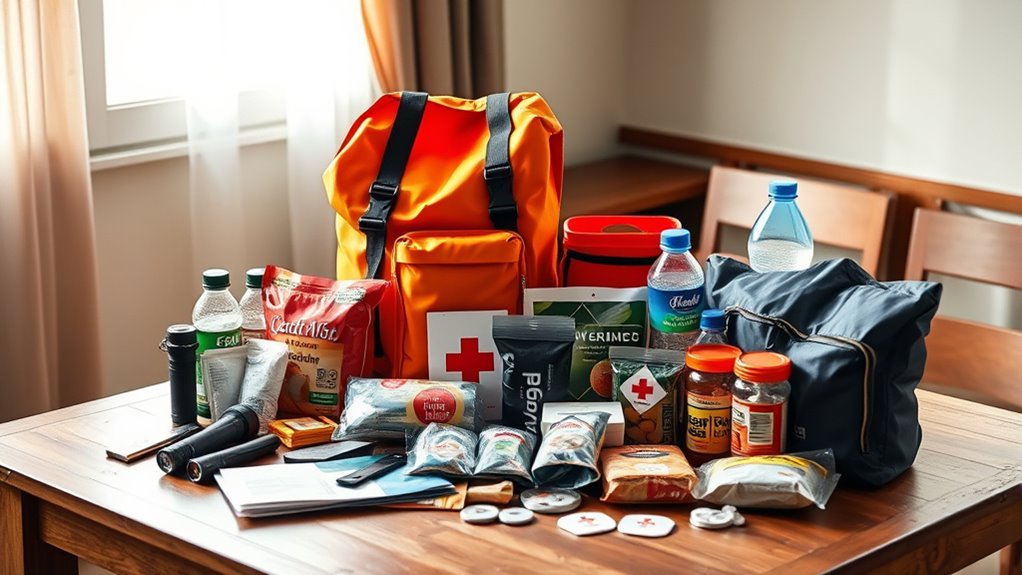

To prepare a disaster kit for couples in typhoon zones, include essentials like flashlights, batteries, spare whistles, and waterproof containers holding important documents. Make sure to have enough water, non-perishable food, and basic first aid supplies. Keep a clear evacuation plan and know your nearest shelters. Organize communication devices like portable radios and charged phones. Staying organized with these items helps you react swiftly—continue to find out how to strengthen your preparedness plan.
Key Takeaways
- Pack a shared emergency kit with essential supplies, documents, and communication devices for quick access during typhoons.
- Familiarize yourselves with local evacuation routes and shelters, marking them on maps for rapid response.
- Establish a communication plan and keep emergency contacts updated and accessible, using backup radios if needed.
- Practice your disaster response plan regularly as a couple to ensure coordination and calm during emergencies.
- Include financial preparedness, such as securing important documents and considering investments like IRAs for future resilience.

Living in a typhoon zone means being prepared for unpredictable and potentially dangerous weather events, and having a well-stocked disaster preparedness kit is essential for couples. When a typhoon strikes, quick access to critical information and safe evacuation options can make all the difference. You should familiarize yourself with evacuation routes in your area before disaster strikes. Knowing where the designated shelters are and how to reach them quickly ensures you won’t waste precious time during an emergency. Keep a detailed map or printout of these routes, and consider marking your nearest shelters for easy reference. Planning your evacuation routes in advance helps reduce panic and confusion during a storm, especially if you’re dealing with power outages or debris blocking roads.
Familiarize yourself with evacuation routes and shelters to stay safe during a typhoon.
Equally important is establishing reliable emergency communication methods. Cell networks can become overwhelmed or fail during severe weather, so having alternative ways to stay in touch with loved ones and emergency services is crucial. Invest in a portable battery-powered or hand-crank radio to receive real-time weather alerts and updates from local authorities. Keep a list of emergency contacts written down and stored in your disaster kit, including friends, family, neighbors, and local emergency services. Consider also setting up a group chat or communication plan with your partner and trusted contacts so everyone stays informed and coordinated. This way, you can quickly relay your status, location, or any needs during the storm.
Your disaster kit should include items that support your emergency communication plan and help you navigate evacuation routes safely. Flashlights, extra batteries, and a whistle can be lifesavers if power is out. Keep your phone charged and consider investing in a portable charger, so you’re not caught disconnected. Include essential documents like IDs, insurance papers, and medical records in waterproof containers, and store copies electronically if possible. These documents can be indispensable when seeking assistance or proving your identity at shelters.
Preparing for a typhoon involves more than just gathering supplies; it’s about creating a comprehensive plan that covers evacuation routes and emergency communication. Practice your plan regularly with your partner so both of you know what to do and where to go when a storm approaches. Being proactive now will help you stay calm, organized, and safe when a storm hits. Additionally, understanding IRA investing options can help you build financial resilience for future emergencies. Remember, your preparedness efforts are a key part of protecting yourselves and minimizing the impact of the storm.
Top picks for "disaster preparednes coupl"
Open Amazon search results for this keyword.
As an affiliate, we earn on qualifying purchases.
Frequently Asked Questions
How Often Should We Update Our Disaster Kit?
You should update your disaster kit regularly to guarantee its effectiveness. Conduct kit maintenance at least every six months, checking for expired items and replacing them. Practice emergency supply rotation by using and replacing perishable items like food and water annually. This routine keeps your kit ready, ensures supplies stay fresh, and helps you identify any missing items. Stay proactive—regular updates are key to being prepared for any emergency.
What Legal Documents Should We Include in Our Kit?
Imagine your legal documents are your treasure map during chaos. You should include vital legal documentation and emergency paperwork like IDs, insurance policies, medical records, and property deeds. These items guide you through legal hurdles and guarantee quick access when needed. Keep copies in a waterproof container and update them regularly. Having these essential papers ready can turn confusion into clarity, helping you navigate any storm with confidence.
How Can We Ensure Our Pet’s Safety During a Typhoon?
To guarantee your pet’s safety during a typhoon, focus on pet safety by preparing emergency pet supplies, including food, water, medications, and a sturdy carrier. Keep these supplies accessible and store them in a waterproof container. During the storm, keep your pet indoors in a safe, secure area away from windows. Regularly update your pet’s emergency kit and have a plan to evacuate if necessary, prioritizing their well-being.
Are There Specific Items Recommended for Elderly Couples?
Imagine a sturdy lighthouse guiding you through stormy seas. For elderly couples, your disaster kit should include essential symbols of safety—elderly mobility aids to keep you steady and senior healthcare supplies to guarantee ongoing health. Pack items like walking frames, hearing aids, medications, and first aid essentials. These symbols of support help you navigate the chaos confidently, ensuring safety and comfort during every turbulent wave.
How Do We Store Our Kit to Prevent Damage From Flooding?
To prevent damage from flooding, you should store your kit in waterproof containers to keep supplies dry. Additionally, place these containers on elevated storage, like shelves or pallets, away from ground level. This way, even if water rises, your essential items stay protected. Regularly check your storage setup, especially before typhoon season, to make certain everything remains secure and accessible when needed most.
Conclusion
Preparing a disaster kit is essential, especially if you live in a typhoon zone. Did you know that nearly 80% of typhoon-related deaths occur due to inadequate preparedness? By assembling a well-stocked kit, you and your partner can stay safe and minimize risks during storms. Don’t wait for the next warning—act now and make sure you’re ready to face any typhoon together. Your preparedness could be the difference between safety and disaster.