
Combining traditions like unity coins, veils, and other rituals adds depth and meaning to your wedding, reflecting your cultural heritage and personal values. Unity coins symbolize prosperity and shared responsibilities, while the veil often represents purity and trust. Incorporating these customs transforms your ceremony into a heartfelt celebration that honors your roots and love story. If you keep exploring, you’ll discover how blending these traditions creates a unique and meaningful wedding experience.
Key Takeaways
- Combining traditions like unity coins and veils enhances the ceremony’s cultural significance and personal meaning.
- Rituals such as exchanging coins and lifting veils symbolize trust, commitment, and transition into married life.
- Integrating multiple customs reflects respect for heritage and creates a personalized, heartfelt celebration.
- Layering symbols like coins, veils, and candles deepens emotional and spiritual connections during the ceremony.
- Thoughtful combination transforms traditional elements into a unique expression of love, identity, and cultural heritage.
Many couples today are blending ancient traditions to create meaningful wedding ceremonies, and combining unity coins, veils, and rituals is a beautiful way to symbolize their bond. These elements aren’t just decorative; they carry deep cultural symbolism and ritual significance that can enrich your celebration. Understanding the origins and meanings behind these customs allows you to personalize your wedding, honoring your heritage while creating new memories.
Blending ancient traditions like unity coins and veils enriches your wedding with cultural meaning and personal significance.
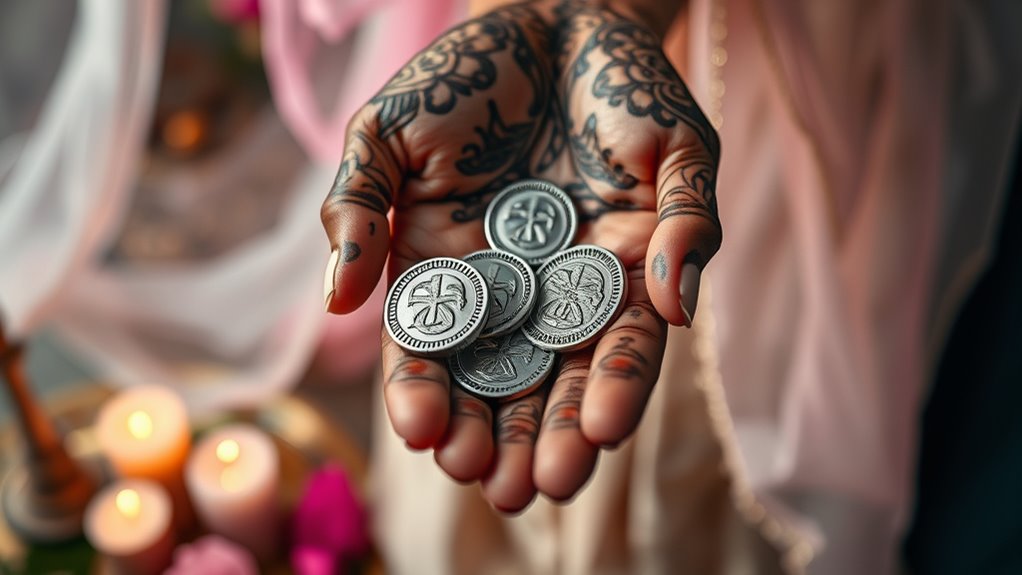
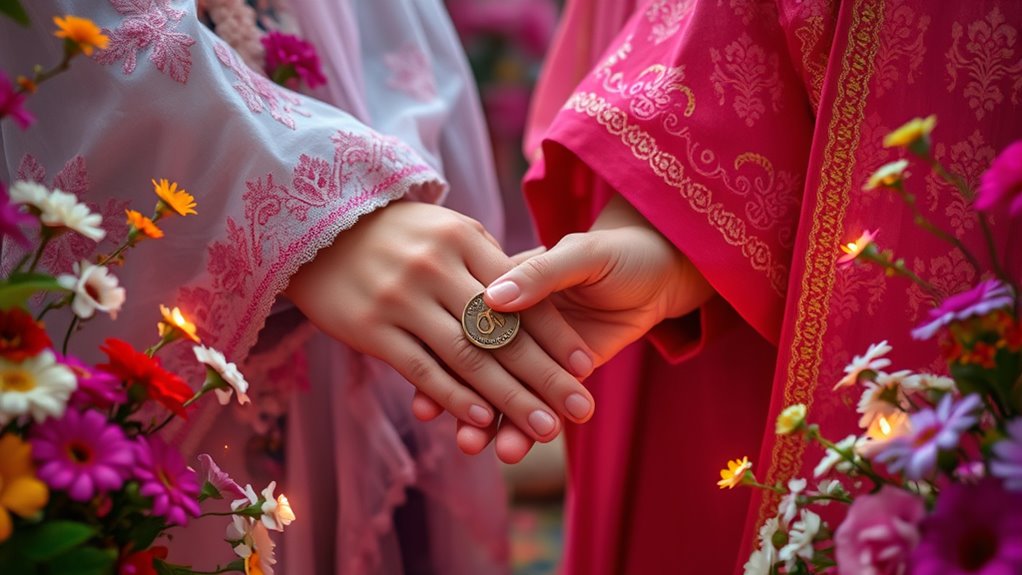
Unity coins, often called “arras” in Spanish-speaking cultures, symbolize prosperity and trust. When you exchange these coins during your vows, you’re embracing the idea of sharing wealth and responsibilities in your marriage. The ritual’s significance goes beyond material exchange; it’s a gesture of commitment and mutual support. The coins themselves often feature religious or cultural symbols, reinforcing the sacred nature of your union. Incorporating this tradition can reflect your desire for a prosperous life together, rooted in centuries of cultural practice.
The veil is another powerful symbol with rich ritual significance. Historically, veils represented purity, modesty, and the bride’s shift from single life to married life. In some cultures, lifting the veil signifies the groom’s acceptance of his bride, symbolizing trust and the reveal of a new chapter. Wearing a veil can also honor family or religious customs, adding layers of cultural meaning to your ceremony. Choosing a veil that resonates with your heritage deepens the ritual’s significance, linking your wedding to ancestral traditions and shared cultural values.
Other rituals often accompany these elements, like the lighting of candles or the tying of cords, each adding to the tapestry of symbolism. These rituals serve as physical acts that embody emotional and spiritual commitments, making your ceremony more than just a celebration—it’s a meaningful rite of passage. When you incorporate cultural symbolism thoughtfully, you create a layered narrative of love, trust, and cultural pride.
Integrating unity coins, veils, and rituals allows you to craft a wedding that reflects your unique heritage and personal beliefs. It’s about respecting tradition while making it your own. By understanding the cultural symbolism and ritual significance of each element, you guarantee that your ceremony remains authentic and heartfelt. This blending of customs not only honors your past but also sets a meaningful foundation for your future together. In the end, these traditions become more than mere symbols—they transform your wedding into a profound expression of love, history, and cultural identity.
Frequently Asked Questions
How Do Different Cultures Interpret Unity Coins?
You might notice that different cultures interpret unity coins through their unique cultural symbolism and ritual significance. Some view them as symbols of unity, prosperity, or good luck, while others see them as tokens of commitment or blessing. You’ll find that these coins often play essential roles in ceremonies, representing shared values or spiritual bonds, making their meaning deeply rooted in specific cultural traditions and beliefs.
Are Veil Rituals Used for Specific Occasions Only?
Imagine a bride wearing a veil during her wedding, symbolizing purity and cultural significance. You might wonder if veil rituals are only for special occasions. In many cultures, they serve as meaningful ritual symbolism, used during weddings or religious ceremonies to mark significant life events. While often reserved for specific moments, some traditions incorporate veil rituals more broadly to honor cultural heritage or spiritual beliefs.
Can Rituals Be Customized for Personal Beliefs?
You can definitely customize rituals to reflect your personal beliefs. Many ceremonies offer flexibility and personalization options, allowing you to incorporate meaningful symbols or traditions that resonate with you. Ritual flexibility means you’re not confined to strict rules, so you can adapt rituals to suit your spiritual journey. This way, your ceremonies feel more authentic and special, making the experience truly meaningful and unique to you.
What Are the Historical Origins of These Traditions?
Tracing the trail of these traditions reveals their roots in ancient symbolism, where rituals evolved to embody spiritual significance. You’ll find that unity coins, veils, and other customs stem from diverse cultural origins, each with unique stories of societal solidarity and sacred ceremonies. Over time, these rituals transformed, blending symbolism and spiritual practices, creating meaningful traditions that continue to resonate in modern ceremonies.
How Do Modern Practices Adapt Ancient Rituals?
You see, modern practices adapt ancient rituals by emphasizing their symbolic significance, making them more relevant today. Ritual adaptation involves blending traditional elements with contemporary values, allowing you to connect deeply with timeless meanings. For example, couples might customize unity coins or veil ceremonies to reflect their personal journeys. This evolution keeps rituals meaningful while respecting their historical roots, helping you celebrate love and unity in a way that resonates in your life today.
Conclusion
As you weave together the threads of unity coins, veils, and rituals, you craft a vibrant tapestry of tradition and love. These symbols are like keys opening memories and meaning, turning ceremonies into lifelong stories. Embrace the beauty in blending old and new, for it’s in this harmony that traditions truly come alive. Let your unique celebration shine like a beacon, guiding others to find their own special rhythm amidst the rich mosaic of customs.