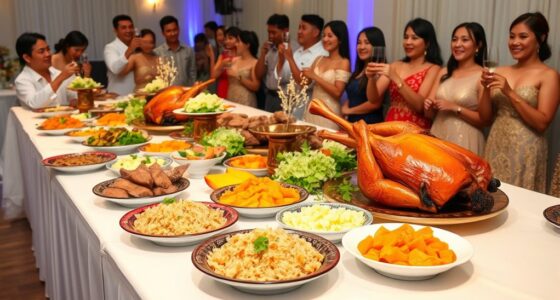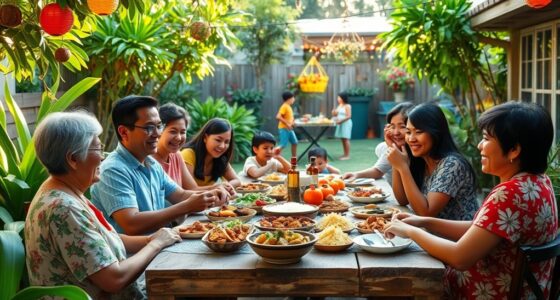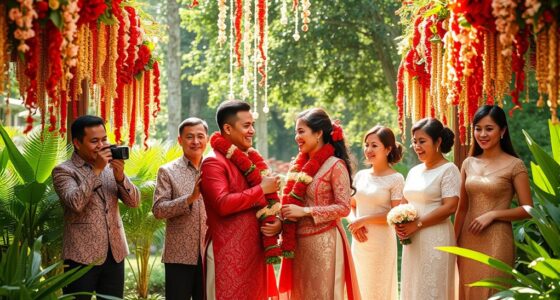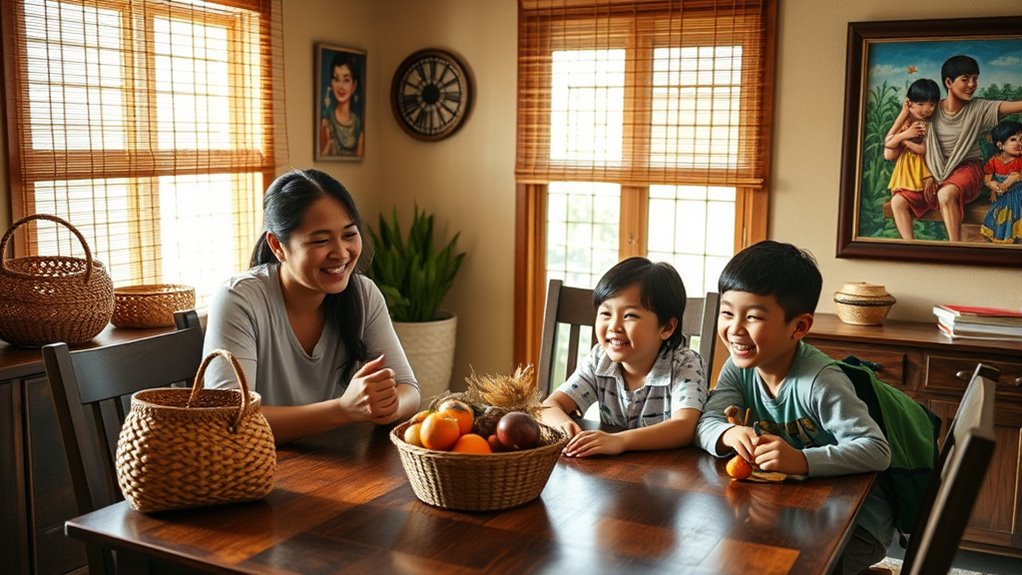

Navigating cultural differences in a Fil-Am family involves intentionally blending Filipino traditions, language, and values with American customs. You can do this by encouraging your children to speak Tagalog at home, celebrate Filipino holidays, and participate in community events, while also supporting their American identity through school and friendships. Creating a safe space for cultural exploration helps your kids feel proud of both sides. If you keep exploring, you’ll discover more strategies to nurture their dual identity confidently.

Get gifts for the two of you delivered free with Prime
- Fast, free delivery on millions of items
- Prime Video, Amazon Music and more included
- Member-only deals all year
Key Takeaways
- Create a safe space for children to express and explore both Filipino and American cultures.
- Incorporate Filipino traditions, language, and holidays into daily routines alongside American customs.
- Encourage open conversations about cultural identity to foster understanding and pride.
- Support language preservation through practice, classes, and integrating Tagalog into everyday life.
- Be patient and loving as children navigate and blend their dual cultural identities over time.
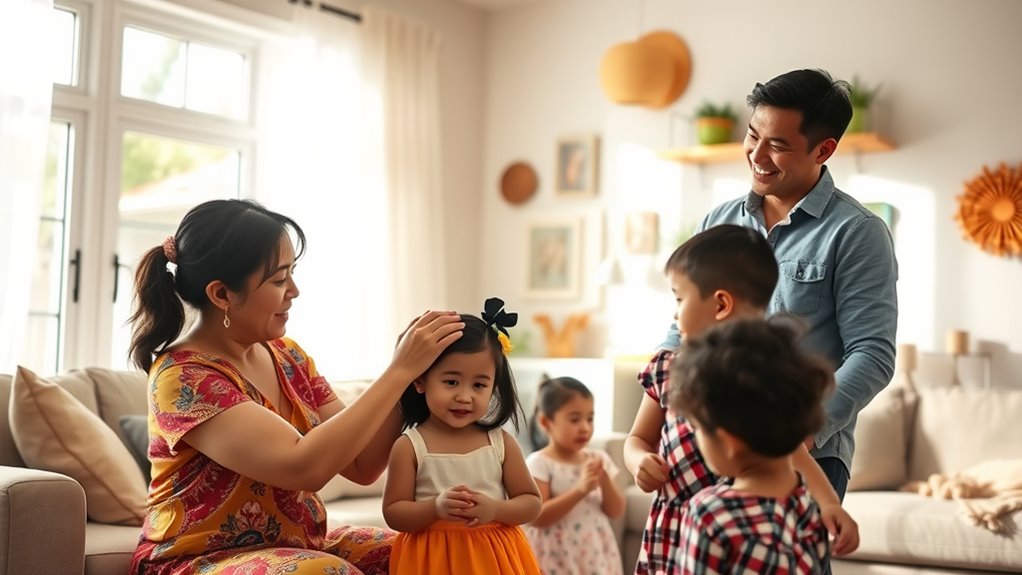
Have you ever wondered what it’s like to balance two cultures within a single family? It’s a continuous journey that involves embracing your Filipino roots while adapting to American customs. As a parent, you want your children to feel connected to their cultural identity, which often means actively teaching them about family traditions, history, and values. Preserving your language is a crucial part of this process. You might speak Tagalog at home, listen to Filipino music, or cook traditional dishes to keep your heritage alive. These small but meaningful actions help your kids understand where they come from and foster a sense of belonging. However, it’s not always easy to maintain language preservation, especially when they’re exposed to English outside the home. You may find yourself repeating words or phrases, encouraging them to speak Tagalog, or even enrolling them in language classes. The goal is to make Filipino language and culture a natural part of their daily life, not something they see as a burden.
Balancing these two worlds requires patience and flexibility. You may face moments when your children feel torn between their Filipino identity and their American upbringing. They might prefer to speak English because it’s the language used at school and with friends, which can lead to a sense of disconnect from their roots. It’s important to create a safe space where they can express their cultural identity without judgment. Share stories from your childhood, celebrate Filipino holidays, or participate in community events. These activities help your kids appreciate their heritage and develop pride in their dual identity. It’s also vital to acknowledge that cultural identity isn’t static; it evolves as they grow. Some children might adopt more American customs, while others become more immersed in Filipino traditions. Your role is to support their exploration and help them integrate both aspects into their lives.
Understanding the importance of cultural preservation can guide your efforts to maintain your heritage while adapting to new environments. Ultimately, navigating cultural differences isn’t about choosing one side over the other but blending them seamlessly. Your efforts to preserve language and nurture cultural identity empower your children to become confident, well-rounded individuals. They’ll learn to appreciate their Filipino roots while thriving in an American environment. By fostering open conversations about culture, encouraging language use, and celebrating traditions, you create a family atmosphere where dual identities are embraced, not divided. This balance isn’t always straightforward, but with patience and love, you’ll help your children grow up proud of who they are—Filipino and American alike.
Popular right now

Ninja Luxe Café Mini Plus Espresso and Drip Coffee Machine with AutoFroth, Stainless Steel, ES351

Samsung 48-Inch S90H OLED 4K Smart TV (2026)

Vitamix Propel Series 510 Professional-Grade Blender, 3 Programs, Black
As an affiliate, we earn on qualifying purchases.
Frequently Asked Questions
How Do Fil-Am Families Handle Language Barriers at School?
You handle language barriers at school by promoting bilingual communication at home, which helps your kids feel confident and connected. You might also encourage language immersion programs or bilingual classes to enhance their skills. Attending school events as a family and communicating regularly with teachers guarantees you’re involved in their education and can address any language challenges promptly. This approach nurtures your child’s language development and supports their overall success.
What Are Common Conflicts Between Filipino and American Parenting Styles?
Think of parenting styles as two rivers converging—sometimes smoothly, sometimes with splashes. You might find conflicts arise between authoritative parenting, which emphasizes structure and guidance, and American tendencies to foster independence, encouraging kids to explore freely. These differences can create tension as you balance setting boundaries with giving your child room to grow. Managing this blend requires patience, understanding, and a shared goal of raising resilient, respectful children.
How Do Fil-Am Families Celebrate Traditional Filipino Holidays?
You celebrate Filipino holidays by gathering with family to honor traditions and participate in cultural festivals. You share Filipino cuisine, preparing dishes like adobo or lechon, to connect with your roots. During these celebrations, you may wear traditional clothing or perform Filipino dances, creating a vibrant atmosphere. It’s a meaningful way to pass cultural values to your children, fostering pride and understanding of your Filipino heritage.
What Resources Support Fil-Am Parents in Navigating Cultural Identity?
Did you know that 65% of Fil-Am parents seek community support to strengthen their cultural identity? You can find resources like local Filipino organizations, cultural workshops, and online forums that help you connect with others facing similar challenges. These tools empower you to navigate cultural differences confidently, ensuring your kids embrace their heritage while thriving in your community. Leveraging community support makes it easier to nurture a strong, positive cultural identity for your family.
How Can Fil-Am Families Maintain Filipino Values in a Western Environment?
To maintain Filipino values in a Western environment, prioritize cultural preservation by sharing Filipino traditions, stories, and language at home. Engage with your community through Filipino events, organizations, and gatherings, fostering a strong sense of identity. Encourage your kids to celebrate their heritage while embracing their Western surroundings. This balance helps them stay connected to their roots and develop pride in their Filipino identity.
Conclusion
Guiding the delicate dance of cultural differences can feel like walking a tightrope, but with patience and open hearts, you’ll find your balance. Embrace the small moments of understanding, knowing they gently bridge the gap between worlds. Your efforts plant seeds of harmony and respect, helping your children blossom in a rich, blended heritage. Trust that, over time, your nurturing will create a warm, welcoming space where traditions intertwine gracefully, guiding your family toward a bright and harmonious future.