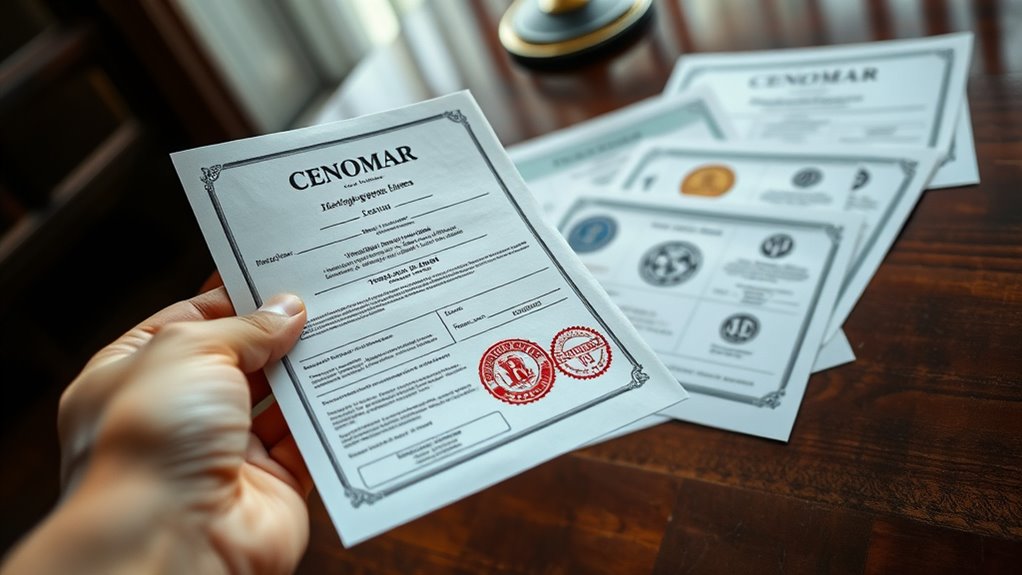

In the Philippines, a CENOMAR (Certificate of No Marriage) shows you’re not currently married, while other papers like birth certificates and valid IDs prove your identity and age. These documents are essential for legal marriage, ensuring all requirements are met and your union is valid. You’ll also need a marriage license before tying the knot. Keep exploring to discover the full list of necessary papers and how to prepare them properly for a smooth process.
Key Takeaways
- A CENOMAR certifies that an individual has no marriage record, essential for marriage applications or legal processes.
- Other marriage papers include birth certificates, valid IDs, and if applicable, divorce or annulment documents.
- These documents are submitted to the local civil registrar or PSA for verification and recording.
- An official marriage certificate is the primary legal proof of marriage recognition in the Philippines.
- Properly prepared documents, including CENOMAR, ensure smooth processing and legal validity of the marriage.

Have you ever wondered what marriage papers actually are and why they’re so important? When you’re planning to tie the knot in the Philippines, understanding these documents is vital. Marriage papers serve as official proof of your marital status and confirm your union complies with local laws. They’re necessary for legal recognition, future legal transactions, and to prevent any issues with your marriage validity. The process begins with meeting specific legal requirements, which vary depending on your circumstances, such as your nationality or whether you’re previously married. These legal requirements often include birth certificates, valid IDs, and sometimes, a CENOMAR, which is a certificate of no marriage. Once you’ve gathered all the necessary documents, the next step is document processing. This involves submitting your papers to the local civil registrar or the Philippine Statistics Authority (PSA), where they verify and record your marriage details. Additionally, understanding the document processing steps can help prevent delays and ensure your papers are correctly handled. Document processing is a key part of guaranteeing your marriage is legally recognized. It can be straightforward if all your papers are complete and correctly filled out, but delays can happen if there are missing or inaccurate details. For example, if your birth certificate isn’t up-to-date or if your CENOMAR shows you’re still legally married to someone else, you’ll face setbacks. That’s why it’s wise to double-check all your documents before submission. The processing includes notarization, verification, and sometimes translating documents if they’re from abroad. Once everything is approved, you’ll receive an official marriage certificate, which acts as your primary legal proof of marriage. Understanding these procedures helps you avoid legal issues later on. Without the proper marriage papers, your union might not be recognized officially, which can affect your rights to property, inheritance, or spousal benefits. Furthermore, if you plan to get married abroad or settle in another country, having these documents in order becomes even more vital. The Philippines also mandates the presentation of other marriage papers such as the Marriage License, which you obtain after submitting your requirements and paying the necessary fees at the local civil registry. This license is a prerequisite before your wedding ceremony can take place.

Trend Certificate of Excellence Classic Certificates, 8-1/2" x 11", 30 Count
- Type: Certificate of Excellence
As an affiliate, we earn on qualifying purchases.
As an affiliate, we earn on qualifying purchases.
Frequently Asked Questions
How Long Does It Take to Process a CENOMAR?
Processing a CENOMAR for marriage verification typically takes about 2 to 5 working days if you apply in person at the Philippine PSA. If you request it online, it may take a bit longer, around 3 to 7 days. You should guarantee your documents are complete to confirm document authenticity quickly. Expedited processing options are often available for urgent needs, so check with the PSA for faster turnaround times.
Can I Get a CENOMAR Online?
You can actually get a CENOMAR online through digital verification services, making the process more convenient. When you apply online, you simplify document authenticity checks, ensuring your records are genuine. It’s no coincidence that many people prefer this method, as it saves time and effort. Just visit the official government portal or accredited agencies, and you’ll receive your CENOMAR securely, quickly, and with verified authenticity, right at your fingertips.
Is a CENOMAR Valid Internationally?
Yes, a CENOMAR is generally valid internationally for marriage verification and document authenticity purposes. However, it’s best to verify the specific requirements of the country you’re dealing with, as some may require additional documents or notarization. Always make sure your CENOMAR is properly authenticated or apostilled if necessary, so authorities abroad recognize its validity and confirm your marital status accurately.
What Are the Costs Involved in Obtaining Marriage Papers?
You’ll need to pay processing fees and other costs for marriage documentation, which vary depending on the documents required and the local government office. Expect fees for obtaining a CENOMAR, marriage license, and authentication if needed for international use. These costs generally range from a few hundred to a thousand pesos each. Always check with your local civil registry or embassy for specific fees and additional expenses to avoid surprises.
Can I Use a CENOMAR for Visa Applications?
Yes, you can use a CENOMAR for visa applications, acting as a key to your marital status. Think of it as your marriage certification’s secret handshake, proving your single or married status. Just guarantee your document undergoes proper authentication, like document authentication, to meet the visa requirements. This official paper helps consulates verify your background, making your visa process smoother and opening doors to new adventures.

GraduationMall US Birth Certificate Holder 8.5×11 Birth Certificate Cover Protector with Logol "Birth Certificate" Birth Gifts
- Country-specific Design: US birth certificate protector with gold text
- Secure Protection: Includes 8 corner ribbons and clear sleeve
- Official Seal: Features gold foil Great Seal of USA
As an affiliate, we earn on qualifying purchases.
As an affiliate, we earn on qualifying purchases.
Conclusion
Now that you understand the different marriage papers from CENOMAR to marriage licenses, you’ll navigate these documents with confidence. Remember, knowledge is power, and knowing what each paper entails helps you avoid surprises down the road. Think of it as having a foot in the door—you’re better prepared for the journey ahead. So, stay informed, double-check your papers, and you’ll be all set to tie the knot without a hitch.

Philippines Philippinese Filipinos and American USA Flag 6"X12" Aluminum Auto Tag Front License Plate for Trucks & Suvs | Weatherproof Rustproof Metal Decorative Sign
- Durable Aluminum Construction: Weatherproof, rustproof, fade-resistant finish
- Vibrant Flag Graphics: High-resolution Philippines and USA flag design
- Universal Fitment: 6×12 inches with standard mounting slots
As an affiliate, we earn on qualifying purchases.
As an affiliate, we earn on qualifying purchases.

Marriage Certificate with Greenery Eucalyptus on Linen 6pk 8.5×11” License Commitment Ceremony for Photographs Minimalist Wedding Gift Custom
- Elegant Greenery Eucalyptus Design: Delicate eucalyptus motif for a natural touch
- Premium Linen-Textured Cardstock: High-quality, soft-textured linen paper
- Standard 8.5” x 11” Size: Fits standard frames and albums
As an affiliate, we earn on qualifying purchases.
As an affiliate, we earn on qualifying purchases.