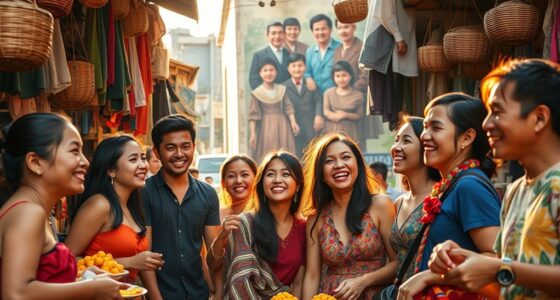
Understanding utang na loob and pakikisama helps you see how Filipino values shape relationships. Utang na loob is about feeling grateful and reciprocating kindness, while pakikisama emphasizes harmony and going along with the group to avoid conflict. These values promote mutual support, respect, and social cohesion. Keeping these in mind can deepen your relationships and foster trust. If you continue exploring, you’ll discover how these principles strengthen Filipino community bonds even further.
Key Takeaways
- Utang na loob is a reciprocal gratitude that fosters trust, loyalty, and ongoing appreciation in relationships.
- Pakikisama emphasizes harmony and cooperation, encouraging individuals to go along with group preferences to maintain peace.
- Both values promote social cohesion by strengthening mutual support, respect, and community bonds.
- Utang na loob creates a sense of obligation that reinforces loyalty and gratitude over time.
- Pakikisama nurtures inclusiveness and consensus, ensuring relationships remain harmonious and respectful.

Have you ever wondered how Filipino values like utang na loob and pakikisama shape everyday relationships? These cultural principles play a significant role in guiding how you interact with others, emphasizing the importance of reciprocal obligations and social harmony. When someone helps you out, it’s not just a favor; it’s a gesture that creates a sense of mutual responsibility. You feel compelled to return the kindness, fostering a cycle of support that strengthens your bond. This sense of obligation isn’t burdensome but rather an intrinsic part of maintaining harmony within your community. It encourages you to be considerate, dependable, and attentive to the needs of others, ensuring that relationships remain balanced and respectful.
Filipino values like utang na loob and pakikisama foster mutual support and social harmony in everyday relationships.
In Filipino culture, utang na loob—literally translating to “debt of gratitude”—embodies this idea of reciprocal obligations. When someone extends help, whether it’s emotional, financial, or practical, you recognize that you owe them a debt that you should repay when the opportunity arises. This doesn’t mean keeping a strict ledger of favors, but rather nurturing a sense of ongoing gratitude that cements your relationship. It’s a way of affirming trust and loyalty, reinforcing the social fabric that keeps communities united. The obligation isn’t seen as a burden but as an expression of respect and appreciation, which in turn promotes social harmony. You become more mindful of your actions, knowing that your responses influence the collective well-being.
Pakikisama complements this idea by emphasizing harmony and smooth interpersonal relationships. It encourages you to go along with the group’s wishes, avoid conflict, and maintain a friendly, cooperative attitude. When you prioritize social harmony, you’re more likely to accommodate others’ opinions and seek consensus rather than confrontation. This value fosters a sense of unity, ensuring that disagreements don’t escalate into divisiveness. It’s about creating an environment where everyone feels valued and included, which ultimately benefits the community as a whole.
Both utang na loob and pakikisama guide you to act with empathy and consideration, reinforcing social cohesion. You understand that your actions impact not just yourself but also those around you. By honoring reciprocal obligations and promoting harmony, you help sustain the trust and goodwill that keep relationships resilient. These values remind you that strengthening social bonds isn’t just about individual benefit but about nurturing a collective sense of belonging and mutual support. In this way, Filipino cultural values shape your everyday interactions into meaningful connections rooted in respect, loyalty, and community spirit.
Frequently Asked Questions
How Do Utang Na Loob and Pakikisama Influence Modern Filipino Business Practices?
You see, utang na loob and pakikisama heavily influence modern Filipino business practices by fostering strong business loyalty. You might find that gift giving customs are common to show gratitude and maintain harmonious relationships. These values encourage you to prioritize personal connections over strict contracts, ensuring trust and cooperation. As a result, business partnerships thrive on mutual respect, making relationships as important as the deals themselves.
Can These Cultural Traits Cause Misunderstandings in Multicultural Workplaces?
Yes, these cultural traits can cause misunderstandings in multicultural workplaces. You might interpret gift giving or social obligations differently, leading to confusion or miscommunication. For example, you may see gift giving as unnecessary expense, while your Filipino colleagues view it as a sign of respect and gratitude. Recognizing that utang na loob and pakikisama emphasize relationships helps you navigate these differences and foster better collaboration.
How Do These Concepts Affect Filipino Immigrants’ Integration Abroad?
When you’re a Filipino immigrant abroad, Utang Na Loob and Pakikisama influence your integration by strengthening family bonds and emphasizing social obligations. You might prioritize helping family members or maintaining harmony within your community, which can sometimes challenge your ability to adapt quickly to new environments. While these traits foster strong relationships, they may also lead to difficulties balancing personal ambitions and social responsibilities in a foreign setting.
Are There Any Negative Consequences of Overemphasizing Utang Na Loob and Pakikisama?
You might find yourself caught in a web of overcommitment risks, where constantly putting others first strains your relationships. Overemphasizing utang na loob and pakikisama can lead to burnout, guilt, and loss of personal boundaries. While these values foster connection, too much focus on them risks sacrificing your well-being and authenticity. Balance is key to nurturing genuine bonds without drowning in obligation or resentment.
How Can Foreigners Respectfully Navigate These Cultural Expectations?
To respectfully navigate these cultural expectations, you should observe local gift-giving customs by giving thoughtful, modest gifts, especially during family obligations. Show genuine appreciation and avoid overdoing it, which might seem insincere. Engage with family members kindly, listen actively, and respect their traditions. By demonstrating humility and understanding, you’ll foster trust and build meaningful relationships without overstepping cultural boundaries.
Conclusion
Think of utang na loob and pakikisama as the sturdy threads weaving the fabric of your relationships. When you nurture these values, you create a tapestry of mutual respect and loyalty, strengthening your bonds through trust and understanding. Just like a well-tended garden, these principles flourish when cared for with sincerity. Embrace them wholeheartedly, and you’ll find your connections growing richer and more resilient—turning everyday interactions into a beautiful masterpiece of harmony.