

Many Filipinas seek foreign partners because economic factors play a big role in their lives. They often rely on remittances from family members abroad, which creates financial instability when jobs are lost or economic conditions change. Income gaps and limited local opportunities push them to look for better prospects overseas. These relationships can offer a way to improve living standards and access resources they can’t find at home. To better understand these complex drivers, explore the deeper economic realities influencing their choices.
Key Takeaways
- Filipinas often seek foreign partners to secure additional financial support amid economic hardship and income disparity.
- Heavy reliance on remittances from abroad creates economic vulnerability, motivating relationships for stability.
- Limited access to quality services locally pushes Filipinas to pursue international partnerships for better opportunities.
- Economic disparities encourage Filipinas to view foreign relationships as a means to achieve upward mobility.
- Financial motivations, rather than romance alone, drive many Filipinas to seek foreign partners for improved living standards.
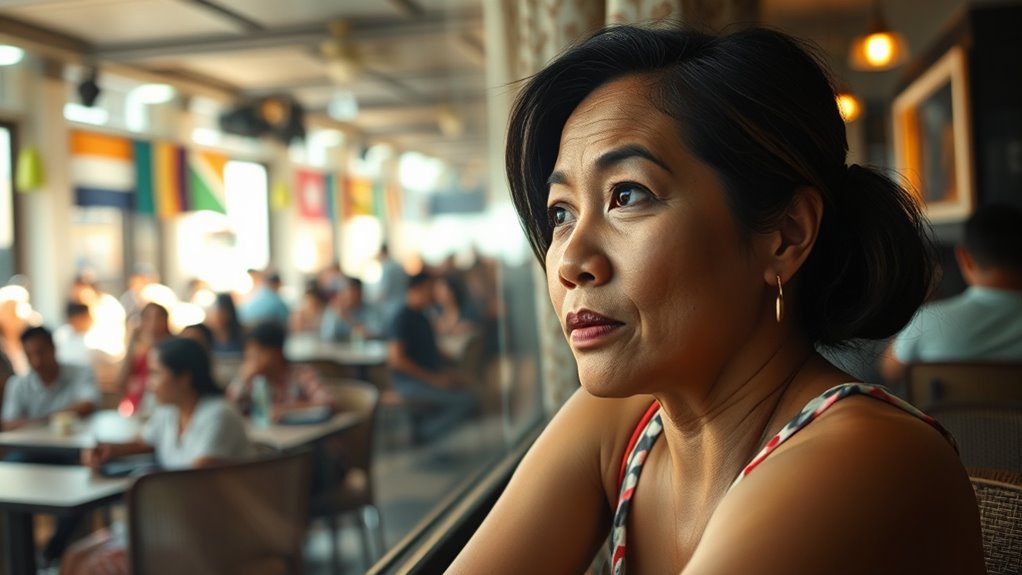
Economic factors play a vital role in shaping the financial landscape you steer daily. For many Filipinas, these factors influence key decisions, including why some seek foreign partners. One significant element is remittance dependence. Many families in the Philippines rely heavily on remittances sent by relatives working abroad. These funds often make up a large portion of household income, providing stability but also creating a reliance that can be risky. When economic conditions in host countries change or job opportunities diminish, families may feel vulnerable. This dependence on remittances can lead Filipinas to contemplate alternative avenues for financial security, including establishing connections with foreign partners who might offer additional support or stability.
Many Filipinas depend on remittances, prompting them to seek foreign partners for financial stability amid economic vulnerabilities.
Income disparity is another crucial factor. Within the Philippines, there’s a noticeable gap between the wealthiest and the poorest. This inequality makes it challenging for many Filipinas to access quality education, healthcare, and employment opportunities. As a result, some seek relationships with foreign partners who can offer a different lifestyle or financial stability that’s lacking locally. The desire for upward mobility, combined with limited opportunities at home, pushes some to explore international relationships as a pathway to improve their economic standing. These partnerships can provide not just financial support but also a sense of security that’s often missing in their everyday lives.
You might notice that these economic factors are interconnected. For instance, income disparity often fuels remittance dependence, as families look for ways to supplement their income through overseas work or support. This cycle creates an environment where seeking foreign partners becomes an understandable response to economic pressures. Many Filipinas view such relationships as a way to bridge the income gap, gain access to better opportunities, or escape the cycle of poverty. While some pursue these partnerships for love or companionship, others see them primarily as a practical solution to economic hardships.
Understanding these underlying economic factors helps clarify why some Filipinas are drawn to foreign relationships. It’s not solely about romance but also about steering a complex environment shaped by remittance dependence and income disparity. These issues influence their choices and aspirations, often making international partnerships seem like a viable option for achieving financial stability and improving their lives. Recognizing this context allows for a more compassionate perspective on their decisions, acknowledging the economic realities that drive their pursuit of relationships beyond national borders.
Frequently Asked Questions
How Do Cultural Differences Influence Filipinas’ Choice of Foreign Partners?
Cultural differences influence your choice of foreign partners by highlighting the importance of cultural compatibility and shared values. Filipinas often seek partners who respect traditional values while offering new perspectives, creating a balanced relationship. You might find that cultural understanding fosters better communication and mutual respect, making foreign partners more appealing. Embracing these differences helps you build a meaningful connection, blending traditional Filipino values with the diverse cultural backgrounds of your partner.
What Role Does Language Barrier Play in These Relationships?
Language barriers can substantially impact your relationship, as limited language fluency may cause communication challenges. You might struggle to express your feelings clearly or misunderstand each other, leading to frustration. These challenges require patience and effort from both partners to overcome. While language differences can create hurdles, they also offer opportunities to learn and grow together, strengthening your bond and fostering deeper understanding over time.
Are There Legal Considerations for Filipinas Partnering With Foreigners?
You need to take into account legal compliance and immigration regulations when partnering with foreigners. Filipinas should guarantee their relationship aligns with local laws, including visa requirements and marriage regulations. It’s essential to stay informed about legal processes for residency or marriage, as failure to comply can lead to immigration issues or legal complications. Consulting legal experts or immigration authorities helps you navigate these rules effectively and avoid future problems.
How Does Social Perception Impact Filipinas Seeking Foreign Partners?
Like a butterfly caught between two flowers, your choices are influenced by societal expectations and social stigma. When Filipinas seek foreign partners, they often face judgment rooted in traditional norms that view such relationships as unconventional. Social perception acts as a double-edged sword, shaping their decisions and how they’re viewed by family and community. Despite this, many pursue these relationships to seek stability, love, or new opportunities beyond societal constraints.
What Support Networks Exist for Filipinas in International Relationships?
You can find support through community organizations that offer resources and guidance for Filipinas in international relationships. Online forums also provide a space to share experiences, ask questions, and get advice from others in similar situations. These networks help you navigate cultural differences, address concerns, and build confidence. By connecting with these groups, you gain valuable support, making your international relationship journey smoother and more informed.
Conclusion
So, next time you wonder why some Filipinas look abroad for partners, remember it’s often about opportunity—something seemingly coincidental yet deeply rooted in economic realities. You might find it surprising how chance encounters or unexpected circumstances can lead someone to seek a better future elsewhere. Sometimes, what appears to be luck is really a response to life’s economic pressures, shaping choices that can change lives in ways you’d never expect.