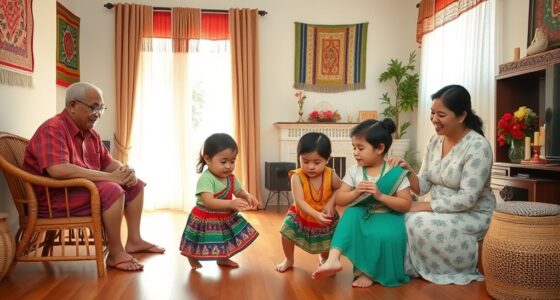
In Filipino culture, friends play a crucial role in shaping your sense of community, heavily marked by “barkada” or close social groups. These friendships are built on loyalty, trust, and mutual support, often involving shared meals, conversations, and support during hardships. Friendships reflect core values like hospitality and inclusiveness, strengthening social bonds. If you want to understand how these relationships contribute to Filipino identity and resilience, there’s more to explore below.
Key Takeaways
- Friends in Filipino culture, especially within “barkada,” form a close-knit support system rooted in loyalty and trust.
- “Barkada” fosters social bonding through shared activities like gatherings, meals, and storytelling, reinforcing community ties.
- Filipinos prioritize maintaining strong personal connections, viewing friendship as integral to cultural identity and collective well-being.
- Relationship dynamics emphasize mutual support, kindness, and loyalty, shaping resilient social networks across different settings.
- Friendship reflects core Filipino values of community, trust, inclusiveness, and shared traditions, strengthening societal cohesion.
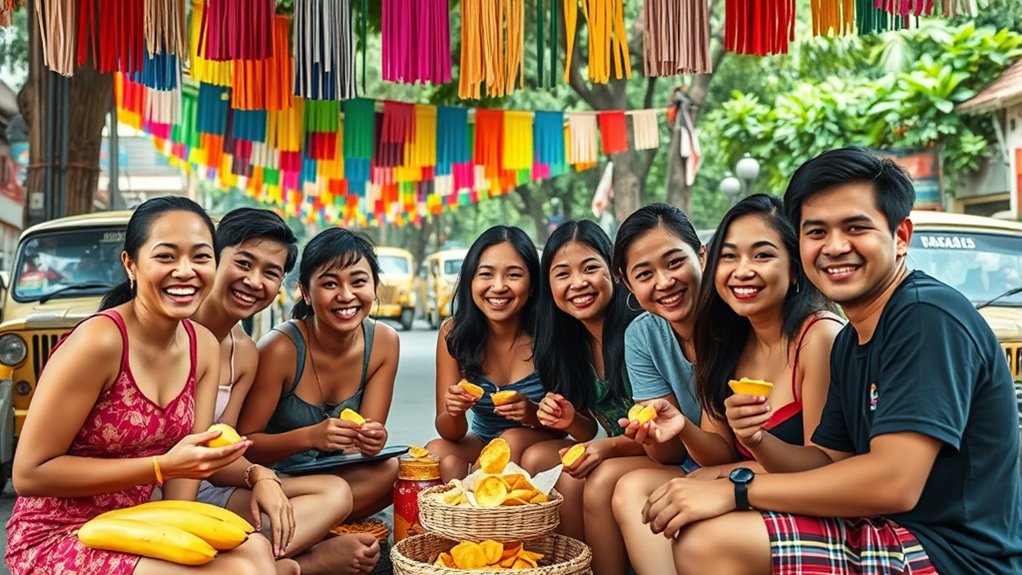
Have you ever wondered how friendship is celebrated in Filipino culture? It’s more than just casual acquaintances or occasional hangouts; it’s an essential aspect of how Filipinos build social bonding and express their cultural identity. In the Philippines, friendships are deeply rooted in a sense of community, where loyalty, trust, and mutual support form the foundation of every relationship. When you join a barkada—a close-knit group of friends—you’re stepping into a social circle that’s like an extended family. These groups often gather regularly, sharing meals, stories, and experiences that strengthen their bond. The concept of “barkada” isn’t just about having fun; it’s about creating a network of people who stand by each other through thick and thin, which is a core value in Filipino society.
Social bonding is the heart of Filipino friendships. Whether it’s celebrating special occasions, helping each other during tough times, or simply spending time together, Filipinos prioritize maintaining strong connections. It’s common for a friend to invite others over for a meal, offering hospitality that reflects the Filipino value of *kapwa*, or shared identity. These gatherings often involve lively conversations, laughter, and a sense of warmth that makes everyone feel included. Through these acts of social bonding, friendships become more than just casual relationships—they’re a reflection of Filipino cultural identity. They showcase a collective spirit, emphasizing that no one is truly alone, and everyone’s well-being matters.
Additionally, Filipino friendship dynamics are often characterized by a strong emphasis on interpersonal relationships, which fosters a sense of loyalty and mutual responsibility among friends. When you’re part of a barkada, you’re expected to look out for each other, celebrate each other’s successes, and provide comfort during hardships. This cultural trait reinforces social bonding and solidifies a sense of belonging. It’s common to see friends supporting each other’s dreams, sharing resources, or simply being present during important moments in life. These acts of kindness and loyalty are expressions of cultural identity, reinforcing the Filipino way of valuing close relationships and community ties.
In Filipino culture, friendship isn’t just about casual companionship; it’s about creating a resilient social fabric that reflects shared values and collective identity. Through social bonding, Filipinos express their sense of belonging and uphold traditions that have been passed down through generations. Whether in small barangays or urban settings, the importance of friends remains central, shaping how Filipinos see themselves within their society. So, when you think about Filipino friendships, remember it’s a celebration of community, trust, and the enduring spirit of togetherness.
Top picks for "role friend filipino"
Open Amazon search results for this keyword.
As an affiliate, we earn on qualifying purchases.
Frequently Asked Questions
How Do Filipino Friends Maintain Long-Term Relationships?
You maintain long-term Filipino friendships by staying connected through regular communication and participating in cultural celebrations together. You support each other during life’s milestones, sharing responsibilities like helping with family obligations or community events. Showing genuine concern and being dependable strengthen your bond. By celebrating successes and offering comfort during hardships, you nurture trust and loyalty, ensuring your friendship endures through the years.
What Are Common Ways Filipinos Show Loyalty to Friends?
Did you know that 85% of Filipinos consider loyalty essential in friendships? You show loyalty by giving thoughtful gift giving and sharing meals, which strengthen bonds. You stand by your friends through thick and thin, supporting their successes and struggles. These actions demonstrate deep commitment and trust, reflecting Filipino values of caring and community. Your consistent presence and gestures show your friends they’re truly valued and cherished.
How Do Age and Social Status Affect Friendship Dynamics?
Age and social status substantially influence your friendship dynamics. Generational differences may lead you to value tradition or modern perspectives, affecting how you connect. Social hierarchy shapes your interactions, as you might show more respect or form closer bonds with those of higher status. You adapt your behavior based on these factors, balancing respect and camaraderie to maintain harmonious relationships across different age groups and social levels.
Are There Specific Gestures That Signify Close Friendship in the Philippines?
Like a handshake sealing trust, a “tampo” or playful pouting signals closeness in Filipino friendships. Cultural gestures such as teasing, frequent “kain tayo” invites, or sharing food serve as friendship symbols, showing warmth and camaraderie. When you call someone “kapatid,” or treat them like family, it signifies deep bonds. These gestures, rich with meaning, symbolize the trust, affection, and kinship that define Filipino friendship dynamics.
How Do Friendship Roles Differ Across Various Filipino Regions?
You’ll notice that friendship roles differ across Filipino regions due to regional customs and cultural variations. In urban areas like Manila, friendships tend to be more modern and casual, while in provinces, traditional values like respect and family bonds shape closer, more formal relationships. These regional differences influence how you interact, show loyalty, and celebrate camaraderie, reflecting the diverse ways Filipinos honor friendship within their unique cultural contexts.
Conclusion
In Filipino culture, friends aren’t just companions—they’re family. You’ll find yourself sharing laughter, struggles, and support, creating bonds that feel unbreakable. Some might say friends can’t replace family, but imagine walking down bustling streets, knowing your barkada is right behind you, ready to catch you if you fall. It’s this deep connection that makes friendships in the Philippines truly special, turning everyday moments into lifelong memories.