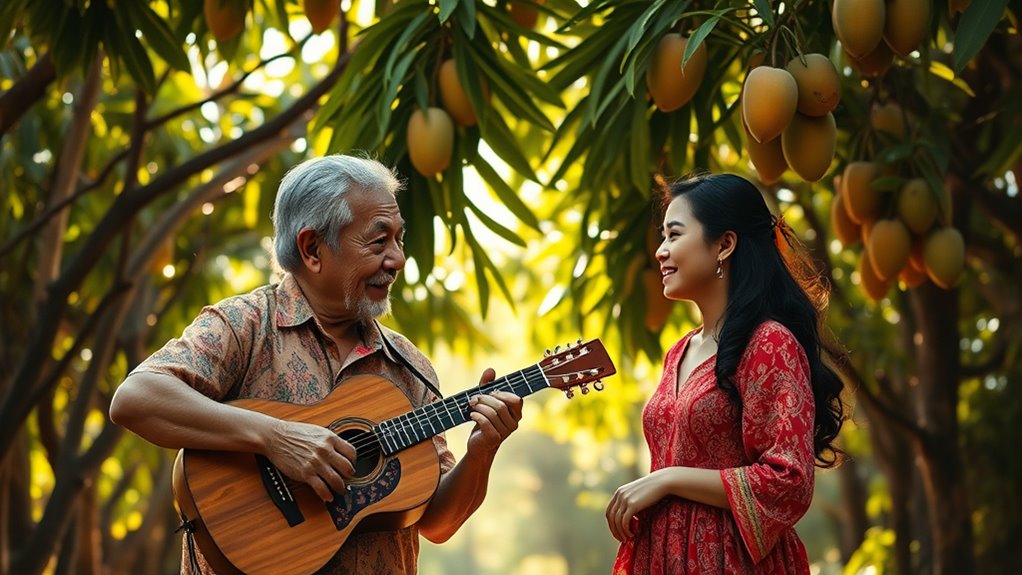

The art of panliligaw is a beautiful Filipino tradition that showcases respect, sincerity, and humility in courtship. You might encounter gestures like serenading with a *harana*, giving thoughtful gifts, or openly expressing your feelings to deepen the connection. These rituals are meant to honor values passed down through generations, emphasizing genuine emotion and social harmony. By understanding these customs, you’ll see how love and pride unite Filipino culture—if you continue exploring, you’ll discover even more heartfelt traditions.
Key Takeaways
- Panliligaw is a Filipino cultural practice of courtship that emphasizes respect, sincerity, and genuine connection.
- Traditional gestures include serenading (*harana*), gift-giving, and public acts of love that honor social and familial values.
- It reflects core Filipino values such as humility, respect, and community involvement in romantic pursuits.
- Modern adaptations utilize digital platforms like social media for heartfelt messages and virtual serenades.
- Despite changes, the essence of panliligaw remains rooted in sincerity, respect, and cultural pride.
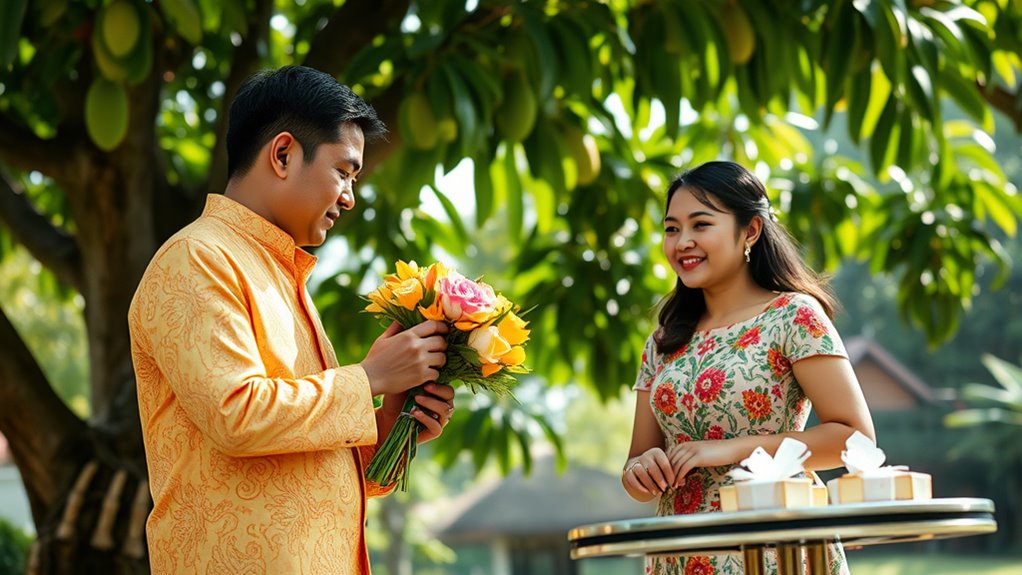
Have you ever wondered what makes traditional panliligaw truly special? At its core, panliligaw is more than just courtship; it’s a vibrant expression of Filipino culture and values. The practice holds deep cultural significance, reflecting respect, sincerity, and a heartfelt desire to connect with someone you admire. It’s a ritual passed down through generations, embodying the Filipino’s emphasis on humility and genuine intent. While modern times have introduced changes, the essence of panliligaw remains rooted in these cultural ideals, even as adaptations emerge to fit contemporary lifestyles.
Panliligaw is a heartfelt Filipino tradition rooted in respect, sincerity, and cultural pride.
In traditional settings, panliligaw involves a series of respectful gestures—like the famous *harana*, where a suitor serenades his beloved outside her window, often accompanied by friends or family. This act isn’t just about singing; it symbolizes devotion, patience, and the willingness to invest effort for love. The man typically brings gifts, such as flowers or food, as tokens of sincerity. These rituals serve as a public declaration of intentions, allowing the community to witness the courtship, reinforcing the importance of social harmony and respect for family opinions. The cultural significance of these acts underscores the Filipino’s deep-rooted values of honor and humility in love.
Today, modern adaptations of panliligaw still honor its traditional roots but are more flexible to suit today’s social landscape. For instance, some suitors now opt for digital serenades or heartfelt messages over traditional *harana*. Social media and messaging apps have become new platforms for expressing affection, allowing for creative, personalized ways to show interest without the formalities of the past. Despite these changes, many still appreciate the sincerity behind a handwritten letter or a thoughtful gesture, emphasizing that the core values of respect and genuine intent remain unchanged.
While these modern adaptations make courtship more accessible and convenient, they don’t diminish the cultural significance of the practice. Instead, they highlight how Filipino traditions adapt to current times while maintaining their foundational principles. Whether through a serenade in person or a heartfelt message online, panliligaw continues to symbolize hope, respect, and the pursuit of love—values that resonate deeply within Filipino society. So, no matter how the courtship is expressed, the heart of panliligaw remains rooted in genuine emotion and cultural pride, bridging the past and present in a beautiful dance of love.
Frequently Asked Questions
How Has Modern Technology Influenced Traditional Panliligaw Practices?
Modern technology has profoundly influenced traditional panliligaw practices by introducing digital communication and social media influence. You now send heartfelt messages via chat or social media, making courtship more accessible and immediate. Instead of face-to-face interactions, you can showcase your intentions online, share photos, and even seek advice from friends. This blend of tradition and technology allows you to connect more conveniently, though it sometimes challenges the personal touch of classic Filipino courtship.
Are There Regional Differences in Filipino Courtship Customs?
Think of Filipino courtship as a vibrant tapestry woven with regional variations, each adding unique colors from cultural diversity. In some areas, courtship flows like a gentle river, emphasizing modesty and family involvement. Elsewhere, it’s more like a lively fiesta, filled with music and lively gestures. These regional differences highlight how local customs shape the way you express love, reflecting the rich cultural mosaic across the Philippines.
What Are Common Mistakes to Avoid During Panliligaw?
During panliligaw, avoid common mistakes like misreading signals and overstepping boundaries. Always pay close attention to your loved one’s cues; if they seem uninterested or uncomfortable, respect their feelings. Don’t push for a response or invade their personal space. Be patient, sincere, and mindful of their comfort. Respecting boundaries and understanding signals helps build trust and shows genuine respect, making your courtship more meaningful and successful.
How Do Families Typically Get Involved in the Courtship Process?
Imagine you’re courting someone in a Filipino community where family involvement is key. Usually, families get involved early by offering guidance, setting up meetings, or giving blessings. Community influence shapes the process, ensuring respect and tradition are maintained. Parents often act as mediators, ensuring both sides are comfortable. This close family involvement helps strengthen bonds, fostering trust and support in the courtship journey.
What Role Does Spirituality or Religion Play in Filipino Courtship?
You find that spirituality and religion deeply influence Filipino courtship, guiding your actions through faith practices and religious rituals. You might attend church together, seek blessings from elders, or participate in prayers to strengthen your bond. These rituals help you demonstrate respect, sincerity, and commitment, showing that your relationship aligns with your values. By incorporating faith into your courtship, you honor traditions and foster a sense of spiritual unity.
Conclusion
As you navigate the art of panliligaw, remember it’s like tending a delicate garden—patience, respect, and genuine effort help it flourish. I once watched a couple’s slow dance of courtship, their sincerity blooming like a rare flower in full bloom. Just as a gardener tends to each plant with care, your thoughtful gestures and heartfelt words nurture love’s growth. Embrace this tradition, and watch your own love story blossom beautifully over time.