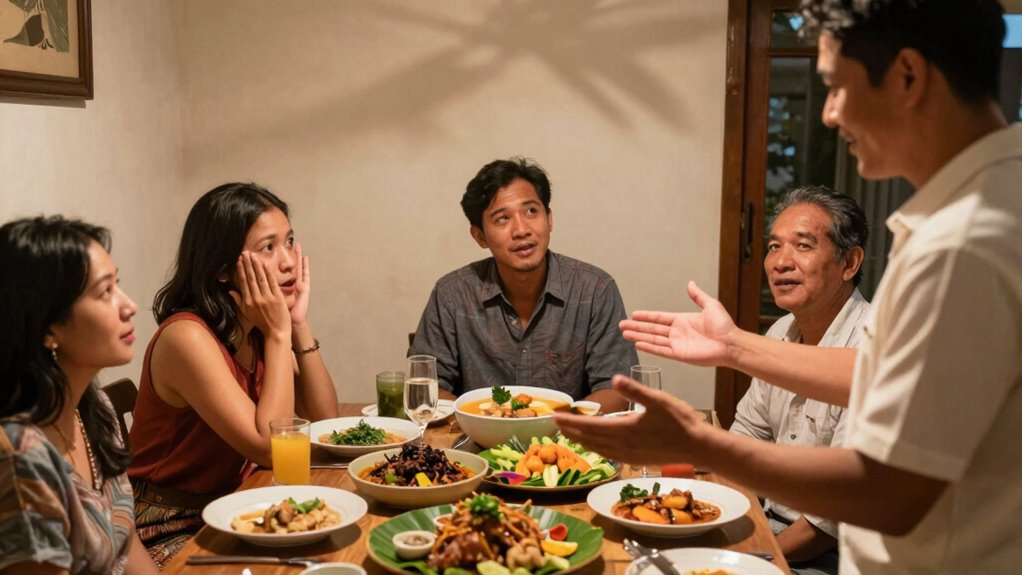

Steering through Filipino hospitality while asserting your boundaries can be tricky. You’ll find that food offerings are a sign of genuine care, making it important to respond thoughtfully. When you need to say no, offer a gracious response like, “Thank you, but I’m full.” Acknowledge their kindness without blunt refusals. Suggesting future activities shows you value the relationship while maintaining your comfort. Understanding these nuances can enhance your connections, leading to richer interactions and experiences.
Key Takeaways
- Understand that declining an offer in Filipino culture may be seen as rude; approach refusals with tact and gratitude.
- Use gracious responses, like “Thank you, but I’m full,” to acknowledge hospitality without rejecting it outright.
- Propose alternative activities, such as meeting another time, to maintain relationships while respecting personal boundaries.
- Engage in honest discussions about your comfort levels to foster understanding and strengthen connections with Filipino friends.
- Learning about cultural nuances enhances interactions, helping balance hospitality with personal boundaries effectively.
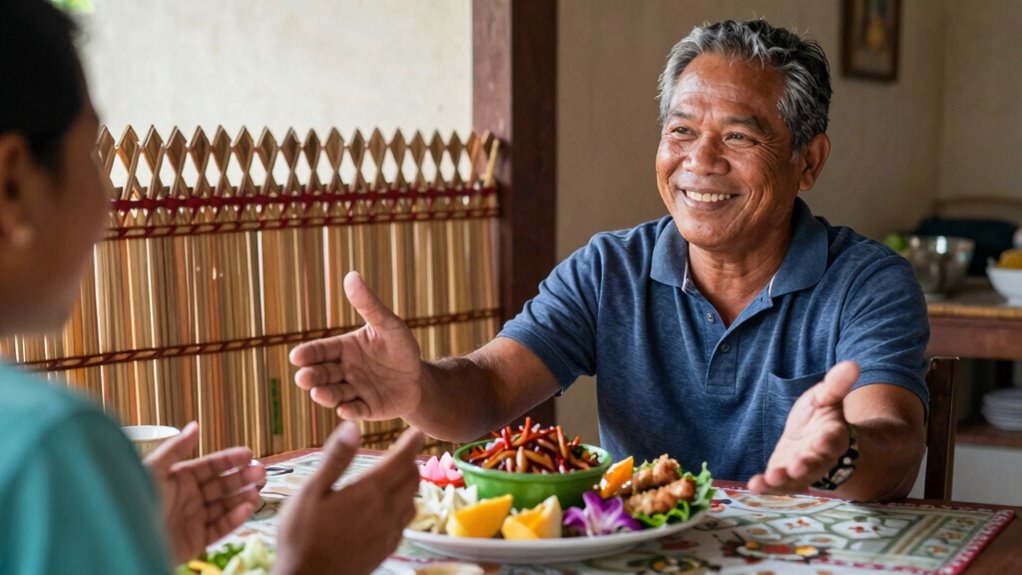
Have you ever experienced the warmth of Filipino hospitality? If you have, you know how welcoming and generous Filipinos can be. When you step into a Filipino home, you might be greeted with a spread of food, laughter, and an invitation to stay longer than you planned. It’s a beautiful aspect of their culture, but it also comes with its own set of cultural expectations that might catch you off guard, especially when it comes to personal space.
In Filipino culture, offering food or a place to stay is more than just a friendly gesture; it’s a way to show love and respect. When someone invites you over, they genuinely want you to feel at home. However, it’s essential to remember that these gestures sometimes come with unspoken expectations. You might feel pressured to accept their offerings, even when you’re not comfortable doing so. This can create a bit of a dilemma, especially if you’re someone who values personal space and prefers to decline politely.
Saying no in a way that’s respectful can be tricky. It’s essential to be aware of how your refusal might be perceived. In Filipino culture, declining an offer can sometimes be seen as rude or dismissive. So how do you navigate this? Start by being gracious. Instead of a blunt no, you might say something like, “Thank you so much, but I’m really full,” or “I appreciate the offer, but I have other plans.” This way, you acknowledge their hospitality without directly rejecting them.
Another helpful tip is to suggest an alternative. If you’re not comfortable accepting food, you might offer to meet another time or suggest a different activity. This shows that you value their friendship while also respecting your boundaries. It’s about finding that balance between honoring their cultural expectations and maintaining your personal space.
Ultimately, it’s about communication. The more you engage with your Filipino friends and family, the more you’ll learn about their perspectives. They’ll appreciate your honesty and might even share their own experiences with boundaries. In Filipino culture, understanding cultural expectations and how they influence behavior can help you navigate social interactions more smoothly. In the end, Filipino hospitality is a beautiful dance of connection, and finding your rhythm can lead to even deeper relationships. So, embrace the warmth, but don’t forget to carve out your own space too.

Heart and Heritage: A Journey Through Filipino Customs and Traditions
As an affiliate, we earn on qualifying purchases.
As an affiliate, we earn on qualifying purchases.
Frequently Asked Questions
How Can I Practice Filipino Hospitality Without Overextending Myself?
You can practice hospitality without overextending yourself by setting clear guest expectations upfront. Let your guests know what you can offer, and don’t hesitate to express your limits. Use self-care strategies like scheduling downtime between hosting duties. This way, you’ll recharge and maintain your energy. Remember, it’s okay to say no when you need to prioritize your well-being. Balancing kindness with your needs guarantees a positive experience for everyone involved.
What Are Common Scenarios Where Boundaries May Be Tested?
Common scenarios where your boundaries may be tested include family gatherings where expectations run high, friend requests that demand time you can’t spare, and work obligations that pile on. Community events might pressure you into participation, while social invitations can feel overwhelming. Volunteer commitments often come with unspoken demands, making it hard to say no. Recognizing these situations helps you maintain balance while still being considerate of others’ needs.
How Do I Recognize When to Say No?
You can recognize when to say no by practicing self-awareness techniques. Pay attention to your feelings and energy levels; if you feel overwhelmed or uncomfortable, it’s a sign to decline. Use respectful refusals, like saying, “I appreciate the invite, but I can’t commit right now.” Trust your instincts and remember that it’s okay to prioritize your well-being. Setting boundaries isn’t selfish; it’s essential for maintaining healthy relationships.
Are There Cultural Exceptions to Saying No in Filipino Culture?
Yes, there are cultural exceptions to saying no in Filipino culture. Notably, about 70% of Filipinos value social harmony over individual desires, highlighting cultural nuances in interactions. You’ll often find that, due to social expectations, people might avoid saying no directly to maintain relationships. Instead, they may use softening phrases or body language to express reluctance, ensuring they don’t hurt feelings while still trying to navigate their own boundaries.
How Can I Communicate My Boundaries Effectively?
To communicate your boundaries effectively, practice assertive communication. Start by clearly stating your needs without being apologetic. Use “I” statements, like “I need some time for myself,” to convey your message directly. When it comes to a respectful refusal, express gratitude for the offer but stand firm in your decision. Remember, being honest and kind helps maintain relationships while ensuring your boundaries are respected. Don’t hesitate to reinforce your limits as needed.
As an affiliate, we earn on qualifying purchases.
Conclusion
In the garden of relationships, Filipino hospitality blooms brightly, but without healthy boundaries, it can overshadow the delicate flowers of self-respect. Imagine a fence, not to keep others out, but to nurture the beauty within. By learning to say no politely, you cultivate a space where kindness and self-care coexist. Just as a gardener prunes for growth, setting boundaries helps you flourish while still sharing your warmth with others, creating a harmonious landscape of connection.
Cultural Sensitivity Training: Developing the Basis for Effective Intercultural Communication
As an affiliate, we earn on qualifying purchases.
As an affiliate, we earn on qualifying purchases.

Iconikal Hardcover Guestbook 1260 Entries Charcoal 10×8" Spiral
- Capacity: Holds up to 1260 entries
- Design: Elegant charcoal hardcover
- Size: 10×8 inches
As an affiliate, we earn on qualifying purchases.
As an affiliate, we earn on qualifying purchases.