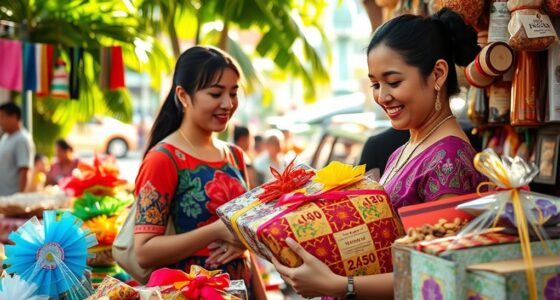
You’ll notice how Filipino dating customs have shifted from traditional courtship, which emphasizes gestures like flowers and family approval, to more modern, digital approaches. Millennials tend to combine respect and meaningful activities, while Gen Z prefers spontaneous chats and quick meetups through social media and messaging apps. These differences reflect evolving cultural values and technology’s role in relationships. If you want to explore how these changes shape Filipino romance today, keep going to uncover more details.
Key Takeaways
- Millennials prefer traditional courtship with family approval, while Gen Z favors spontaneous online chats and quick meetups.
- Millennials emphasize formal gestures like flowers and face-to-face interactions, whereas Gen Z uses emojis and casual messaging.
- Digital communication has made dating more casual and fast-paced for Gen Z, contrasting with Millennials’ more deliberate approach.
- Millennials value meaningful activities and respect in dating; Gen Z focuses on authenticity, shared interests, and immediate connections.
- Both generations prioritize honesty and respect, but their methods of expressing affection and initiating relationships differ significantly.

Dating in the Philippines has evolved considerably, especially as Millennials and Gen Z navigate different social norms and communication styles. If you’re exploring Filipino dating etiquette today, you’ll notice that traditional courtship still influences many dating practices, but digital communication has drastically changed how relationships develop. For Millennials, following traditional courtship often meant formal gestures—bringing flowers, asking the parents’ permission, and engaging in slow, deliberate steps to build trust. These rituals emphasize respect and family involvement, reflecting deeply rooted cultural values. However, even Millennials are increasingly blending these customs with modern approaches, like texting or calling instead of face-to-face conversations, making courtship more flexible but still respectful of tradition.
For Gen Z, digital communication is the backbone of their dating culture. You might find that they prefer chatting via social media, instant messaging apps, or dating platforms, often opting for quick exchanges over traditional face-to-face interactions. This shift creates a more casual, fast-paced dating scene where formalities are less emphasized. While some still value traditional courtship, Gen Z tends to prioritize authenticity and shared interests over elaborate gestures. They’re more comfortable expressing affection through emojis, memes, and casual messages, which can sometimes blur the lines between friendship and romance. This digital-first approach allows for more connection but also demands a new set of etiquette—like knowing when to turn off the screen and meet in person, or respecting boundaries in virtual conversations.
You’ll also notice that the approach to initiating relationships varies greatly between the two groups. Millennials might still prefer to have a slow, respectful courtship, often involving family approval and meaningful dating activities. Meanwhile, Gen Z is more open to spontaneous online chats, quick meetups, and even “friendship first” strategies that can develop into something more. Despite these differences, both groups value honesty and respect, though how they show it may differ. Millennials may adhere more closely to traditional gestures, while Gen Z expresses their feelings through digital means, sometimes with less formality but equal sincerity. Understanding the importance of aligning thoughts and feelings with one’s intentions is key in modern Filipino dating practices, especially as more young people explore mindset and emotional connection in their relationships.
Filipino traditional courtship guidebook
As an affiliate, we earn on qualifying purchases.
As an affiliate, we earn on qualifying purchases.
Frequently Asked Questions
How Has Social Media Influenced Dating Customs Among Filipinos?
Social media has profoundly influenced Filipino dating customs by transforming digital communication, making it easier to connect instantly. You often seek social validation through likes and comments, which can shape your dating choices and perceptions. It encourages more openness and transparency but also adds pressure to maintain a perfect online image. This shift influences how you express affection, build relationships, and navigate social expectations in modern Filipino dating culture.
Are Traditional Filipino Courtship Practices Still Common Today?
You might notice that Filipino courtship and traditional dating practices are still quite common today, especially in more conservative communities. Many people continue to value respectful gestures like “panliligaw” and family involvement. While modern dating often incorporates social media and casual meetups, traditional Filipino courtship remains a meaningful part of the culture, blending old customs with contemporary ways to build romantic connections.
How Do Family Expectations Differ Between Millennials and Gen Z?
Did you know that 65% of Filipino Gen Zs say family approval influences their relationship choices? You might notice that Gen Z tends to seek more independence, while Millennials often involve parents in major decisions. With shifting attitudes, Gen Z values parental involvement but prefers open conversations, whereas Millennials may prioritize personal freedom. Family expectations now balance respect for tradition with a desire for individual autonomy, shaping how relationships develop today.
What Role Does Religion Play in Modern Filipino Dating?
Religion plays a significant role in modern Filipino dating by influencing values and expectations. You might participate in religious rituals or consider faith-based dating as part of your relationship journey. Many Filipinos see faith as a foundation for trust and commitment, shaping how you approach dating and courtship. Even as you navigate modern relationships, religious beliefs often guide your choices, emphasizing respect for traditions and spiritual connection.
How Has Online Dating Changed Filipino Romantic Relationships?
Think of online dating as a new dance floor—digital communication becomes your partner’s rhythm, guiding your steps. Virtual dating lets you connect across miles, turning screens into bridges. This shift makes romance more accessible and spontaneous, like sending a message in a bottle that quickly reaches someone special. You’re no longer limited by geography, and digital tools help you build genuine connections while steering through the evolving Filipino dating scene.
digital dating accessories for Filipinos
As an affiliate, we earn on qualifying purchases.
As an affiliate, we earn on qualifying purchases.
Conclusion
As you navigate this evolving landscape, one thing is clear: Filipino dating customs are shifting in unexpected ways. Will tradition hold strong, or will new trends redefine what it means to connect? The clash between Millennials and Gen Z hints at a future where surprises await—where old rules might be rewritten, and new ones forged. Stay tuned, because the next chapter in Filipino romance is just beginning, and you won’t want to miss how it unfolds.
PENTA ANGEL Handmade Cherry Blossom Card Pop Up 3D Flower Romantic Love Letter Greeting Anniversary Wedding Valentine Birthday Gift Card Blank Stationery Paper for Her Him Husband Wife
Best card to express your love-My love for you, as bright as cherry blossoms, never changes and lasts…
As an affiliate, we earn on qualifying purchases.
As an affiliate, we earn on qualifying purchases.
social media messaging apps for couples
As an affiliate, we earn on qualifying purchases.
As an affiliate, we earn on qualifying purchases.