Filipino wedding traditions are full of meaningful symbols that reflect love, respect, and cultural pride. Wearing the Barong Tagalog or Filipiniana dress shows humility and honor, while rituals like the Arrhae, Veil, and Cord symbolize unity, prosperity, and everlasting bonds. Community participation, like the Money Dance, reinforces family support and good fortune. These customs deeply embody Filipino values and heritage. If you continue exploring, you’ll discover even more about these beautiful traditions and their significance.
Key Takeaways
- Traditional attire like the Barong Tagalog and Filipiniana symbolize purity, honor, and cultural pride.
- Rituals such as the Arrhae, Veil, and Cord ceremonies represent unity, protection, and everlasting bonds.
- The Money Dance and community participation highlight respect, family support, and Filipino values.
- Wedding customs embody hope, faith, prosperity, and spiritual well-being for the couple.
- Overall, these traditions reinforce Filipino cultural identity, family importance, and collective celebration.
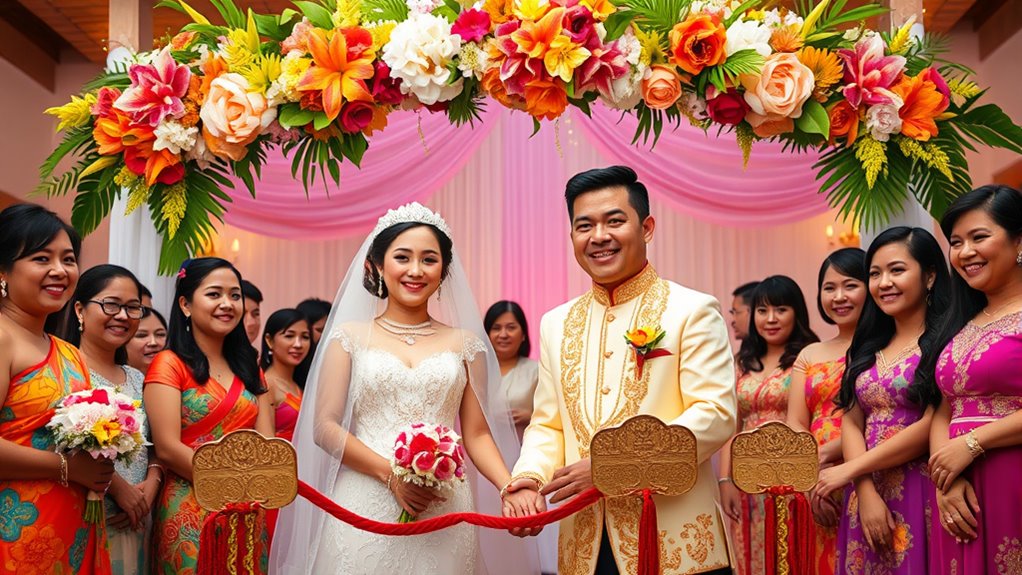
Have you ever wondered what makes Filipino weddings so unique and meaningful? It’s the rich blend of traditions, vibrant customs, and heartfelt symbolism that set these celebrations apart. Central to this are the traditional attire and wedding rituals that carry deep cultural significance. When you see a Filipino bride in her elaborate gown and a groom in his Barong Tagalog, you’re witnessing more than just clothing—you’re witnessing a connection to centuries of Filipino heritage. The traditional attire often includes the Barong Tagalog for men, made from fine, embroidered fabric that signifies purity and honor. For women, the Filipiniana dress, with its elegant butterfly sleeves and intricate embroidery, symbolizes grace and respect for tradition. These outfits aren’t just for show; they embody the Filipino values of humility, pride, and reverence for cultural roots.
Wedding rituals further deepen the meaning of Filipino ceremonies. One of the most iconic is the *Arrhae* or coin blessing, where the groom presents the bride with a set of coins, symbolizing prosperity and financial stability for their married life. The *Veil Ceremony* involves placing a veil over the couple’s shoulders, representing unity and protection from harm. Then there’s the *Cord Ceremony*, where a rosary or cord is draped in a figure-eight shape around the couple, symbolizing their everlasting bond. These rituals are performed with heartfelt prayers and blessings, reinforcing the spiritual dimension of marriage. They aren’t just acts of tradition but expressions of hope and faith for a prosperous future together. Additionally, the significance of Filipino cultural values is often reflected in these wedding practices, emphasizing respect, family importance, and community support.
The wedding rituals also include the *Money Dance*, where guests pin money onto the bride and groom’s clothing as a way of offering financial support and good luck. This lively tradition encourages family and friends to participate actively, turning the celebration into a communal effort to bless the couple. Each ritual and piece of attire is designed to invoke good fortune, unity, and the spiritual well-being of the newlyweds. They serve as visible signs of respect for Filipino culture and a way to pass down values from generation to generation.
In essence, Filipino wedding traditions—through their attire and rituals—are more than just customs. They are powerful symbols of hope, faith, unity, and cultural pride. When you witness these traditions, you’re experiencing a meaningful expression of love that’s deeply rooted in Filipino identity, making every wedding celebration a beautiful affirmation to the country’s rich heritage.
Frequently Asked Questions
How Do Filipino Wedding Customs Vary Across Different Regions?
You’ll notice regional variations in Filipino wedding customs that showcase the country’s rich cultural diversity. In some regions, traditional rituals like the “money dance” or “veil and cord” ceremonies are prominent, while others emphasize unique local practices. These differences reflect local beliefs, history, and traditions, making each wedding distinct. Embracing these regional variations allows you to appreciate the diverse ways Filipinos celebrate love and commitment across the Philippines.
What Are the Modern Influences on Traditional Filipino Wedding Practices?
Like a brushstroke blending old and new, modern influences reshape Filipino wedding practices. You might notice pre-wedding rituals becoming more personalized, reflecting your style. Modern venue choices, such as beaches or gardens, replace traditional churches, adding a fresh vibe. These updates honor tradition while embracing contemporary trends, making your wedding uniquely yours. You get to celebrate love with a mix of heritage and modernity, creating memories that honor both past and present.
Are There Specific Filipino Traditions for Same-Sex Weddings?
Yes, there are specific Filipino traditions for same-sex weddings that embrace LGBTQ acceptance and celebrate love. You might include same-sex rituals like blending of families or symbolic gestures unique to your relationship. Many couples personalize traditional elements, such as the veil or cord, to reflect your bond. These adaptations honor Filipino cultural values while promoting inclusivity, ensuring your special day respects both tradition and your identity.
How Do Filipino Wedding Traditions Incorporate Religious Elements?
You’ll notice Filipino wedding traditions incorporate religious elements through rituals like the Catholic blessing and the lighting of candles, emphasizing religious symbolism. The couple often receives spiritual blessings from a priest or officiant, reinforcing the sacredness of their union. These practices highlight their faith, bringing divine favor and protection. Incorporating these religious elements helps the couple feel spiritually connected, honored, and blessed as they start their new life together.
What Role Do Filipino Family Members Play in Wedding Ceremonies?
You see, Filipino family members play essential roles in wedding ceremonies through family involvement and ceremonial roles. They actively participate in rituals like the veil, cord, and coin ceremonies, symbolizing their support and blessings. Family members also serve as witnesses, offer prayers, and provide emotional and spiritual guidance. Their presence reinforces the importance of family bonds and community support, making the celebration deeply meaningful and rooted in tradition.
Conclusion
Understanding Filipino wedding traditions reveals the rich cultural heritage and deep symbolism behind each ritual. Did you know that over 80% of Filipino couples incorporate at least one traditional practice into their wedding? Embracing these customs not only honors your roots but also brings good luck and unity to your marriage. So, whether you’re blending traditions or starting new ones, these meaningful rituals will make your special day truly unforgettable.