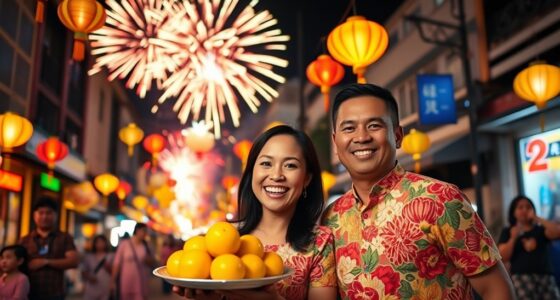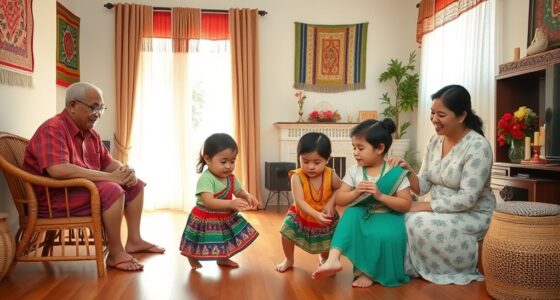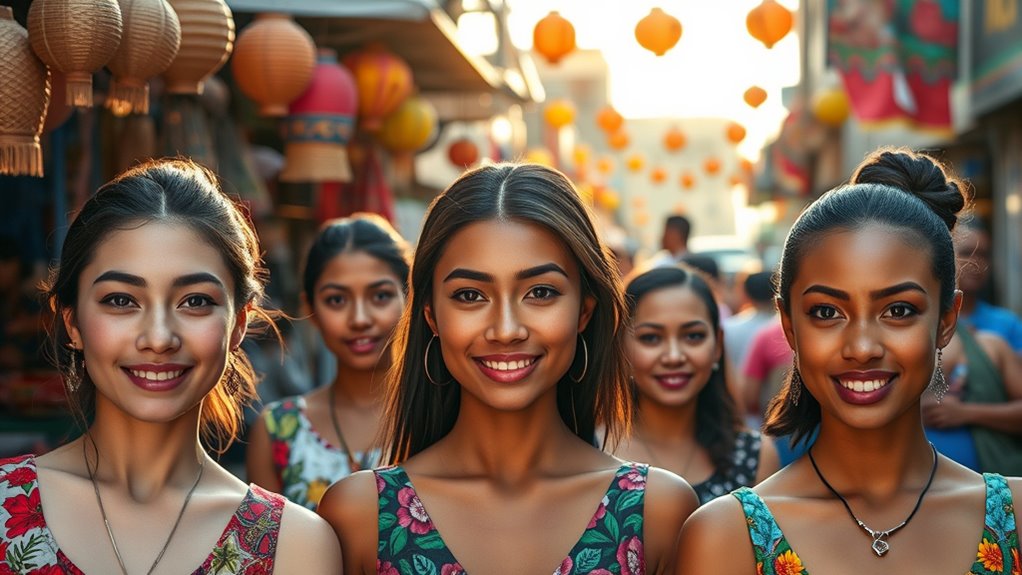

In the Philippines, beauty standards favor fair skin, which symbolizes elegance and social desirability. Traditional attire and modern makeup reflect cultural pride while emphasizing natural, glowing looks. Society values subtlety, approachability, and well-groomed appearances. Cultural heritage enhances everyday styles, blending modern trends with traditional motifs. If you explore further, you’ll uncover how these beauty ideals showcase authentic Filipino identity and community pride through fashion, grooming, and cultural expression.
Key Takeaways
- Fair skin is highly valued, symbolizing elegance, purity, and social status in Filipino beauty standards.
- Traditional attire and makeup emphasize vibrant colors and intricate designs, reflecting cultural pride.
- Natural, luminous skin with a dewy finish is preferred, highlighting health and approachability.
- Beauty ideals incorporate cultural elements like embroidery and motifs to showcase Filipino identity.
- Overall, beauty emphasizes authenticity, elegance, and cultural pride, blending modern trends with traditional symbolism.
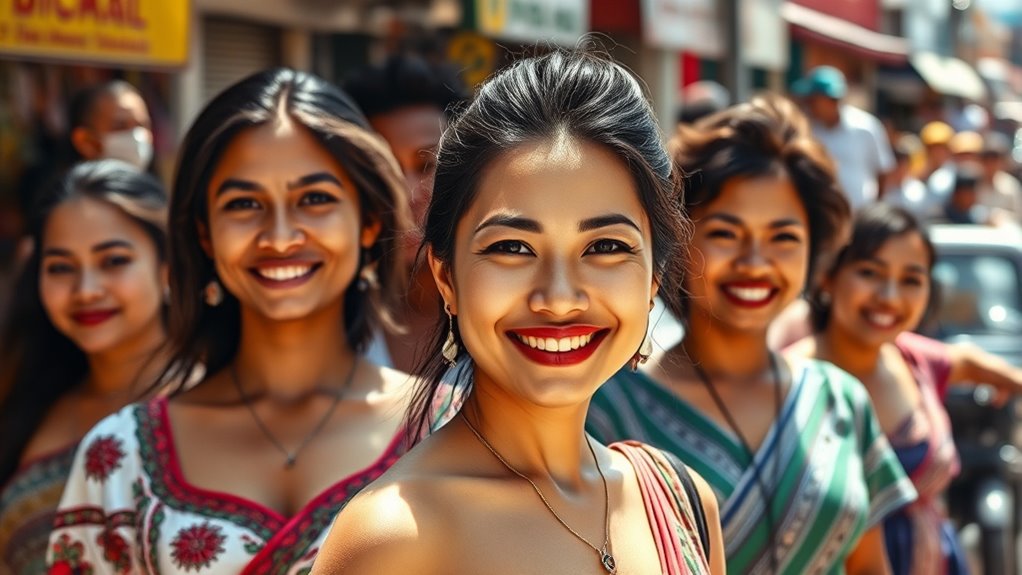
Beauty standards in the Philippines are deeply rooted in cultural traditions and societal influences that shape perceptions of attractiveness. These standards often emphasize qualities like fair skin, delicate features, and elegance, which influence how you view yourself and others. When it comes to makeup trends, you’ll notice that Filipino beauty ideals tend to favor a natural, luminous look that highlights your skin’s glow. Subtle makeup that enhances your features without overpowering them is popular, with dewy finishes, soft eyeshadows, and tinted lip balms reflecting a preference for understated elegance. These trends are not just about fashion; they symbolize a desire to appear fresh, approachable, and well-groomed—traits highly valued in social interactions and personal presentation. Continuous awareness of evolving beauty standards and market trends helps you adapt your style to stay current and expressive of your identity. Traditional attire also plays a significant role in shaping beauty standards. The Philippines’ rich cultural heritage is reflected in garments like the baro’t saya, terno, and barong, which are worn during celebrations and cultural events. When you wear traditional attire, you’re embracing a sense of national pride and identity, but you’re also highlighting your beauty in a way that’s deeply tied to cultural values. These outfits often feature intricate embroidery, vibrant colors, and elegant silhouettes that accentuate your posture and grace. Wearing traditional attire not only celebrates your heritage but also reinforces societal standards of beauty rooted in cultural appreciation and respect. It’s common to see women and men alike showcasing their beauty through these garments during festivals, making them a visual expression of Filipino identity. The influence of these cultural elements extends to everyday beauty practices, where makeup trends often incorporate traditional motifs or techniques, blending modern styles with cultural symbolism. For example, you might notice makeup that emphasizes the shape of the eyes, inspired by traditional Filipino art forms, or use of color palettes that reflect the country’s vibrant festivals. Meanwhile, traditional attire serves as a reminder that beauty in the Philippines isn’t just about superficial appearance; it’s about celebrating your roots, your history, and your community. When you participate in these cultural expressions, you’re affirming a beauty standard that values authenticity, cultural pride, and an elegant presentation.
Frequently Asked Questions
How Have Beauty Standards in the Philippines Evolved Over Decades?
You’ve seen how beauty standards in the Philippines have evolved over decades, driven by cultural shifts and changing beauty perceptions. You now value diverse skin tones and appreciate natural features more than before. Modern influences, social media, and global exposure have challenged traditional ideals, encouraging you to embrace individuality. This evolution reflects a broader understanding of beauty, moving towards inclusivity and self-confidence rather than conforming to outdated standards.
What Role Does Media Play in Shaping Filipino Beauty Ideals?
You’re immersed in a world where media influence and celebrity culture shape your ideals daily. They promote images of flawless skin, slender bodies, and light tones, creating a mirror of perfection. While movies, social media, and magazines elevate certain standards, they also set unrealistic expectations. This juxtaposition makes you aspire to look like your favorite stars, often neglecting your unique beauty in the process.
Are There Regional Differences in Beauty Standards Across the Philippines?
You’ll notice regional variations in beauty standards across the Philippines, influenced by diverse cultural influences. In some areas, lighter skin and delicate features are prized, while others value more robust or traditional traits. These differences reflect local customs, histories, and ethnic backgrounds, shaping unique perceptions of beauty. Embracing these regional variations highlights the rich cultural diversity within the country, reminding you that beauty isn’t one-size-fits-all but deeply rooted in local identities.
How Do Traditional Filipino Beauty Practices Influence Current Standards?
Traditional rituals and indigenous aesthetics still shape current beauty standards in the Philippines. You’re influenced by practices like skin whitening rituals and body adornments that blend ancient customs with modern trends. These traditional Filipino beauty practices create a contrast with contemporary ideals, highlighting a deep cultural connection. By embracing these rituals, you preserve heritage while shaping modern perceptions of beauty, making them richer and more diverse.
What Impact Do Social Media Influencers Have on Beauty Perceptions?
You see that social media influencers have a strong influencer impact on beauty perception. They showcase diverse looks, often promoting idealized standards that sway your opinions and preferences. By sharing their beauty routines and experiences, influencers shape what you consider attractive, sometimes reinforcing traditional standards or challenging them. Their reach influences how you view beauty, encouraging you to rethink or embrace different skin tones, styles, and features in Filipino beauty culture.
Conclusion
Remember, beauty is in the eye of the beholder, and standards are always changing. In the Philippines, skin tone and other features are celebrated, but true beauty goes beyond appearances. Embrace your uniqueness and recognize that, as the saying goes, “Beauty is only skin deep.” Focus on confidence and kindness, because these qualities shine brighter than any societal expectation. Ultimately, your authentic self is what truly makes you beautiful.