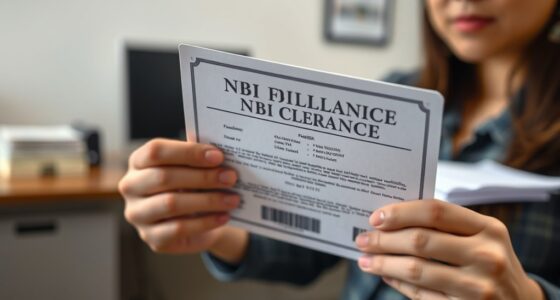
Deciding whether to marry in the Philippines or abroad depends on your cultural values, legal considerations, and personal preferences. Marrying locally lets you embrace Filipino traditions, family support, and straightforward legal processes, making it more meaningful and less complicated. On the other hand, tying the knot abroad offers personalized or international ceremonies, but may require extra legal steps for recognition. To find out which option suits you best, explore the details behind each choice carefully.
Key Takeaways
- Marrying locally in the Philippines offers cultural familiarity and easier access to traditional customs and family support.
- International marriages may require extra legal steps for recognition and adherence to foreign country laws.
- Personal preferences for cultural traditions and ceremony style influence the choice between local or abroad weddings.
- Legal requirements, documentation, and marriage validity are generally simpler within the Philippines.
- Marrying abroad provides more flexible, personalized options but involves navigating complex legal and residency regulations.
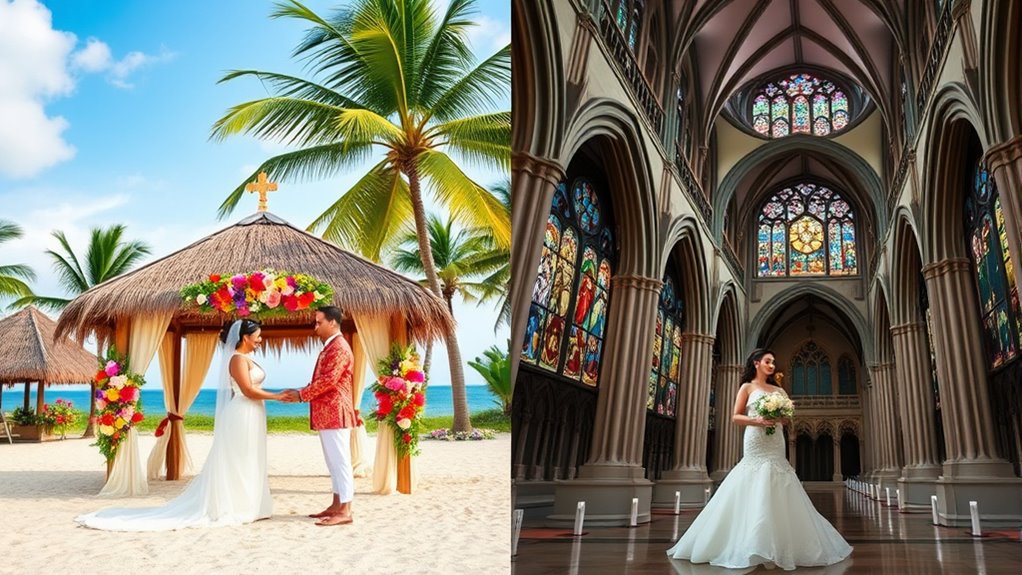
Deciding whether to marry in the Philippines or abroad depends on your personal preferences, legal considerations, and cultural values. If you’re weighing your options, it’s essential to understand how cultural differences and legal requirements can influence your decision. Marrying in the Philippines often means embracing local traditions and customs. You might find comfort in the familiar surroundings, family support, and the chance to celebrate your union with loved ones close by. However, it’s crucial to recognize that cultural differences can affect the ceremony and the way you and your partner approach the marriage. For example, Filipino weddings may include specific rituals, such as the “arrhae” or “veil and cord,” which might not be customary elsewhere. If these traditions hold significance for you, marrying locally could feel more authentic and meaningful.
Choosing between local and abroad marriage involves embracing traditions or exploring new legal landscapes.
On the other hand, choosing to marry abroad might appeal if you’re seeking a more international or personalized ceremony. Many countries have straightforward procedures for marriage licenses, and some may offer more flexibility in terms of ceremony options. Still, you need to be aware of the legal requirements in your chosen country. Different nations have varying laws regarding age, residency, documentation, and sometimes even proof of single status. It’s your responsibility to research these requirements beforehand to avoid surprises or delays. For instance, some countries require translations of birth certificates or affidavits of legal capacity to marry, which could add time and expense to your planning.
Legal requirements are a significant factor because they determine whether your marriage will be recognized both locally and in your home country. If you marry abroad, you may need to go through additional steps to make certain your marriage is legally valid back home. Conversely, marrying in the Philippines involves charting the local civil or religious procedures, which are usually well-defined but can sometimes be complex if you’re a foreigner. You’ll need valid identification, possibly a certificate of legal capacity to marry, and compliance with specific documentation rules.
Ultimately, your choice hinges on how comfortable you feel with the cultural differences and legal requirements of each option. If you prefer familiar traditions and straightforward legal processes, marrying in the Philippines might be the better choice. If you want a more flexible ceremony or a different cultural setting, marrying abroad could suit you better. Either way, thorough preparation and understanding the legal landscape will guarantee your wedding day is smooth and legally valid, no matter where you decide to tie the knot.

Top 10 Filipino Wedding Traditions You Need to Know (Filipino Culture and Traditions)
As an affiliate, we earn on qualifying purchases.
As an affiliate, we earn on qualifying purchases.
Frequently Asked Questions
How Do Marriage Laws Differ Between the Philippines and Other Countries?
Marriage laws differ markedly between the Philippines and other countries. You’ll find that legal recognition varies, with some nations requiring specific documentation like residency proofs or pre-marital counseling. In the Philippines, you need to submit documents like birth certificates and a CENOMAR, while abroad, requirements depend on local laws. Always check the country’s rules to guarantee your marriage is valid and recognized legally, avoiding future complications.
What Are the Costs Associated With Marrying Abroad Versus in the Philippines?
Did you know that overseas weddings can cost up to 50% more than those in the Philippines? For a cost comparison, you’ll find that marrying abroad often involves higher venue fees, travel expenses, and legal costs. An expense breakdown shows that in the Philippines, costs are generally lower with affordable venues and simpler paperwork, while abroad, you pay for international travel, accommodations, and legal fees. Budget wisely to avoid surprises!
Are There Language Barriers When Marrying in the Philippines or Abroad?
You might encounter language barriers when marrying abroad, especially if you and your partner speak different languages, making communication more challenging. In the Philippines, English is widely spoken, reducing potential language barriers. However, cultural differences could still impact your experience, regardless of location. Preparing for these differences helps guarantee smoother interactions with authorities and vendors, making your wedding planning more enjoyable and less stressful.
How Does Residency Impact Marriage Legality in Different Countries?
Residency requirements substantially impact marriage legality in different countries. You need to meet specific residency criteria to guarantee your marriage receives legal recognition. For instance, some countries demand a minimum stay period before marriage, while others don’t. Failing to meet these residency requirements can delay or invalidate your marriage. To avoid issues, check local laws beforehand, so your marriage’s legality isn’t compromised, regardless of where you choose to tie the knot.
What Are the Cultural Considerations When Choosing Where to Marry?
Your decision is like choosing between a vibrant tapestry or a sleek modern mural. When considering cultural rituals and family expectations, think about what resonates with you. If you value traditional ceremonies, marrying in the Philippines might preserve cultural richness. Alternatively, foreign weddings could offer unique experiences. Prioritize open communication with your families to guarantee your choice respects their customs while making your special day authentic and meaningful.

Marriage Certificate (Pk of 6) – Premium, Bronze Foil Embossed
- Design Style: Contemporary and traditional options
- Purpose: Commemorate and record your wedding
- Embossment Detail: Gold foil embossment with Bible verse
As an affiliate, we earn on qualifying purchases.
As an affiliate, we earn on qualifying purchases.
Conclusion
So, whether you choose to say “I do” amidst the sun-kissed beaches of the Philippines or under foreign skies, remember that love’s true destination isn’t a place, but the heart you share it with. Like a journey through uncharted seas, each option offers its own adventure—just make sure your vows anchor your dreams and your love sails smoothly, no matter where you tie the knot. After all, every love story is a voyage worth celebrating.

Vow Renewal Certificate with Greenery Minimalist on Linen 6pk 8.5×11” Marriage License Ceremony Officiant Eucalyptus Water Color Green Floral
- Design: Eucalyptus watercolor greenery motif
- Material: Linen-textured cardstock for durability
- Size: 8.5×11 inches, fits standard frames
As an affiliate, we earn on qualifying purchases.
As an affiliate, we earn on qualifying purchases.

Thiccywoov 8 Sets Wedding Aisle Decoration Include 16 oz Rose Daisy Hanging Mason Jar 32 Shepherds Hooks Rustic Mason Jar with Faux Rose and Daisy for Outdoor Wedding Isle Ceremony Decorations
- Complete Wedding Aisle Decoration Kit: Includes hooks, mason jars, and floral bouquets
- Sturdy, Durable Materials: Steel hooks, glass jars, fabric flowers
- Ideal Size for Most Settings: 32-inch hooks, 16oz jars, 11.81-inch bouquets
As an affiliate, we earn on qualifying purchases.
As an affiliate, we earn on qualifying purchases.