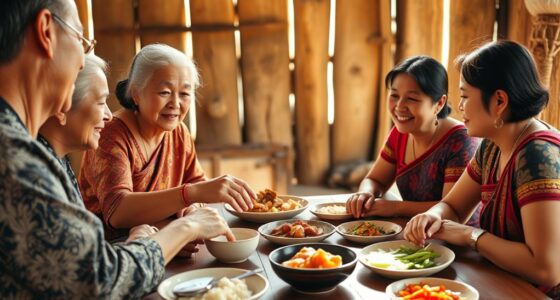
In Filipino relationships, traditional roles had men as providers and protectors, while women were nurturing homemakers centered on family. Today, those roles have shifted as couples share expenses, support careers, and communicate openly. Men participate in household chores, and women take the lead in dating and decision-making. Although some traditional customs remain, modern practices blend respect with equality. If you keep exploring, you’ll uncover how these evolving dynamics shape Filipino partnerships today.

Get gifts for the two of you delivered free — and shop member deals
- Fast, free delivery on millions of items
- Access to Prime Big Deal Days deals on October 6–7
- Prime Video, Amazon Music and more included
Key Takeaways
- Traditional Filipino relationships emphasized men as providers and women as homemakers, reinforced by cultural norms and courtship customs.
- Courtship involved respectful gestures like serenades and gift-giving, highlighting male chivalry and clear gender roles.
- Modern Filipino relationships see shared expenses, mutual support, and women initiating communication, reflecting increased gender equality.
- Traditional and modern practices now blend, with cultural values adapted into casual expressions of affection and mutual respect.
- The evolving relationship landscape promotes genuine connection, emphasizing mutual support and redefining gender roles beyond traditional norms.
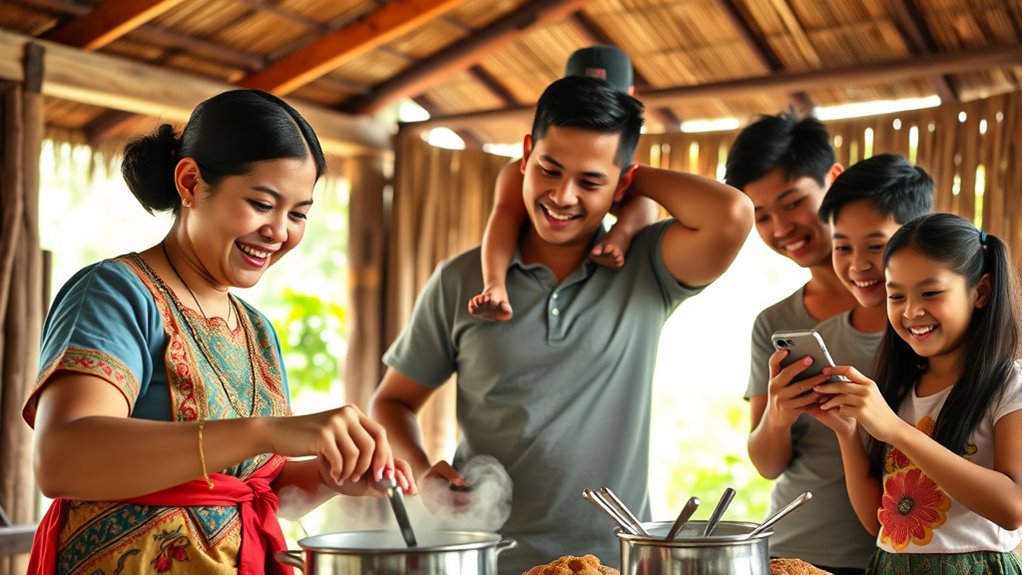
In Filipino relationships, traditional gender roles often shape expectations and behaviors, influencing how partners interact and support each other. Historically, men have been viewed as the primary providers and protectors, while women were expected to be nurturing, homemakers, and supportive partners. This division of roles was reinforced through cultural norms, family expectations, and traditional courtship practices. During courtship, for example, men often took the initiative to pursue women, demonstrating their interest through gestures like gift-giving, serenades, and formal visits. These acts of traditional courtship emphasized chivalry and respect, reinforcing the idea that men should lead and women should respond with gratitude and patience. Such customs created clear boundaries and expectations that many Filipino families still hold onto, even as society evolves.
Traditional Filipino courtship emphasizes respect, chivalry, and clear roles, with men pursuing women through gestures like serenades and gift-giving.
However, modern dating norms have begun to challenge and shift these traditional roles. Today, you might find couples sharing expenses, making joint decisions, and supporting each other’s careers equally. The influence of globalization and social media has introduced new ways of thinking about relationships, encouraging open communication, independence, and gender equality. You might see women initiating conversations, planning dates, or pursuing careers without feeling guilty or breaking societal expectations. Conversely, men are increasingly comfortable sharing their feelings and participating in household chores, breaking away from the stereotypical image of the dominant provider. These changes reflect a broader acceptance of partnership based on mutual respect rather than prescribed gender roles. Moreover, the availability of diverse relationship models allows couples to craft partnerships that suit their unique needs and values.
Despite these shifts, some aspects of traditional courtship remain relevant, especially in more conservative communities. Many still value the idea of courtship as a respectful, deliberate process where the man demonstrates sincerity and commitment. But you’re also likely to observe a blending of old and new practices, where couples adapt traditional gestures into more casual, personalized expressions of affection. This blend allows Filipino couples to honor cultural roots while embracing the principles of equality and modernity.
Ultimately, the shift from traditional gender roles to modern dating norms isn’t about abandoning cultural values but reinterpreting them. You now have the opportunity to define your relationship in a way that respects your individuality, values mutual support, and fosters genuine connection. Whether you adhere to traditional courtship customs or adopt more contemporary approaches, what matters most is that both partners communicate openly and support each other’s growth. The evolving landscape of Filipino relationships offers a richer, more inclusive understanding of love and partnership that embraces change while honoring tradition.
Filipino courtship serenade music
As an affiliate, we earn on qualifying purchases.
As an affiliate, we earn on qualifying purchases.
Frequently Asked Questions
How Do Rural and Urban Filipino Relationships Differ in Gender Roles?
In rural areas, traditional gender roles dominate, with men often seen as providers and women as caregivers, rooted in rural traditions. Urban modernization, however, encourages more equality, allowing women to pursue careers and men to share household duties. You’ll notice that urban relationships tend to be more flexible and progressive, while rural ones maintain more conventional roles. These differences reflect the ongoing influence of tradition versus modern societal changes.
What Influence Do Social Media and Modern Technology Have on Gender Expectations?
Social media and modern technology notably shape your gender expectations through digital empowerment and online influence. You might think these tools only entertain, but they also challenge traditional roles by showcasing diverse relationships and empowering individuals to express their true selves. As you engage online, you’re exposed to new ideas, encouraging you to question stereotypes and embrace equality, ultimately transforming how gender roles are perceived in Filipino relationships today.
Are There Regional Differences Within the Philippines Regarding Gender Roles?
Yes, regional differences exist within the Philippines regarding gender roles. Cultural variations and traditional practices influence these differences, making some areas more conservative than others. You might notice that in rural regions, traditional gender expectations are more strictly followed, while urban areas tend to adopt more progressive views. These regional distinctions shape how individuals perceive roles within relationships, highlighting the rich diversity in Filipino cultural norms across the country.
How Do Filipino Lgbtq+ Relationships Navigate Traditional Gender Roles?
Like a river carving new pathways, Filipino LGBTQ+ relationships navigate traditional gender roles with resilience. You express your identity openly, challenging societal expectations and embracing authentic self-expression. While societal acceptance varies, many find strength in community and love, reshaping norms one step at a time. You balance respecting cultural values while forging your own path, turning the tide toward a more inclusive future where gender roles no longer define your worth.
What Role Does Education Play in Shifting Gender Norms in Filipino Society?
Education plays a vital role in shifting gender norms in Filipino society by promoting educational empowerment and increasing gender awareness. When you access inclusive, gender-sensitive education, you challenge traditional stereotypes and develop a deeper understanding of diverse identities. This awareness encourages you to question restrictive roles, fostering more equitable relationships. As more Filipinos learn about gender equality, societal norms gradually transform, making room for acceptance and respect across all gender identities.
couples shared expense organizer
As an affiliate, we earn on qualifying purchases.
As an affiliate, we earn on qualifying purchases.
Conclusion
As the tides of tradition and modernity swirl, you stand at the crossroads of change. Gender roles in Filipino relationships are like a dance—sometimes steady, sometimes spontaneous—shifting with time’s gentle breeze. Embrace the rhythm of equality and respect, letting love lead the way. In this evolving dance, you hold the power to shape a future where understanding blooms and stereotypes fade into the sunset, leaving behind a horizon full of hope.
modern Filipino relationship books
As an affiliate, we earn on qualifying purchases.
As an affiliate, we earn on qualifying purchases.
As an affiliate, we earn on qualifying purchases.
Fall Picks
fall essentials
As an affiliate, we earn on qualifying purchases.