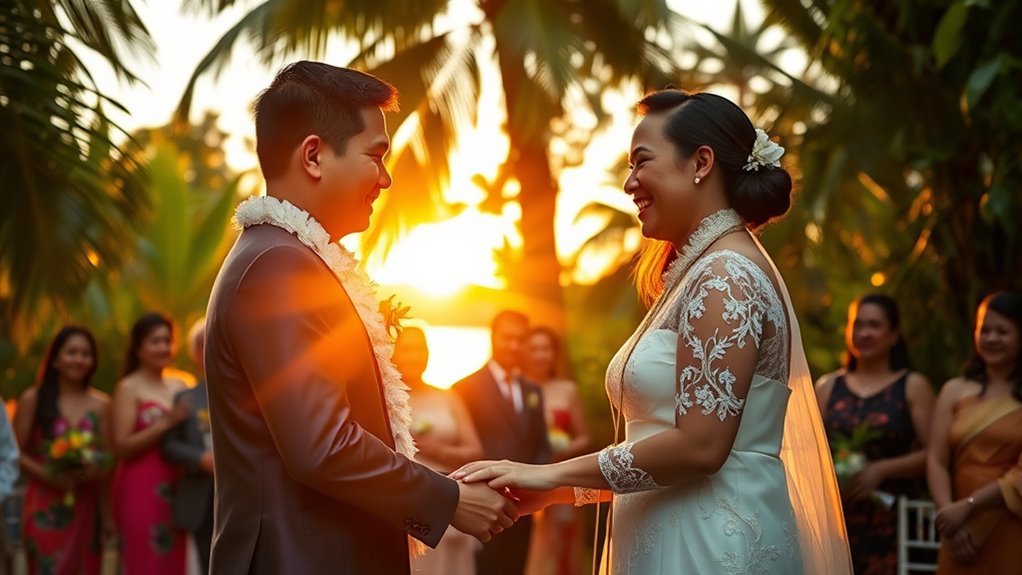

Yes, if you’re married to a Filipino citizen, you can become a Filipino by applying for naturalization. You’ll need to establish legal residence in the Philippines for at least one year before applying, and gather essential documents like your marriage certificate and proof of residency. The process involves an interview, verification of your marriage, and demonstrating your genuine integration into Filipino society. Keep exploring to discover the full steps and requirements involved.
Key Takeaways
- Marriage to a Filipino citizen can facilitate the naturalization process but does not automatically grant citizenship.
- The foreigner must establish legal residence in the Philippines for at least one year before applying.
- Necessary documents include proof of marriage, proof of residency, and valid identification.
- The naturalization process involves government review, a court hearing, and an oath of allegiance.
- Genuine marriage and integration into Filipino society are essential for eligibility.

Marrying a Filipino citizen can be a straightforward path for foreigners to become Filipino nationals, provided they meet the legal requirements and follow the proper procedures. The process involves specific legal procedures designed to guarantee that the marriage is genuine and that the applicant qualifies for citizenship. These procedures are outlined by Philippine law and are vital to follow carefully to avoid delays or denial.
Marrying a Filipino citizen offers a clear route to Filipino citizenship when legal requirements and procedures are properly followed.
The first step is to guarantee you meet the residency requirements. Generally, if you’re married to a Filipino citizen, you can apply for citizenship after establishing legal residence in the Philippines. The residency period varies depending on your circumstances, but typically, you need to have lived in the country for at least one year before filing your application. During this time, you must maintain legal status, which means holding the appropriate visa or residence permit. It’s essential to keep documentation of your stay, such as visa stamps, to prove your continuous residence. This helps validate your application and supports your claim for naturalization based on marriage.
Once you’ve met the residency requirements, you’ll need to prepare the necessary documents for the legal procedures. These usually include your marriage certificate, proof of residency, valid identification, and a certificate of legal capacity to marry (if applicable). You’ll also need to submit an application to the Bureau of Immigration or the appropriate government authority. The process involves an interview and review of your documents to verify the authenticity of your marriage and your eligibility for naturalization.
The legal procedures also demand that you demonstrate integration into Filipino society and intent to reside permanently. You’ll be expected to show that your marriage is genuine, not entered into solely for the purpose of obtaining citizenship. This might involve providing evidence such as joint bank accounts, shared property, or affidavits from friends and family affirming your relationship’s authenticity. Additionally, understanding the legal framework surrounding naturalization can help you navigate the process more effectively.
After filing your application, the government will review your case, and if everything is in order, you’ll be granted Filipino citizenship through a process called naturalization. This process involves a court hearing where your case is evaluated, and if approved, you’ll take an oath of allegiance to the Philippines. Once you’ve taken this oath, you’re officially a Filipino citizen.

GraduationMall Certificate of Marriage 8.5"x 11" Diploma Cover Imprinted Padded Diploma Holder White
【Size】1 Pack;Hold 8 1/2" x 11" Certificate or Diploma, 4 mm of Foam Padding;
As an affiliate, we earn on qualifying purchases.
As an affiliate, we earn on qualifying purchases.
Frequently Asked Questions
How Long Does the Marriage Process Take to Qualify for Citizenship?
The marriage duration required for citizenship eligibility typically takes at least five years of legal marriage and residence in the Philippines. During this period, you must demonstrate genuine marriage and fulfill residency requirements. The process involves submitting necessary documents, undergoing background checks, and applying through the Bureau of Immigration. Keep in mind, the exact timeline can vary depending on your circumstances, but generally, it takes several months to over a year to complete the citizenship qualification process.
Are There Language or Residency Requirements for Foreign Spouses?
Think of citizenship as a bridge you must build carefully. You’ll need to demonstrate language proficiency in Filipino or English, proving you can communicate effectively. Additionally, you must satisfy the residency duration requirement, typically living in the Philippines for at least one year after marriage. These requirements guarantee you’re genuinely integrated into Filipino society, making the shift meaningful and sincere.
Can Dual Citizenship Be Retained After Becoming Filipino?
Yes, you can retain dual citizenship after becoming Filipino, provided you meet the legal requirements set by the Philippine government. You need to apply for dual citizenship through a naturalization process and comply with specific legal steps. This allows you to enjoy the benefits of Filipino citizenship while keeping your original nationality. Just guarantee you follow the proper procedures and submit the necessary documents to maintain your dual citizenship status.
What Documents Are Needed to Apply for Citizenship by Marriage?
Imagine your wedding license, passport, birth certificate, and proof of legal residence as your VIP pass to citizenship. You’ll need to submit marriage requirements like the marriage certificate, along with valid ID, proof of residency, and passport-sized photos. Document verification guarantees all paperwork is legit. These steps turn your marriage into a formal journey toward Filipino citizenship, making your union officially recognized and celebrated by the nation.
Is There a Fee Associated With the Naturalization Process?
Yes, there are citizenship fees associated with the naturalization process. When you submit your marriage documentation and apply for Filipino citizenship, you’ll need to pay these fees, which cover processing and administrative costs. The exact amount may vary depending on your situation and the requirements of the Bureau of Immigration. Be prepared to pay these fees promptly to ensure your application proceeds smoothly.
proof of residency for naturalization
As an affiliate, we earn on qualifying purchases.
As an affiliate, we earn on qualifying purchases.
Conclusion
So, if you’re married to a Filipino, you can definitely become a citizen and truly call the Philippines your home. Just follow the legal process, and you’ll open the door to a new world of opportunities and belonging. It’s like stepping into a storybook where you’re the main character—no dream is too big! With patience and perseverance, you’ll find yourself wrapped in the warm embrace of Filipino citizenship, feeling more at home than ever before.
IRELAND CRITICAL SKILLS EMPLOYMENT PERMIT: Complete Guide for Skilled Professionals — Eligibility, Application, Stamp 4 & Irish Citizenship 2026 (Series 4 – EUROPE & ALTERNATIVE DESTINATIONS)
As an affiliate, we earn on qualifying purchases.
As an affiliate, we earn on qualifying purchases.

Marriage Certificate (Pk of 6) – Premium, Bronze Foil Embossed
MARRIAGE CERTIFICATE: Beautifully designed for contemporary or traditional tastes. Stand out with a premium quality, ready-to-frame Marriage certificate…
As an affiliate, we earn on qualifying purchases.
As an affiliate, we earn on qualifying purchases.