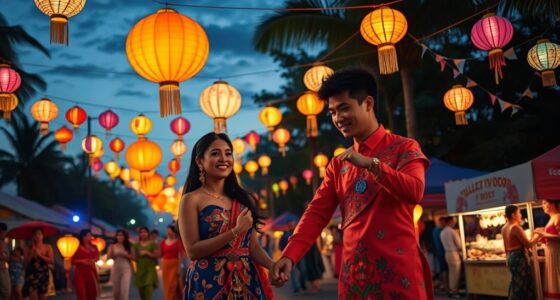
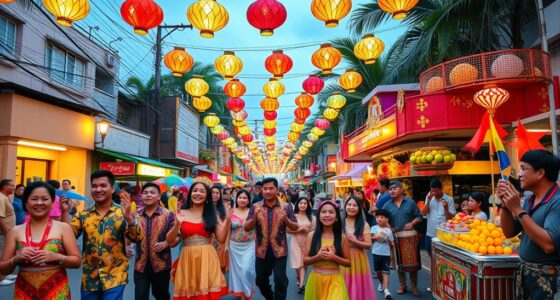
Filipino courtship traditions blend age-old rituals like harana and pamanhikan with modern dating. You’ll find that respect, patience, and family involvement remain central to relationships. Traditional practices involve serenading outside the woman’s home and seeking her family’s approval. Today, many still honor these customs while embracing contemporary ways to connect. If you want to understand how these traditions continue to shape Filipino relationships today, there’s more to discover about their meaningful cultural roots.
Key Takeaways
- Traditional Filipino courtship includes rituals like *harana* and *pamanhikan*, emphasizing respect, family involvement, and sincerity.
- *Harana* involves serenading the woman outside her home to express romantic interest.
- *Pamanhikan* is a formal family visit requesting the woman’s hand, reinforcing cultural values and trust.
- Modern dating introduces new ways of connecting, but many still observe traditional practices alongside contemporary methods.
- Core values of respect, family involvement, and building genuine relationships remain central in Filipino courtship today.
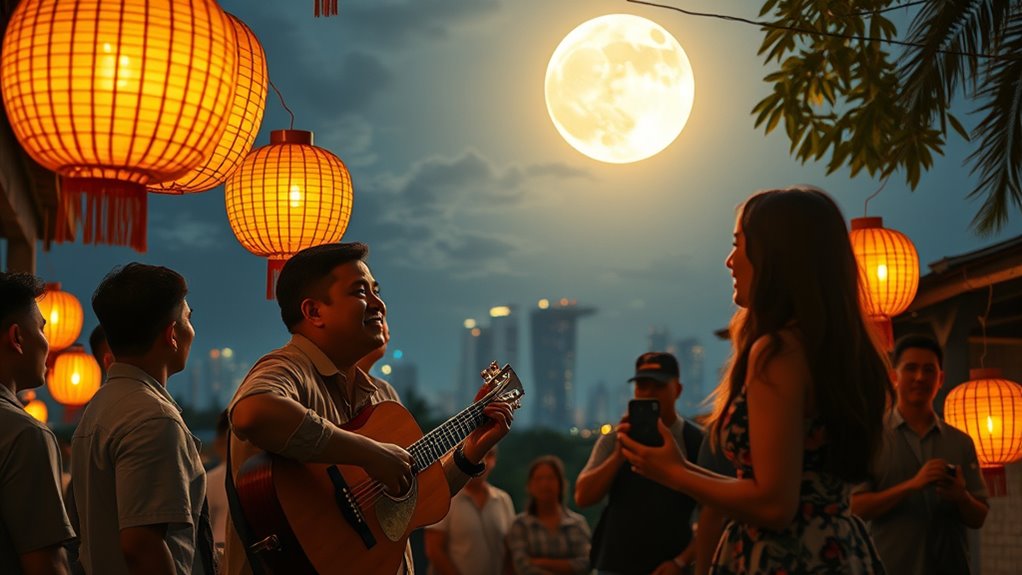
Filipino courtship traditions are deeply rooted in cultural values that emphasize respect, patience, and genuine connection. These traditions often revolve around sacred rituals that symbolize the sincerity of a person’s intentions and their commitment to building a meaningful relationship. One of the most iconic practices is the *harana*, where a suitor serenades the woman outside her window or home, often accompanied by friends or family members. This act isn’t just about singing; it’s a heartfelt gesture that demonstrates devotion and sincerity. During these rituals, family involvement plays a crucial role. The family’s approval and support are essential, as they serve as gatekeepers to the relationship, ensuring that intentions are genuine and respectful. The family’s presence during courtship activities signifies that the relationship isn’t just between two individuals but a union that involves their loved ones. This involvement fosters trust and respect, which are considered essential in Filipino culture.
In traditional settings, courtship isn’t rushed. It’s a slow process characterized by patience and understanding. The suitor might visit the woman’s home repeatedly, bringing small gifts or engaging in conversations with her family. These visits often serve as opportunities for families to get to know each other better, reinforcing the idea that courtship is a collective affair rooted in respect. Sacred rituals like *pamanhikan*—where the suitor formally visits the woman’s family to ask for her hand in marriage—highlight the importance of family involvement and adherence to cultural protocols. This act isn’t just a formality; it’s a sign of respect and a way to foster a relationship built on trust and mutual understanding. During *pamanhikan*, families discuss the future, finances, and expectations, ensuring everyone is on the same page before moving forward.
While modern dating has introduced new ways of connecting, many Filipino couples still honor these traditions, blending old customs with contemporary practices. Whether through a serenade or a simple dinner, the core values of respect and familial involvement remain central. These sacred rituals remind you that courtship isn’t just about romantic attraction but about building a foundation of trust, respect, and genuine connection that respects Filipino cultural identity. Embracing these traditions shows reverence for your roots, while also allowing room for personal expression and modern influences. In the end, Filipino courtship is about creating a relationship that honors both individual desires and collective family values, ensuring that love is rooted in respect and community.

My Harana: A Filipino Serenade
As an affiliate, we earn on qualifying purchases.
As an affiliate, we earn on qualifying purchases.
Frequently Asked Questions
How Have Filipino Courtship Practices Evolved in Urban Areas?
In urban areas, Filipino courtship has shifted from traditional practices like harana to more casual dating and online dating. You now often meet potential partners through social media or dating apps, making it easier to connect quickly. Casual dating is common, and formal courtship has become more relaxed, reflecting modern lifestyles. You enjoy greater independence and flexibility, blending traditional values with contemporary approaches to finding love and companionship.
Are Traditional Courtship Rituals Still Widely Practiced Today?
You’ll find that traditional courtship rituals, like harana and panliligaw, are still practiced but less commonly. While some see them as cultural significance and endeavor for ritual preservation, modern dating habits tend to dominate urban areas. You might experience a blend of old and new, where heartfelt serenades or handwritten notes coexist with online messaging. Overall, these customs are cherished symbols of Filipino heritage, even if not universally practiced.
How Do Filipino Courtship Customs Vary Among Different Regions?
You’ll notice that Filipino courtship customs vary by region, reflecting local culture and traditions. In some areas, you might experience regional dances like Tinikling or Singkil during courtship, while in others, food preferences play a role, with specific dishes shared to show affection. These regional differences make Filipino courtship uniquely diverse, blending traditional rituals with local customs, creating a colorful and meaningful experience across the Philippines.
What Role Does Family Approval Play in Modern Filipino Dating?
Family approval plays a significant role in your modern Filipino dating life, as family influence remains strong. Cultural expectations often mean you seek your family’s blessing before advancing your relationship. They want to make certain your partner aligns with your values and traditions. By involving your family, you show respect and maintain cultural harmony, making your relationship more meaningful and rooted in Filipino values that emphasize family unity and approval.
How Do Contemporary Filipino Youth Incorporate Social Media Into Courtship?
You might be surprised, but social media has become a key part of Filipino courtship, blending tradition with digital romance. You actively use platforms for online flirting, sharing moments, and expressing interest. Social media helps you connect more casually and instantly, making it easier to start conversations or build relationships. It’s a modern twist on courtship that complements family approval, allowing you to navigate love stories in a more accessible, engaging way.

KEYCHIN Philippine Sun And Star Bracelet Filipina Philippine Pride Gifts Philippine Flag Jewelry (Filipina Sun C-Gold)
Material: made of high quality copper and durable metal with exquisite plating process, sturdy and durable and hypoallergenic
As an affiliate, we earn on qualifying purchases.
As an affiliate, we earn on qualifying purchases.
Conclusion
You’ve seen how Filipino courtship has evolved from the romantic serenades of harana to today’s modern dating scenes. Notably, a recent survey shows that 65% of Filipinos still value traditional courtship practices, blending old and new ways. This mix keeps cultural roots alive while embracing change. Whether through a simple text or a heartfelt serenade, your love story continues to reflect the rich, enduring Filipino tradition of courtship that binds generations.

Filipino Graduation Stole – Adult Size White & Gold Satin Stole with Philippine Sun Embroidery, Cultural Graduation Sash for Filipino Graduates, Simple Modern Design
SIMPLE MODERN DESIGN – Clean lines and a minimalist layout create a timeless, modern look that highlights Filipino…
As an affiliate, we earn on qualifying purchases.
As an affiliate, we earn on qualifying purchases.
KEYCHIN Philippine Sun And Star Bracelet Filipina Philippine Pride Gifts Philippine Flag Jewelry (Filipina Sun C-Gold)
Material: made of high quality copper and durable metal with exquisite plating process, sturdy and durable and hypoallergenic
As an affiliate, we earn on qualifying purchases.
As an affiliate, we earn on qualifying purchases.