
In Filipino relationships and marriages, religion deeply influences your commitment, rituals, and social bonds. It guides how you celebrate vows, resolve conflicts, and build a spiritual connection with your partner. Religious ceremonies, often involving prayers and blessings, reaffirm your devotion both to God and your community. Family expectations may challenge your choices, but respecting faith traditions helps strengthen your bond. If you want to understand how faith continues to shape Filipino marriage customs, there’s more to explore.
Key Takeaways
- Religion deeply influences Filipino marriage rituals, viewing marriage as a sacred spiritual covenant rather than just a legal contract.
- Religious beliefs guide conflict resolution, commitment, and family roles within Filipino relationships.
- Interfaith marriages often involve blending traditions and open communication to honor diverse religious backgrounds.
- Family and community expectations shape religious practices and influence partnership decisions in Filipino culture.
- Religious ceremonies reinforce social bonds, cultural identity, and shared faith, serving as vital markers of spiritual and cultural unity.

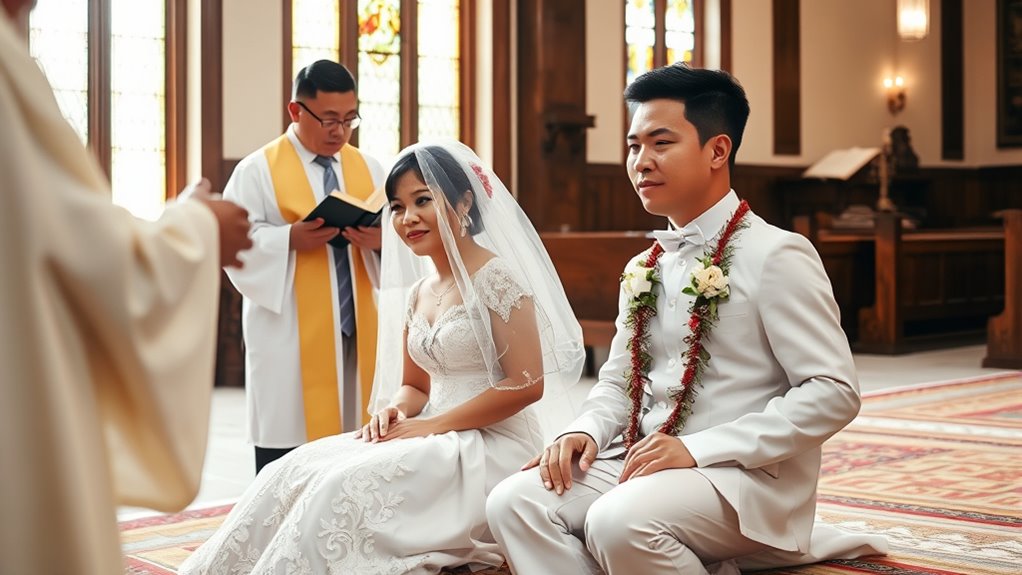
Religion plays a significant role in shaping Filipino relationships and marriages, often serving as a foundation for values, traditions, and social expectations. As a Filipino, you understand that faith influences how couples approach commitment, conflict resolution, and family life. When two individuals decide to unite, their religious beliefs often determine the type of wedding ceremony they choose and how they conduct their married life. Religious ceremonies, whether Catholic, Protestant, or from other faiths, are not just rituals; they are sacred vows that solidify the couple’s bond in the eyes of God and community. These ceremonies often involve specific prayers, readings, and blessings that reinforce shared spiritual values, making the marriage more than just a legal contract—it’s a spiritual covenant.
Religion shapes Filipino marriages, serving as a sacred foundation for vows, traditions, and community bonds.
However, when couples come from different religious backgrounds, interfaith challenges can surface. You might find yourself *steering through* complex questions about whose faith to prioritize or how to honor both traditions. These differences can lead to disagreements on wedding arrangements, religious practices, and raising children. Many couples address these issues by blending traditions, such as having a Catholic ceremony alongside a Muslim or Iglesia Ni Cristo blessing, or by choosing a more neutral religious approach that respects both faiths. Such compromises require open communication and mutual respect, as well as the support of family and religious leaders who can guide the couple through these unique challenges.
Religious ceremonies in Filipino culture are often more than personal milestones; they are community events that reaffirm social bonds. Attending and participating in these ceremonies isn’t just about witnessing a union; it’s about reinforcing cultural values like family loyalty, respect for elders, and spiritual devotion. These events are usually grand, involving not only the couple but also the extended family and community, emphasizing that marriage is a collective affair rooted in shared faith and social harmony.
In some cases, religious differences might test the strength of a relationship, especially if family expectations lean heavily toward one faith. You might face pressure to convert or conform, which can strain the relationship if both partners aren’t willing to compromise. Despite these challenges, many couples find ways to honor both religions, holding dual ceremonies or creating new traditions that incorporate elements from each faith. Ultimately, religion in Filipino relationships isn’t just about personal belief—it’s intertwined with cultural identity, community bonds, and the shared hope of a harmonious future together.

Diane Bish Wedding Book – Organ
88 Pages
As an affiliate, we earn on qualifying purchases.
As an affiliate, we earn on qualifying purchases.
Frequently Asked Questions
How Do Religious Differences Affect Filipino Couples’ Compatibility?
Religious differences can create interfaith challenges for Filipino couples, affecting their compatibility. You might face disagreements over family traditions, spiritual practices, or future religious upbringing. However, focusing on spiritual compatibility helps you navigate these differences. Open communication and mutual respect are key. By understanding each other’s beliefs, you can build a strong foundation that embraces diversity, strengthening your relationship despite the potential hurdles of interfaith challenges.
Are Religious Ceremonies Mandatory for Filipino Marriages?
Think of a Filipino marriage as a tapestry woven with faith and tradition. While religious ceremonies aren’t legally required, they hold deep cultural significance, symbolizing unity and spiritual blessing. Legal requirements like marriage licenses are essential, but many couples choose religious rites to honor their faith and community. So, you’re not forced, but many find that blending law and faith creates a richer, more meaningful bond.
How Does Religion Influence Conflict Resolution in Filipino Relationships?
Religion greatly influences how you resolve conflicts in Filipino relationships. You might turn to faith-based counseling or spiritual conflict resolution to find harmony. Your faith guides you to approach disagreements with patience, prayer, and understanding, often seeking guidance from spiritual leaders or scriptures. This spiritual approach helps you strengthen your bond, promoting forgiveness and compassion, which are essential in overcoming conflicts rooted in cultural and religious values.
What Role Does Religion Play in Filipino Dating Customs?
Think of religion as the guiding star in Filipino dating customs. You’ll find that cultural traditions often intertwine with religious symbols, shaping how couples express their budding love. From prayer rituals to family blessings, faith influences your approach to dating, emphasizing respect and moral values. Religious events and holidays become opportunities to strengthen bonds, making your relationship a reflection of shared beliefs and cultural pride.
Do Religious Beliefs Impact Family Planning Decisions?
Yes, your religious beliefs often influence your family planning decisions. Many Filipinos rely on faith-based counseling to guide choices about birth control, aligning them with their religious teachings. You might feel compelled to follow specific moral or spiritual values, which can limit the use of certain contraceptives. This blend of faith and personal choice shapes how you plan your family, emphasizing the importance of religious principles in these decisions.

Lazo Para Boda,Wedding Lasso for Ceremony Catholic,Lazos Para Boda Catolica,Lazos Para Bodas De Iglesia Para Novios,Pearls Rosary with Unity Cross for Wedding Ceremony,Lazo De Boda Para Los Novios
PREMIUM GIFT BOX: This wedding lasso or lazo para boda is part of our newest collection. It consists…
As an affiliate, we earn on qualifying purchases.
As an affiliate, we earn on qualifying purchases.
Conclusion
Just like a sturdy bamboo tree bends with the wind but remains rooted, your faith can strengthen your relationship through life’s storms. In the Philippines, where nearly 80% of the population identifies as Catholic, religion often acts as a guiding light, fostering love and commitment. Embracing shared beliefs can be the anchor that keeps you steady during challenging times, proving that faith isn’t just a tradition but the foundation for lasting, resilient relationships.

LakWilows Unity Wedding Candles Ceremony Set with Holder, Stable Rustic Unity Candle Stand, Christian Unity Wedding Candle Set with 1 Pillar and 2 Taper Candles
💒 Sacred Wedding Unity Candle for Ceremony – Centered around the timeless scripture “Love is patient, love is…
As an affiliate, we earn on qualifying purchases.
As an affiliate, we earn on qualifying purchases.

FANYX Wedding Set, Arras Para Boda Catolica and Lazo Para Boda Catolica, Wedding Arras Coins and Lasso for Ceremony Catholic Gift.
Handcrafted Wedding Set: Includes 13 gold-tone Guadalupe wedding arras with rhinestones, a heart-shaped jewelry box, a gold-tone cat’s…
As an affiliate, we earn on qualifying purchases.
As an affiliate, we earn on qualifying purchases.