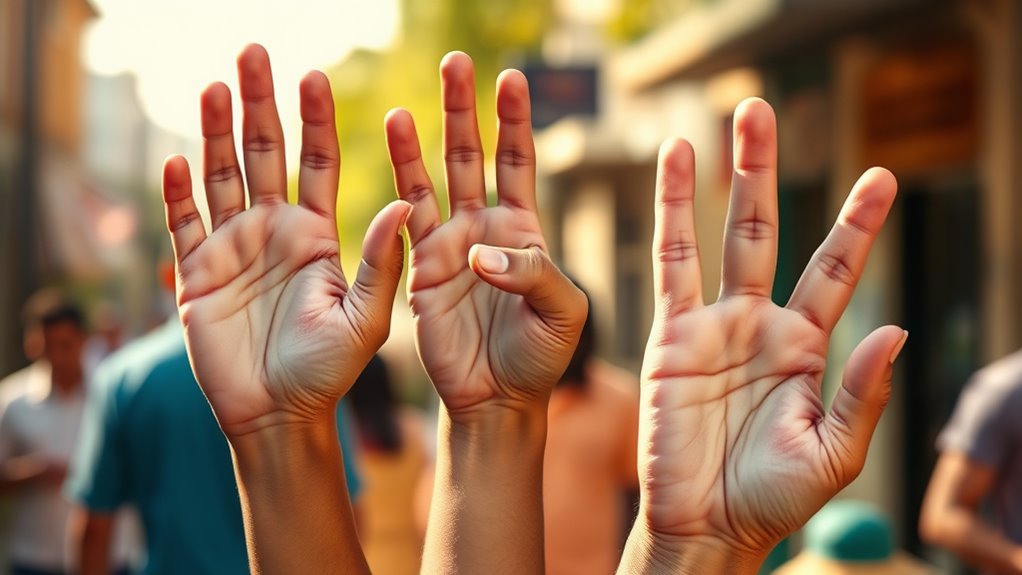

To better understand Filipino culture, download a quick reference chart of gestures and their meanings. This handy guide covers key gestures like “mano,” which shows respect to elders, and common signals like thumbs-up and peace signs. It explains which gestures are polite, which might cause misunderstandings, and how to use non-verbal cues confidently. Keep exploring this resource to deepen your awareness of respectful communication and make meaningful connections during your visit.
Key Takeaways
- The chart highlights common Filipino gestures such as “mano,” thumbs-up, and peace sign, with their cultural meanings.
- It emphasizes proper respect gestures toward elders, especially the “mano,” to foster social harmony.
- The downloadable resource clarifies gesture nuances, including palm orientation and avoiding rude gestures like pointing with the index finger.
- It offers practical tips to prevent misunderstandings and promote respectful interactions through non-verbal cues.
- Access the chart via the provided link for quick reference to Filipino gestures and their social significance.

Have you ever wondered what Filipino gestures really mean? Understanding these non-verbal cues is essential to steering Filipino culture smoothly. Gestures in the Philippines are more than just body movements; they’re a key part of cultural etiquette that convey respect, friendliness, and social harmony. However, without proper awareness, you might unintentionally offend someone or create a misunderstanding. That’s why having a quick reference guide can be so helpful, especially for travelers or newcomers trying to avoid common misunderstandings.
Understanding Filipino gestures is key to respectful and smooth cultural interactions.
For instance, a popular gesture is the “mano,” where you take an elder’s hand and press it to your forehead. This act is a sign of respect and reverence, especially toward elders. Failing to recognize it or not reciprocating can be seen as disrespectful or dismissive. Conversely, not understanding the significance of a smile or a nod might lead you to misjudge someone’s intentions or feelings, making social interactions awkward. These gestures are deeply rooted in Filipino cultural etiquette, emphasizing respect for elders and social harmony.
Another common gesture is the “thumbs-up,” which generally indicates approval or agreement. But be cautious—while it’s widely accepted in the Philippines, in some neighboring countries, it might hold different or even offensive connotations. This highlights the importance of understanding the context and cultural sensitivities to avoid misunderstandings. Similarly, pointing with your index finger is considered impolite; Filipinos prefer using their whole hand or thumb to gesture, especially when inviting someone to come closer or indicating a direction. Ignoring such nuances can be perceived as rude, even if that’s not your intention.
The “peace sign,” made by raising two fingers, is another familiar gesture often used to express friendliness or victory. However, if you show the back of your hand instead of the palm, it can be considered offensive, similar to other cultural taboos. Recognizing these subtle differences helps reinforce respect and shows that you’re making an effort to follow local customs.
In essence, understanding Filipino gestures and their meanings plays a fundamental role in practicing good cultural etiquette. It helps prevent common misunderstandings and fosters genuine connections. Having a downloadable chart or quick reference guide ensures you’re prepared, whether you’re greeting elders, showing approval, or maneuvering daily interactions. Paying attention to these non-verbal cues demonstrates your respect for Filipino culture and makes your experience more authentic and respectful. Moreover, being aware of cultural differences can significantly enhance your interactions and help you build meaningful relationships during your stay. Remember, gestures often speak louder than words, and mastering their meanings can greatly enrich your understanding of the Philippines’ warm and respectful social fabric.

Love More, Fight Less: Communication Skills Every Couple Needs: A Relationship Workbook for Couples
As an affiliate, we earn on qualifying purchases.
Frequently Asked Questions
Are Filipino Gestures Universally Understood Outside the Philippines?
You might wonder if Filipino gestures are understood outside the Philippines. Cultural variations can cause interpretation challenges, as gestures often carry different meanings across cultures. While some gestures are similar globally, many are unique to the Philippines and may be misinterpreted elsewhere. So, don’t assume everyone will understand your gestures correctly. It’s best to be aware of these differences to avoid misunderstandings and show respect for local customs.
How Should I Respond to Unfamiliar Filipino Gestures Politely?
Think of unfamiliar Filipino gestures as a new language you’re just beginning to learn. To respond politely, embrace cultural sensitivity and respectful communication. When unsure, smile gently and avoid making assumptions. You might ask politely, “Can you please explain?” showing your interest and respect. Remember, approaching unfamiliar gestures with openness and humility helps foster positive connections and demonstrates your genuine respect for Filipino culture.
Do Gestures Vary Between Different Regions in the Philippines?
You might notice that gestures can differ across the Philippines due to regional variations and cultural differences. In some areas, certain gestures might carry unique meanings or be more commonly used. It’s important to stay observant and respectful, adapting your responses accordingly. When unsure, a polite smile or verbal greeting can help bridge any cultural gaps, showing your respect for local customs and avoiding misunderstandings.
Are There Gestures Considered Inappropriate or Offensive in Filipino Culture?
You should be aware that some Filipino gestures can be considered inappropriate or offensive if not used carefully, as they relate to cultural taboos. For respectful communication, avoid gestures that might be interpreted as disrespectful, such as pointing with your feet or making rude hand signs. Showing respect through proper gestures helps you connect better and demonstrates your understanding of Filipino culture, ensuring positive interactions and avoiding misunderstandings.
How Can I Learn More About Filipino Etiquette Beyond Gestures?
You can learn more about Filipino etiquette by immersing yourself in Filipino traditional customs and following cultural etiquette guidelines. Engage with locals, observe their behavior, and ask respectful questions about traditions. Reading books or articles on Filipino culture also helps. Participating in community events or festivals gives firsthand experience. By showing genuine interest and respect, you’ll naturally understand the nuances of Filipino etiquette beyond just gestures.

The 5 Love Languages® Card Game, Couples Games for Adults, 2 players, 16+
The 5 Love Languages Card Game is a fun and engaging couples card game that will have you...
As an affiliate, we earn on qualifying purchases.
Conclusion
By understanding these Filipino gestures, you hold the key to revealing a world of silent stories woven into everyday interactions. Each gesture is a delicate brushstroke on the vibrant canvas of Filipino culture, whispering secrets of respect, warmth, and humor. As you navigate this rich tapestry, remember that these silent signals speak volumes, transforming simple movements into a language that bridges hearts and fosters genuine connection—turning gestures into the poetry of everyday life.

BestSelf Intimacy Deck – 170 Conversation Cards for Couples, Fun and Romantic Card Game for Deeper Connection and Pillow Talk
𝗧𝗵𝗲 𝗨𝗹𝘁𝗶𝗺𝗮𝘁𝗲 𝗖𝗼𝘂𝗽𝗹𝗲𝘀 𝗖𝗮𝗿𝗱 𝗚𝗮𝗺𝗲 𝗳𝗼𝗿 𝗔𝗱𝘂𝗹𝘁𝘀: Spice up your evenings with this bestselling intimacy card game –...
As an affiliate, we earn on qualifying purchases.

Nonviolent Communication: A Language of Life: Life-Changing Tools for Healthy Relationships (Nonviolent Communication Guides)
As an affiliate, we earn on qualifying purchases.